VLCC supertanker freight rates surged 94% to an all-time high of $423,736 per day as the U.S.-Iran conflict brought Strait of Hormuz shipping to a near-halt in March 2026. Four major marine war risk insurers cancelled Persian Gulf coverage, while Maersk suspended special cargo acceptance across 8 countries. With one-third of seaborne crude, 19% of global LNG, and 14% of refined products transiting the strait, the ripple effects are reshaping supply chain costs globally.
The Middle East supply chain crisis escalated dramatically in early March 2026, as the U.S.-Iran conflict caused shipping through the strategically vital Strait of Hormuz to grind to a near halt. On March 2, 2026, Very Large Crude Carriers (VLCCs) hit an all-time high benchmark freight rate of $423,736 per day, data from LSEG showed.
That marked an increase of more than 94% from Friday’s close—with VLCCs carrying 2 million barrels of oil per voyage from the Middle East to China—sending shockwaves through global energy and logistics markets simultaneously.
The disruption strikes at the heart of global trade. According to Argus Media, the Strait of Hormuz handles approximately one-third of all seaborne crude oil trade, 19% of global LNG flows, and 14% of global refined products trade.
Any prolonged disruption to transit through the waterway between Iran and Oman carries cascading implications far beyond energy markets—into manufacturing costs, logistics network architecture, and cross-border trade flows for businesses worldwide.
VLCC Freight Rates Shatter All Records: The Anatomy of a Market Panic
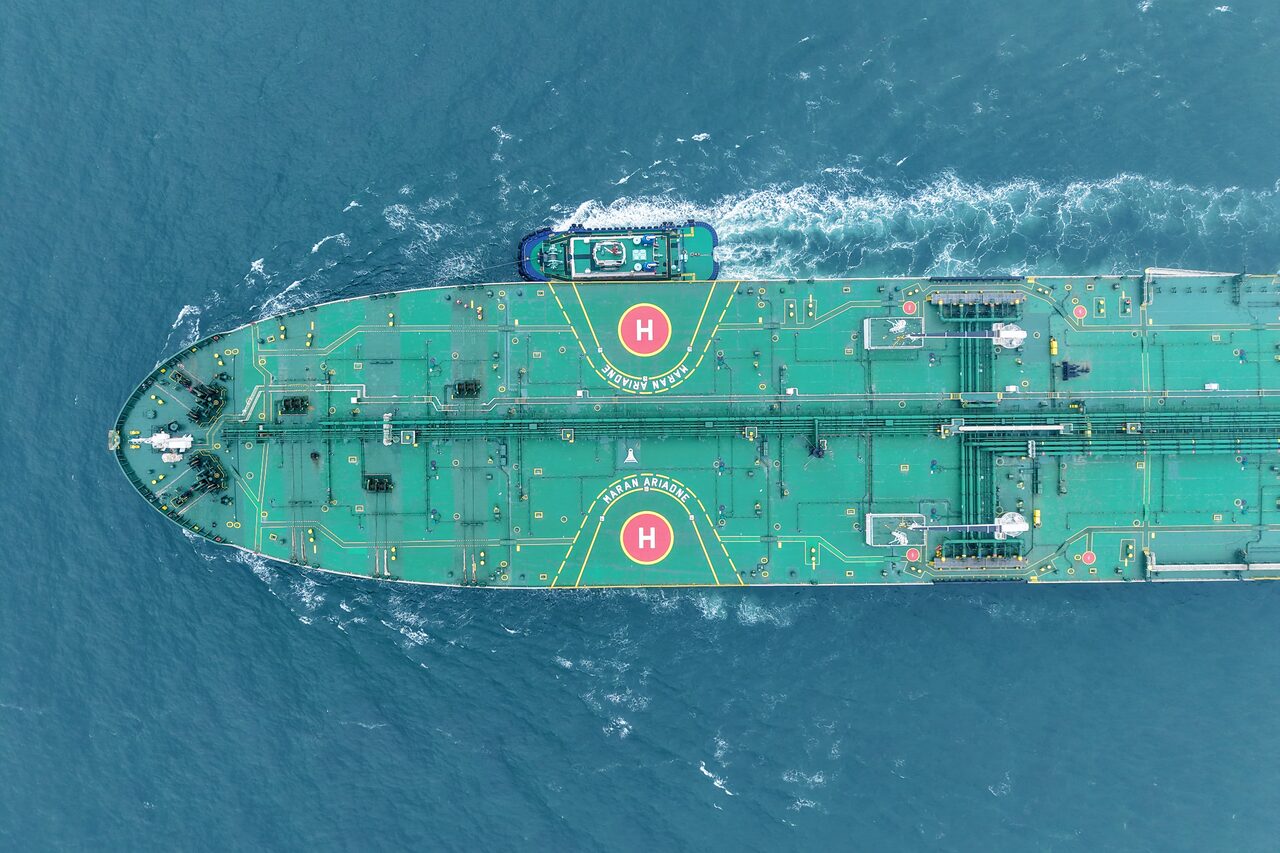
VLCCs are the workhorses of the Middle East-to-Asia crude oil supply chain, each capable of carrying 2 million barrels. The benchmark rate surged to $423,736 per day on Monday, March 2—shattering all prior records.
Sheel Bhattacharjee, head of freight pricing in Europe at Argus Media, told CNBC: “Charterers in the VLCC segment stepped back from the market and avoided securing vessels as multiple incidents have led to increased threat levels around the Strait of Hormuz, despite the waterway not being officially closed.”
Crucially, Bhattacharjee noted that Middle East oil producers had not yet announced a halt to production or loading operations. Ports in the UAE, Oman and Kuwait remained operational.
This distinction matters: the price shock was expectation-driven, not production-driven. When freight markets price in fear before actual supply disruption materializes, the volatility can be more severe and less predictable—and the rebound more uncertain.
An Iranian Revolutionary Guards senior official declared the Strait of Hormuz closed, warning that any vessel attempting to pass would be attacked. The U.S. military’s Central Command (CENTCOM) disputed this claim.
The ambiguity itself became a market driver: uncertainty about the physical status of the waterway kept charterers sidelined and pushed shipping rates higher regardless of whether the strait was technically passable.
War Risk Insurance Market Collapses: Four Major Insurers Exit the Persian Gulf
Simultaneous with the freight rate spike, the global marine war risk insurance market experienced an unprecedented breakdown. Within days of the escalation, four of the world’s most prominent marine insurance institutions announced the cancellation of war risk coverage for vessels operating in the Middle East region:
- American Club (New York, USA)
- Gard and Skuld (Norway) — among the world’s largest marine P&I clubs
- NorthStandard (UK) — major ship protection and indemnity association
- London P&I Club (UK) — one of the oldest and largest shipowner mutual insurers
These institutions collectively cover a significant share of the global commercial fleet. When war risk coverage is cancelled, ship operators face a binary choice: transit without insurance protection, or avoid the route entirely. For rational commercial operators, the latter is almost always the answer. This effectively creates a market-imposed closure of the waterway—even before any physical blockade materializes. The result is what Bhattacharjee described: “most shipowners were avoiding transits through the strait of Hormuz after insurers cancelled the war risk coverage.”
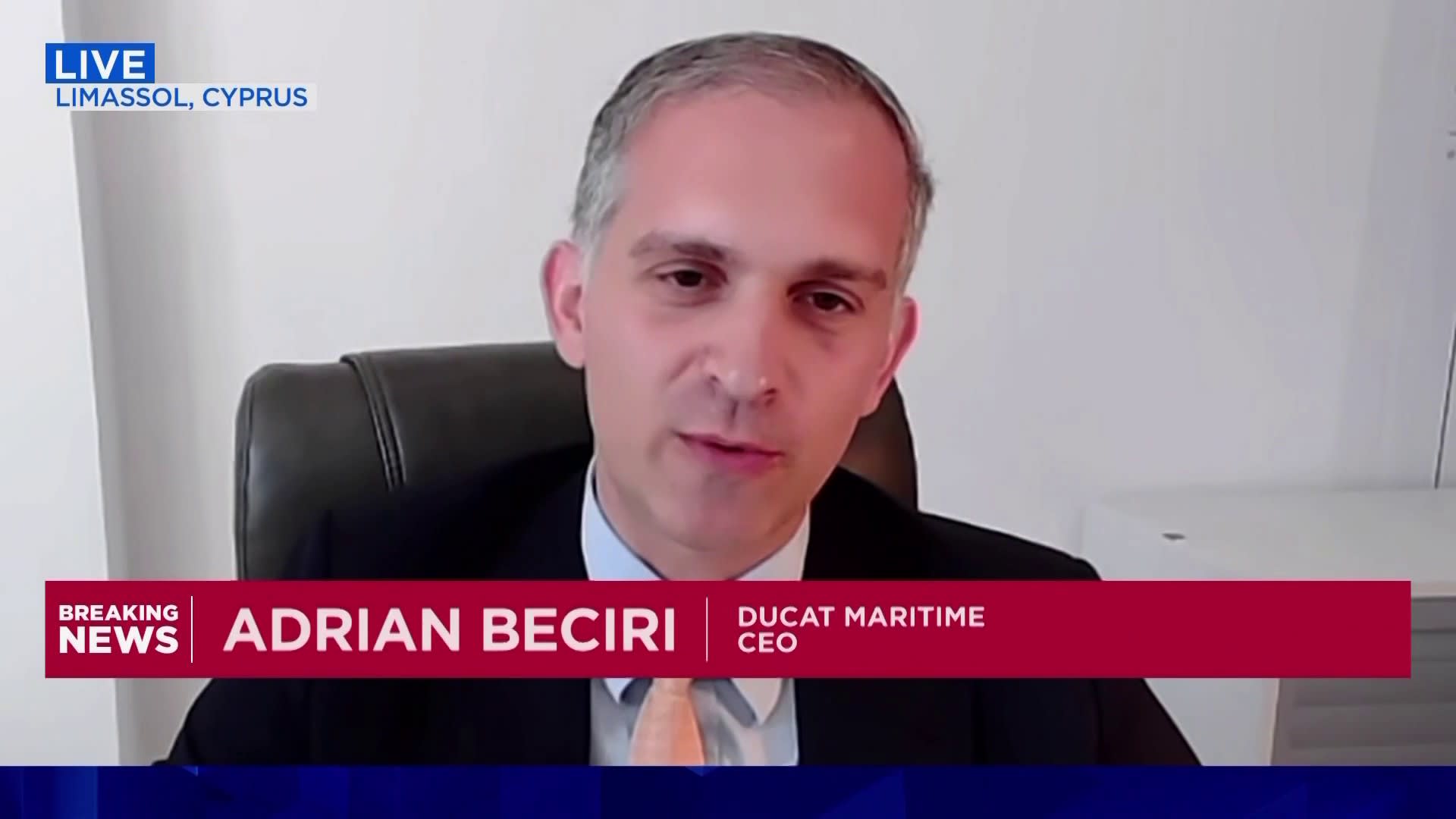
“We were trying to hire a dry bulk vessel to carry our typical rice food supplies to West Africa, which is around the Cape of Good Hope. You would think that is a million miles away from the conflict zone. We actually lost the ship. Someone had paid 50% more than they typically would do…” — Adrian Beciri, CEO of DUCAT Maritime, on CNBC Squawk Box Europe
War risk insurance cancellations of this magnitude are historically rare events. The last comparable episode in the Strait of Hormuz was in 2019, though its scale and coverage were significantly smaller than the current situation. Even after conflicts de-escalate, insurers typically maintain elevated risk premiums for months or years—meaning the structural cost of Middle East transit routes will likely remain higher than pre-crisis levels regardless of how quickly the immediate hostilities subside.
The Ripple Effect: How a Rice Shipment to West Africa Got Caught in the Hormuz Crisis
DUCAT Maritime CEO Adrian Beciri’s real-world example illustrates one of the most counterintuitive aspects of the current disruption: the cost and capacity impacts are radiating far beyond the conflict zone itself. Beciri’s company was seeking a dry bulk vessel to carry rice to West Africa via the Cape of Good Hope—a route with zero geographic proximity to the Persian Gulf. Yet the vessel they sought was captured by a charterer willing to pay 50% above market rates to transport Indonesian coal to India’s west coast.
The underlying logic: the vessel owner was uncertain about securing return cargo from the Persian Gulf region, and therefore demanded a premium for any committed voyage. This dynamic—where uncertainty about future cargo availability from a disrupted region inflates spot rates globally—demonstrates how tightly integrated modern shipping markets are. A disruption in one critical corridor cascades almost instantly into rate pressure across entirely unrelated trade lanes.
Beciri characterized the situation as “potentially a double whammy”—the Hormuz closure compounding the ongoing pressure from Houthi activity on the Red Sea/Suez Canal corridor. With both of the world’s most critical maritime shortcuts simultaneously under threat, global shipping networks face the prospect of unprecedented route compression. The comparison to Covid-era supply chain shocks is increasingly being voiced within the industry. During the 2021-2022 period, the simultaneous shortage of vessels, port congestion, and equipment imbalances pushed container rates to historic highs. The current crisis carries structural similarities—though concentrated in the energy and bulk shipping segments rather than containers, for now.
Shipping Giants Respond: Maersk Suspends 8-Country Cargo Acceptance
The four largest container shipping companies in the world have all issued fresh operational guidance in response to the deteriorating security environment:
- Maersk: Immediately suspended reefer and dangerous/special cargo acceptance in and out of the UAE, Oman, Iraq, Kuwait, Qatar, Jordan, Bahrain and Saudi Arabia until further notice. All sailings on the Middle East-India to Mediterranean and Middle East-India to U.S. East Coast services were rerouted around the Cape of Good Hope.
- MSC (Mediterranean Shipping Company): Issued fresh guidance, prioritizing personnel and cargo safety
- Hapag-Lloyd: Followed with updated safety-first operational policy and port call adjustments
- CMA CGM: Issued latest guidance, evaluating and implementing alternative routing options
Maersk’s decision carries particular market significance—the company is widely regarded as a barometer of global trade, and its operational choices tend to signal what the broader industry considers prudent. The suspension affects 8 countries across the Gulf region. For shippers relying on Jebel Ali (Dubai) and Khor Fakkan—the region’s preeminent transshipment hubs linking Asia, Europe and East Africa—the suspension creates immediate planning urgency. These ports serve as critical intermediate nodes in global shipping networks; their effective sidelining forces cargo routing through alternative hubs with potentially longer transit times and higher costs.
Three Scenarios: What the Hormuz Crisis Means for Supply Chains in 2026
The medium-term impact on global supply chains will hinge on how long the disruption persists. Three scenarios frame the decision space for supply chain managers:
Scenario 1 (Optimistic): Conflict de-escalates within 2-4 weeks
VLCC rates ease from peak levels; war risk insurers gradually restore coverage at elevated premiums. Middle East ports resume full operations; Maersk and peers lift suspension restrictions. Jebel Ali and Khor Fakkan recover their transshipment roles, though at higher baseline operating costs. Supply chain managers should treat this scenario as requiring buffer planning rather than structural redesign.
Scenario 2 (Base Case): Low-intensity standoff persists 2-3 months
VLCC market remains elevated; war risk coverage partially restored at significantly higher premiums. Cape of Good Hope rerouting becomes the operational default, adding 10-14 days to Asia-Europe voyages.
Middle East transshipment functions partially transfer to Singapore, Port Said and other alternative hubs. Energy prices remain elevated, transmitting inflation pressure into manufacturing cost structures globally.
Scenario 3 (Pessimistic): Dual long-term blockage of Hormuz and Suez
Roughly one-third of seaborne crude supply faces sustained disruption, with Brent crude at risk of significant further upside. Container freight rates risk revisiting 2021-2022 pandemic peaks as vessel capacity is absorbed into extended alternative routings. Supply chain managers must activate emergency inventory building, accelerate supplier diversification, and model scenarios where Middle East transit routes are unavailable for 6+ months.
Strategic Implications for Global Supply Chain Managers
The Hormuz crisis of March 2026 is a stress test for supply chain resilience frameworks built in the post-pandemic era. Several strategic imperatives emerge from the current situation:
Energy cost exposure management: For manufacturers relying on Middle East oil and LNG, the VLCC rate spike translates directly into margin pressure. At $423,736 per day for a VLCC carrying 2 million barrels over a typical 15-day voyage, freight cost per barrel increases substantially versus pre-crisis levels.
This cost ultimately flows through to refinery input costs and downstream energy pricing across Asia and Europe, making energy budget assumptions from early 2026 unreliable for the remainder of Q1 and Q2.
Transshipment hub diversification: Jebel Ali’s temporary functional impairment underscores the risk of over-reliance on single transshipment nodes.
Supply chain networks that built routing redundancy through Singapore, Colombo, or Mediterranean alternatives are better positioned to absorb the current shock. Those without contingency routing plans face higher expediting costs and potential service disruptions.
The “rice ship to West Africa” anecdote—where a vessel completely outside the conflict zone saw a 50% rate premium imposed by market forces—illustrates why supply chain risk management must extend beyond direct geographic exposure to model second and third-order effects.
The Strait of Hormuz crisis is not just a Middle East supply chain problem. It is a global logistics price signal that will propagate through every trade lane until the underlying uncertainty is resolved.
Related Reading
- Strait of Hormuz Crisis: A Structural Supply Chain Disruption with Cascading Global Implications
- Hormuz Strait Alert Meets Red Sea Reopening: How the Middle East’s Twin Chokepoint Crisis Is Reshaping Global Shipping in 2026
Source: cnbc.com
This article was AI-assisted and reviewed by our editorial team.