China’s humanoid robot industry has rapidly emerged as a dominant force in the global market, as evidenced by recent data reported by TechCrunch. In 2025, global humanoid robot shipments reached just 13,317 units, yet Chinese companies captured a disproportionate share of that early market. Unitree, a leading Chinese robotics firm, shipped 36 times more units than U.S. rivals Figure and Tesla — a figure that underscores the depth of China’s supply chain advantage. This gap is not accidental: it reflects years of deliberate investment in manufacturing infrastructure, particularly in sectors like electric vehicles (EVs), where spillover capabilities are now fueling the robotics industry.
The Numbers Behind China’s Early Dominance
The 2025 global shipment figure of 13,317 humanoid robot units marks the industry’s earliest commercial baseline. The market is expected to reach 2.6 million units by 2035, with annual growth nearly doubling each year, according to TechCrunch’s analysis. At this trajectory, companies that build scale and data advantages now will likely define the industry’s technical and commercial standards a decade from now. China’s roster of top-shipping companies in 2025 includes Agibot, Unitree, UBTech, Leju Robotics, Engine AI, and Fourier Intelligence — a concentration of early-stage leaders that suggests China is not merely participating in the race but setting its pace.
TechCrunch notes that these figures require careful interpretation: it remains unclear how many of the 13,317 units represent genuine commercial sales versus demonstration models or pilot deployments. The early-stage nature of the industry means that market share metrics are still forming. Nevertheless, the directional signal is unambiguous — China’s manufacturing ecosystem allows its companies to produce robots faster, at lower cost, and with higher iteration frequency than Western competitors.
Selina Xu, China and AI policy lead at the office of Eric Schmidt, explained the structural source of this advantage to TechCrunch: China’s hardware supply chain — built largely through the EV sector, encompassing sensors, batteries, and drive systems — gives robotics companies access to components that would otherwise require years to develop. This directly compresses the time from prototype to mass production, a critical variable in an industry where first-mover advantages compound over time.
“China has a more robust hardware supply chain — much of it built up through the EV sector, from sensors to batteries — and the world’s strongest manufacturing base, allowing companies to iterate far faster than Western competitors.” — Selina Xu, China & AI Policy Lead at Eric Schmidt’s office (via TechCrunch)
Three Pillars of China’s Supply Chain Edge
TechCrunch’s analysis distills China’s humanoid robot advantage into three reinforcing factors. First, the hardware supply chain: through the EV sector’s maturation, China developed world-class capabilities in sensors, batteries, and electric actuators — the exact components that humanoid robots depend upon. This infrastructure lets Chinese firms source components domestically at scale, reducing costs and shortening lead times significantly compared to Western counterparts who import components or build from scratch.
Second, the manufacturing base: China’s industrial infrastructure supports rapid iteration at production scale. While U.S. and European firms must often choose between R&D investment and manufacturing ramp-up, Chinese firms can pursue both simultaneously. This is reflected in the capital markets: Unitree completed its Series C funding at a valuation of approximately $3 billion, with ambitions for an IPO at a target valuation of up to $7 billion. Galbot, another key player, raised over $300 million in fresh funding, pushing its own valuation to an estimated $3 billion — one of the largest financing rounds in China’s humanoid robotics sector to date.
Third, the policy and capital ecosystem: government industrial strategy, labor shortage pressures, and concentrated private capital are converging to accelerate China’s humanoid robotics push. As Galbot CSO Yuli Zhao observed to TechCrunch, the market is shifting from “demo-driven excitement” to “operations-driven adoption.” Customers increasingly ask whether robots can run stably in real environments and genuinely reduce workload — a shift that China’s integrated ecosystem is well-positioned to meet.
Global Competition: U.S. and Japan Respond
The United States is actively scaling its humanoid robot ambitions, though from a smaller production base. U.S. startup Foundation plans to build 50,000 humanoid robots by end of 2027 — a target that, if achieved, would represent a major leap in American production capacity. Hyundai Motor’s Boston Dynamics division has introduced a new Atlas model designed for factory environments, with plans to produce up to 30,000 units annually at U.S. facilities and deploy them in factory settings by 2028. These efforts reflect genuine strategic intent, but the current production gap vis-à-vis Chinese companies — illustrated by Unitree’s 36x shipment lead — suggests that scaling ambition into volume will take time.
Japan brings a different set of strengths to the race. The country targets humanoid mass production by 2027, drawing on a decades-deep robotics heritage that includes Honda’s Asimo, Murata’s Murata Boy, and SoftBank Robotics’ Pepper. Coral Capital CEO James Riney, speaking to TechCrunch, identified three factors that position Japan well: a pressing labor shortage that creates genuine demand for automation; a cultural disposition toward robots as collaborative partners rather than threats; and Japan’s established dominance in precision components and robotics supply chains.
The competitive picture suggests a three-way dynamic: China leads on speed-to-scale, the U.S. on AI software investment, and Japan on precision manufacturing and societal adoption infrastructure. Each has defensible strengths, but for supply chain practitioners evaluating vendor relationships and technology partnerships, China’s current shipment lead and cost competitiveness make it the most immediately relevant actor in the 2026 landscape.
The Software-Hardware Gap: The Critical Bottleneck
Despite China’s hardware advantages, TechCrunch’s reporting flags a fundamental tension: the hardware is outpacing the software. Selina Xu described the current state directly — the robot body can now handle a much wider range of dexterous motions than years ago, but “the brain is still nascent.” The core challenge is training data scarcity. Unlike large language models (LLMs), which can crawl the internet for vast text corpora, robot foundation models cannot simply scrape existing datasets. Most companies rely on simulation environments to generate synthetic training data, but real-world operational data remains essential and difficult to acquire at scale.
On the software stack, Nvidia currently holds a dominant position. Most Chinese humanoid robot companies run their AI inference on Nvidia’s Orin chips, and Nvidia’s end-to-end humanoid software stack is widely regarded as leading the field. Domestic Chinese chipmakers are developing alternatives, but none have yet demonstrated comparable performance. This creates a structural dependency that adds complexity to China’s supply chain independence narrative — while hardware is domestically controlled, the cognitive layer remains externally sourced.
Safety represents an additional dimension of this challenge. As TechCrunch noted, some robots broke down during high-profile humanoid marathons, highlighting reliability concerns. A single prominent failure could trigger public or regulatory backlash that slows deployment timelines. For manufacturers and logistics operators considering humanoid robot adoption, the software-hardware gap is the critical risk variable — and the primary reason that near-term applications are concentrated in structured, repetitive environments where failure modes are predictable and manageable.
Early Application Windows: Warehouse, Manufacturing, Retail
Galbot’s CSO Yuli Zhao told TechCrunch that early commercial momentum for humanoid robots will likely emerge first in contained work environments: industrial manufacturing, warehouse logistics, and retail. What these sectors share is a specific combination of conditions that current-generation humanoid robots can meet: repetitive tasks, long operating hours, and clear process structures. These characteristics create the demand signal and the operational stability required for robots to deliver reliable value rather than just demonstration value.
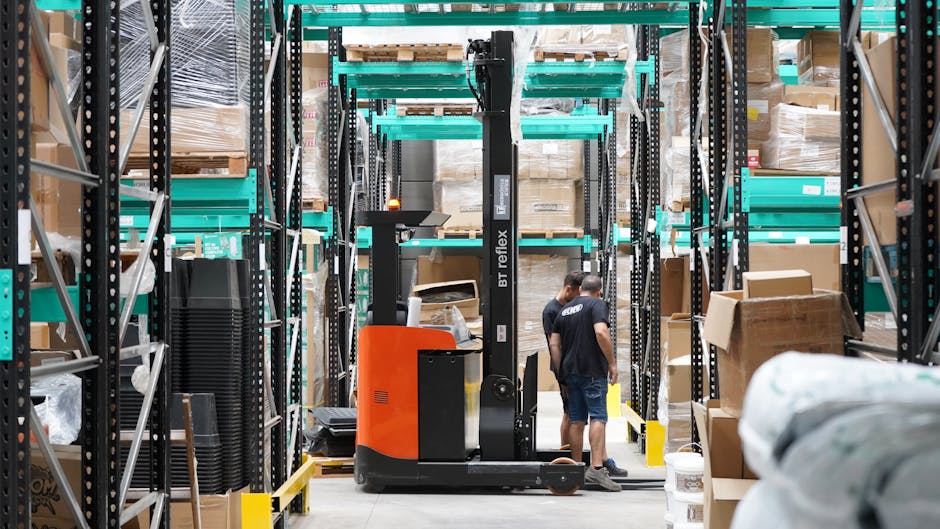
In warehouse logistics, humanoid robots offer compelling potential for goods-to-person picking, shelf replenishment, loading and unloading operations, and physical inventory tasks. Combined with existing warehouse management systems (WMS) and automation infrastructure, humanoid robots capable of navigating real-world environments could meaningfully enhance throughput and accuracy. For supply chains dealing with persistent labor shortages — a chronic challenge across North America, Europe, and parts of Asia — this creates direct ROI through reduced labor dependency and lower error rates.
- Industrial Manufacturing: Assembly, quality inspection, and hazardous environment operations where physical dexterity and endurance matter
- Warehouse Logistics: Picking, packing, replenishment, and loading/unloading tasks across high-throughput distribution centers
- Retail Operations: Inventory counting, shelf management, and standardized customer interaction scenarios
Critically, these early deployments do more than generate operational value — they create proprietary training data. Each real-world operation cycle generates observations, corrections, and optimizations that synthetic simulation cannot fully replicate. Companies that deploy at scale earliest will accumulate data advantages that compound over time, creating the ecosystem lock-in dynamic that characterizes maturing AI markets.
From 13,317 to 2.6 Million: What the Trajectory Means
The growth arc from 13,317 units in 2025 to a projected 2.6 million by 2035 represents one of the steepest volume ramps in recent industrial technology history. According to TrendForce’s December 2025 report cited by TechCrunch, China is actively expanding its humanoid robot presence across industrial, consumer, and rehabilitation segments, targeting both affordable mass-market models and high-end specialty applications. This multi-tier strategy positions Chinese firms to capture demand at multiple price points as the market evolves.
The implications for global supply chains are substantial. As humanoid robot production scales, component supply chains will face new demand patterns — for high-precision sensors, advanced actuators, battery systems, and embedded AI chips. China’s EV-derived manufacturing ecosystem is currently best positioned to absorb this demand at scale, which may extend its supply chain influence beyond robotics hardware into the broader ecosystem of components and subsystems. For international manufacturers and logistics operators, understanding where to position in this supply chain — as buyers, integrators, or component suppliers — will be a strategic priority over the next five years.
Zhao’s framing captures the essence of China’s competitive position: “The ecosystem here compresses the entire cycle — R&D, supply chain, manufacturing, integration, and customer deployment — into a very tight loop. That means humanoid companies can move from prototype to real-world deployment faster, learn from real operations, and iterate at a pace that’s difficult to match elsewhere.” For supply chain professionals navigating the 2026 landscape, this tight-loop dynamic is both a competitive benchmark and a procurement consideration as humanoid robots move from pilot programs to operational infrastructure.
Source: techcrunch.com
This article was AI-assisted and reviewed by our editorial team.