As global e-commerce enters its most consequential phase since the post-2020 surge, supply chain strategy has shifted from a cost center to the primary determinant of competitive survival. The 2025 cross-border logistics market has officially crossed the $1 trillion threshold, with projections indicating it will reach $185.87 billion by 2031—a compound annual growth rate (CAGR) of 9.4% despite mounting geopolitical friction, regulatory tightening, and platform-driven consolidation. This isn’t merely expansion; it’s structural recalibration. Driven by the explosive growth of SHEIN, Temu, and TikTok Shop—and accelerated by Amazon’s aggressive supply chain ‘centralization’ agenda—the logistics layer is no longer about moving parcels. It is now the orchestration layer for inventory intelligence, customs compliance, local fulfillment sovereignty, and real-time demand sensing.
The Five Archetypes: Beyond Channel Selection to Strategic Alignment
Historically, sellers evaluated logistics providers on speed, price, and tracking visibility. In 2026, that framework is obsolete. Instead, forward-thinking brands are mapping their logistics partners against five distinct archetypes—each representing a unique value proposition, risk profile, and strategic dependency. These are not categories but operational philosophies, each demanding different levels of data integration, capital commitment, and organizational agility.
What unites them is a shared pivot toward ‘data power’ (‘shù lì’) and ‘chain power’ (‘liàn lì’)—terms coined by WL123’s 2026 analysis to describe the decisive shift from physical asset ownership to algorithmic decision-making and end-to-end ecosystem control. As low-value de minimis thresholds shrink—the U.S. $800 duty-free exemption faces legislative review in Q2 2026, and the EU’s IOSS compliance burden intensifies—logistics providers must now serve as regulatory interpreters, tax agents, and AI-powered inventory co-pilots—not just couriers.
Global Giants: Speed as Sovereignty—At a Steep Premium
DHL, FedEx, and UPS remain the gold standard for mission-critical shipments, but their dominance is increasingly situational rather than universal. Their core advantage remains irreplaceable: owned aviation assets (DHL operates over 270 aircraft), proprietary global hub infrastructure (FedEx’s Memphis SuperHub processes 4.5 million packages daily), and unmatched customs brokerage depth. In 2026, DHL Express continues to lead transatlantic B2C deliveries with 92% on-time performance for door-to-door service within 2–4 business days—a benchmark no consolidator or postal network can consistently match.
Yet this supremacy comes at escalating cost. Fuel surcharges rose an average of 14.3% YoY in Q4 2025, while peak-season surcharges now apply for 22 weeks annually—up from 12 in 2022. For sellers shipping high-margin electronics or limited-edition fashion drops, this premium remains justified. But for mid-tier sellers, the ROI calculus has shifted dramatically:
- A $299 smartphone shipped via DHL Express to Germany incurs $48.70 in base freight + $12.30 in surcharges = $61.00 total, representing 20.4% of product value
- The same item shipped via a top-tier Southeast Asia–focused专线 (e.g., YunTu) costs $18.50—70% less—with delivery in 5–7 business days and 98% customs clearance success
- For non-urgent replenishment, a hybrid model using ocean FCL + last-mile domestic carrier reduces landed cost to $6.20—89% lower than express
This cost-performance divergence explains why international express now accounts for just 12.7% of total cross-border parcel volume by weight (McKinsey Global Logistics Report, 2026), despite commanding over 35% of revenue share—a clear signal of strategic segmentation.
Postal Networks & Multilateral Infrastructure: The Unseen Backbone Under Pressure
China Post, USPS, Royal Mail, and the Universal Postal Union (UPU) ecosystem represent the world’s most extensive physical distribution infrastructure—reaching 99.8% of global addresses, including remote villages in Kenya, mountainous regions of Nepal, and island communities across the Pacific. Their resilience lies in scale, not speed: China Post’s domestic pickup network covers 567,000 rural service points, enabling first-mile collection from factory gates in Guangdong to village cooperatives in Yunnan.
However, the UPU’s terminal dues reform—phased in globally since 2025—is eroding their historic pricing advantage. Average terminal fees paid by origin countries to destination posts have increased 32% since 2023, directly impacting small-parcel economics. Simultaneously, China Post’s strategic pivot is accelerating: its new Shanghai–Osaka air corridor delivers parcels within 12 hours (departing Pudong at 02:00, arriving Kansai by 14:00 JST), powered by dedicated freighter capacity and pre-clearance agreements. This signals a broader trend: national posts are transforming from passive conduits into integrated supply chain orchestrators, combining warehousing, bonded logistics, and localized returns management—blurring the line between ‘postal service’ and ‘third-party logistics provider’.
Specialized Regional Players: The Rise of the ‘Smart Consolidator’
Companies like Yanwen, 4PX, SF International, and YunTu have redefined the middle ground—not as a compromise, but as a precision-engineered solution stack. Unlike legacy carriers, they operate with zero owned aircraft but command over 86% of chartered cargo capacity on key Asia–Europe lanes (Air Cargo News, 2026). Their edge lies in dynamic resource allocation: real-time bidding on belly-hold space, AI-optimized package consolidation algorithms, and embedded customs tech stacks that auto-generate HS code classifications with 99.2% accuracy.
SF International exemplifies this evolution. Leveraging its domestic express footprint of 18,200 service outlets and 32 regional sorting hubs, it offers end-to-end FBA headhaul solutions with 99.6% on-time warehouse receipt compliance—a metric critical for Amazon’s IPI score calculations. Crucially, these players now embed predictive analytics dashboards for clients: forecasting customs delays based on historical seizure rates per HS code, modeling duty/tax liabilities pre-shipment, and simulating optimal inventory splits across multiple overseas warehouses. This transforms logistics from a transactional function into a strategic planning partner.
Platform-Centric Ecosystems: When Logistics Becomes Platform Policy
Amazon Logistics and Cainiao represent the most profound paradigm shift: logistics as platform governance infrastructure. Amazon’s 2026 ‘Shenzhen Hub’ initiative—consolidating inbound cross-border volume from 12 Chinese export zones into a single AI-optimized staging facility—reduces average FBA inbound transit time by 2.8 days but simultaneously increases seller dependency on Amazon’s algorithmic inventory recommendations. Similarly, Cainiao’s ‘Overseas Preferred Warehouse’ program in Spain and Poland now mandates real-time sales velocity data sharing from AliExpress sellers to dynamically allocate storage slots—a move that improves fill rates but cedes demand-sensing authority.
The trade-off is stark. Sellers using Amazon’s end-to-end flow achieve 87% higher conversion on ‘Prime’-tagged listings and 42% lower cart abandonment, yet face 5–10% FBA fee increases in 2026 and reduced flexibility in returns processing. Meanwhile, Cainiao’s integrated tax calculation engine reduced IOSS-related errors by 73% for EU-bound Lazada sellers—but requires full API integration with sellers’ ERP systems, raising implementation barriers for SMEs.
In essence, platform logistics no longer ‘serves’ the seller—it structures the seller’s entire operational rhythm: inventory planning cycles, promotional timing, even product launch sequencing become synchronized to platform-defined logistics rhythms.
Infrastructure-Led Integrators: The ‘Warehouse-as-OS’ Revolution
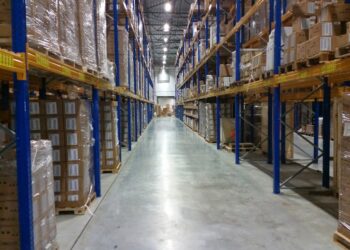
At the apex of strategic sophistication sit companies like Gucang, Sinotrans, Kerry Logistics, and Best Inc. They don’t sell shipping—they sell geopolitical optionality. With Temu’s semi-managed model requiring local stock availability in 18 target markets by Q3 2026, and with U.S. importers facing new CBP requirements for ‘responsible sourcing’ documentation, the ability to store, process, label, and fulfill locally is no longer a convenience—it’s a license to operate.
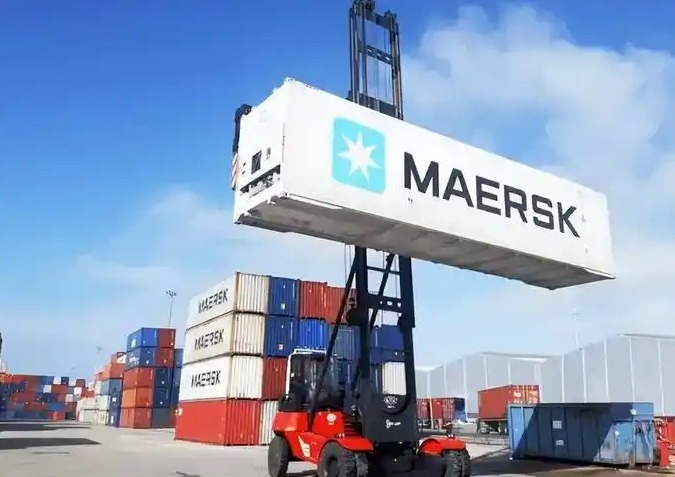
Gucang’s latest ‘One-Pool Inventory’ SaaS platform—deployed across 240+ overseas warehouses—uses reinforcement learning to recommend optimal stock allocation across Amazon, Temu, and TikTok Shop inventories, reducing dead stock by 28% and improving sell-through velocity by 37%. Sinotrans, meanwhile, leverages its domestic rail network (12,800 km of dedicated freight lines) to offer ‘rail-sea-air’ multimodal solutions that cut carbon emissions by 41% versus air-only while maintaining 9-day door-to-door to Hamburg.
This tier represents the future: where logistics providers evolve into supply chain operating systems, embedding financial services (trade finance), regulatory compliance modules (EUDR, UFLPA), and sustainability reporting engines—all accessible via unified APIs. The barrier to entry is no longer capital for trucks or planes, but data science talent, regulatory domain expertise, and interoperable technology architecture.
For global brands navigating 2026, the lesson is unequivocal: monolithic logistics partnerships are a liability, not an efficiency. The winning strategy is a dynamic, rules-based portfolio: international express for critical path replenishment (<2% of SKUs), regional specialists for core volume (65–70%), platform ecosystems for traffic acquisition leverage, and infrastructure-led integrators for strategic market entry and resilience. As the $185.87B market matures, it’s not the biggest player that wins—it’s the smartest architect of interconnected capability.
Source: WL123 Cross-Border Logistics Navigation Ecosystem Platform, “2026 Cross-Border E-Commerce Logistics Service Provider Analysis: The ‘Going Global’ Chessboard from Courier Giants to Overseas Warehouse Newcomers,” published January 2026.