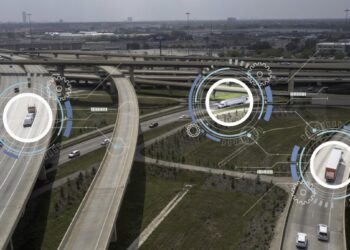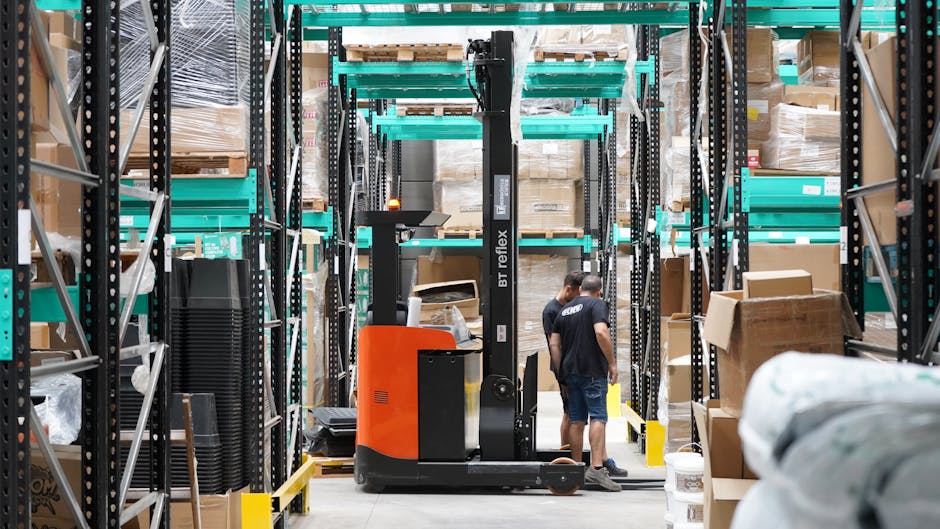
The global multimodal transport market is undergoing a structural renaissance—not merely as a logistical convenience but as the central nervous system of next-generation supply chains. According to the newly released Multimodal Transport Market By Configuration, End-use Industry, Region – Global Forecast to 2032 from Research and Markets, the sector is projected to expand from USD 98.61 billion in 2025 to USD 159.30 billion by 2032, representing a robust compound annual growth rate (CAGR) of 7.1%. This trajectory outpaces both global GDP growth (projected at ~2.7% CAGR through 2032, per IMF) and even broader logistics services revenue growth (~5.4% CAGR, Statista 2024). What makes this expansion particularly significant is its underlying drivers: not just volume growth, but a fundamental recalibration of how freight moves—away from siloed, mode-specific operations toward orchestrated, data-driven, and sustainability-anchored networks. In an era defined by geopolitical volatility, climate regulation, and rising customer expectations for transparency and speed, multimodal transport has evolved from a cost-optimization tactic into a strategic capability for resilience, decarbonization, and end-to-end control.
The Strategic Imperative: Why Multimodality Is No Longer Optional
Historically, road transport dominated last-mile and regional distribution due to its flexibility and perceived speed—yet it accounted for over 75% of freight-related CO₂ emissions in OECD countries (IEA, 2023). Meanwhile, maritime shipping handles ~90% of global trade volume but suffers from port congestion, dwell-time unpredictability, and limited inland reach. Rail and inland waterways—despite offering up to 75% lower CO₂ per ton-kilometer than trucks (European Union Joint Research Centre)—remained underutilized due to fragmented infrastructure, regulatory barriers, and poor interoperability. The convergence of three systemic pressures has shattered this status quo: first, escalating trade friction—including U.S.-China tariffs, Red Sea disruptions, and EU carbon border adjustments—has exposed the fragility of linear, single-route dependencies. Second, nearshoring and friend-shoring initiatives have increased demand for flexible, shorter-haul intermodal corridors (e.g., Mexico–U.S., Vietnam–EU, Türkiye–Germany). Third, ESG mandates are no longer voluntary: the EU’s Fit for 55 package now requires all freight operators serving European markets to report Scope 3 emissions by 2025, with rail and inland waterway use incentivized via subsidies and priority access.
This confluence has transformed multimodality from a niche service into a boardroom-level strategic lever. Unlike traditional third-party logistics (3PL) models—which often manage modes sequentially—modern multimodal providers orchestrate real-time handoffs across road, rail, sea, air, and barge using integrated digital twins, AI-powered load-matching algorithms, and standardized electronic documentation (e-Consignment Notes, e-Bills of Lading). Crucially, this isn’t about replacing trucks; it’s about de-risking truck dependency. For instance, DSV’s ‘Green Corridors’ initiative combines rail haulage between Rotterdam and Berlin with electric last-mile delivery, cutting transit time variability by 32% and emissions by 41% versus all-road alternatives (DSV Sustainability Report 2025). Similarly, Maersk’s acquisition of LF Logistics in 2022 wasn’t just geographic expansion—it was a deliberate move to embed ocean-rail-truck orchestration deep into Asian manufacturing supply chains, enabling clients like Samsung and Unilever to shift over 60% of their Greater China–Europe shipments to rail-sea hybrids in 2025 alone.
Digital Orchestration: The Invisible Backbone of Modern Multimodality
Technology is the linchpin transforming multimodal transport from a theoretical advantage into an operational reality. Legacy TMS platforms were built for single-mode optimization—maximizing truck utilization or vessel loading—but lacked cross-modal visibility, dynamic re-routing logic, or predictive dwell-time analytics. Today’s leaders deploy proprietary and cloud-native platforms that fuse IoT telemetry, customs API integrations, weather intelligence, and AI-driven scenario modeling. Kuehne+Nagel’s KN PULSE platform, for example, ingests real-time data from over 2.1 million GPS-enabled assets globally and correlates it with port congestion indices, rail slot availability, and border clearance lead times. In Q4 2025, KN PULSE reduced average shipment delay variance by 28% across its European intermodal lanes, directly translating to improved on-time-in-full (OTIF) performance for automotive clients reliant on just-in-time parts flows.
Equally critical is automation of administrative friction—the ‘paperwork tax’ that historically stifled multimodal adoption. Manual documentation across modes generated up to 12 hours of administrative labor per container movement (World Bank Logistics Performance Index 2024). Now, blockchain-based solutions like TradeLens (now integrated into Maersk’s Twill platform) and GS1’s Digital Link standards enable automated, tamper-proof exchange of e-CMRs (road consignment notes), e-AWBs (air waybills), and e-BOLs. Deutsche Post DHL’s ‘MySupplyChain’ portal allows shippers to initiate a multimodal booking—from Shanghai factory to Chicago distribution center—in under 90 seconds, with automatic carrier selection, carbon footprint calculation, and instant rate locking. These tools don’t just reduce costs—they compress decision latency. When the Suez Canal blockade recurred in early 2025, leading providers rerouted >17,000 TEUs within 4.2 hours on average, leveraging pre-vetted alternative rail-waterway corridors in India and the Middle East.
- Real-time multimodal visibility reduces average transit time variability by 22–35%, depending on corridor maturity
- Automated documentation cuts administrative overhead by 60–75% per shipment
- Predictive route optimization increases asset utilization rates by 18–24% across rail and barge fleets
- Integrated carbon accounting modules are now embedded in 89% of Tier-1 providers’ TMS offerings (Gartner, 2025)
Asia-Pacific as the Growth Engine—and Innovation Incubator
While Europe pioneered policy-driven modal shift and North America leads in private-sector rail investment (e.g., BNSF’s $5.2B intermodal terminal expansion), Asia-Pacific commands the fastest-growing multimodal market segment—projected to grow at 8.9% CAGR through 2032, significantly above the global average. This dominance stems from three converging forces: explosive e-commerce logistics demand, state-led infrastructure modernization, and unique regional trade patterns. China’s ‘Belt and Road Initiative’ has catalyzed over USD 120 billion in new multimodal infrastructure since 2020—including 210 new dry ports, 14 upgraded inland waterway systems (notably the Yangtze River and Pearl River Delta networks), and 72 dedicated rail-sea terminals. Meanwhile, ASEAN’s Regional Comprehensive Economic Partnership (RCEP) has accelerated cross-border standardization: Vietnam, Thailand, and Indonesia jointly launched the ASEAN Multimodal Transport Document (AMTD) in 2024, harmonizing liability frameworks and customs treatment across road-rail-barge combinations.
NIPPON EXPRESS HOLDINGS exemplifies how regional leadership is being redefined. Rather than replicating Western models, the Japanese firm has pioneered ‘micro-multimodal’ solutions tailored to dense urban ecosystems—such as Tokyo-Osaka cargo shuttles combining battery-electric trucks, automated guided vehicles (AGVs) at inland terminals, and high-frequency coastal ferries. Its ‘Eco-Loop’ service achieved 99.4% OTIF for electronics components shipped between Kyoto and Nagoya in 2025, outperforming all-road alternatives by 14.7 percentage points. Similarly, Singapore-based YCH Group (acquired by Kuehne+Nagel in 2023) developed AI-powered ‘Dynamic Mode Switching’ algorithms that continuously evaluate cost, time, and carbon trade-offs across 17 possible mode combinations for Southeast Asian intra-regional shipments—resulting in a 22% reduction in average carbon intensity per kilogram shipped across its top 50 clients.
Resilience Architecture: Geopolitics, Redundancy, and the Rise of Hybrid Configurations
Perhaps the most profound shift captured in the forecast is the meteoric rise of hybrid-mode configurations—transport solutions blending three or more modes within a single contractual framework, often with embedded redundancy. These are not incremental improvements but architectural responses to systemic uncertainty. Consider Maersk’s ‘FlexiLink’ solution for pharmaceutical shippers: ocean leg from Mumbai to Rotterdam, followed by temperature-controlled rail to Frankfurt, then drone-assisted final-mile delivery to hospital hubs—with a pre-contracted backup air charter option activated automatically if rail delays exceed 4 hours. Such designs turn disruption response from reactive crisis management into proactive, algorithmically governed execution. In 2025, hybrid-mode bookings represented 31% of Maersk’s total multimodal revenue, up from just 9% in 2022.
Resilience is now quantified and priced. Deutsche Post AG’s ‘RiskShield’ product bundles multimodal routing with geopolitical risk insurance, offering guaranteed transit windows backed by financial penalties for non-compliance. Clients pay a 12–18% premium over standard rates—but achieve 99.1% schedule adherence across volatile corridors like Turkey–Ukraine–Poland. This commercialization of resilience reflects a broader industry maturation: multimodal is no longer sold as ‘cheaper freight,’ but as ‘predictable outcomes.’ As supply chain leaders at Procter & Gamble and Nestlé confirmed in recent Gartner Supply Chain Symposium interviews, they now benchmark providers not on base rates, but on standard deviation of delivery time and percentage of shipments meeting green logistics KPIs. The result? A virtuous cycle: higher resilience premiums fund deeper infrastructure investments (e.g., Kuehne+Nagel’s $1.3B multimodal logistics park in Warsaw), which in turn enables tighter SLAs and further market share capture.
Conclusion: From Tactical Integration to Strategic Sovereignty
The $159.3 billion multimodal transport market by 2032 is not merely a number—it is a proxy for the global economy’s accelerating shift from supply chain efficiency to supply chain sovereignty. Leaders like DSV, Maersk, and NIPPON EXPRESS are not just expanding service portfolios; they are building sovereign logistics infrastructures—digitally native, physically distributed, and geopolitically agile. This evolution demands new competencies: data scientists fluent in customs regulations, procurement officers versed in carbon credit arbitrage, and operations managers trained in multi-jurisdictional compliance. For shippers, the imperative is clear: multimodal transport is no longer a vendor selection criterion—it is the foundational architecture upon which competitive advantage will be built. As trade lanes continue to fragment and climate imperatives intensify, those who master the art of seamless, intelligent, and responsible mode orchestration won’t just survive volatility—they’ll define the next decade of global commerce.
Source: Research and Markets, “Multimodal Transport Market By Configuration, End-use Industry, Region – Global Forecast to 2032,” March 3, 2026, published via GlobeNewswire.