In 2026, global supply chains are no longer defined by efficiency alone—but by adaptive resilience, regulatory intelligence, and carbon-aware orchestration. The era of monomodal dependency is over. As geopolitical friction intensifies, climate policy accelerates, and e-commerce expectations compress delivery windows to under 48 hours in core markets, cross-border logistics has evolved from a cost center into the primary strategic lever for market entry, brand trust, and margin preservation. According to UNCTAD’s 2026 Global Trade Logistics Report, 68% of exporters now cite logistics agility—not tariff rates—as their top barrier to scaling in new regions. This shift reflects a profound structural reconfiguration: the rise of the multimodal transport matrix, where five distinct but increasingly interoperable pathways—maritime, aerial, rail, road, and warehousing—are no longer sequential links in a chain, but interlocking nodes in a dynamic, data-driven network.
Ocean Freight: The Anchored Backbone Under Pressure
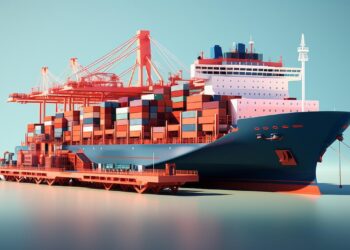
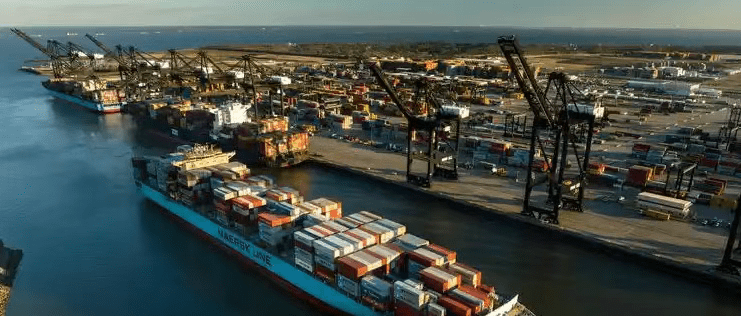
Despite predictions of overcapacity—with an estimated 150 million TEUs of new vessel capacity entering service in 2026—ocean freight remains the irreplaceable foundation of global trade, carrying over 80% of global merchandise volume by weight. Its dominance persists not out of inertia, but because no alternative matches its cost-per-ton-mile economics for heavy, non-perishable, or bulk commodities. Yet the ‘anchor’ is straining. Red Sea rerouting has added 10–14 days to Asia–Europe voyages, pushing average transit times to 38 days for standard Far East–Northwest Europe routes. Simultaneously, the EU’s Emissions Trading System (EU ETS) now fully covers maritime emissions, introducing a complex layer of ‘green premiums’ that can add USD $120–$280 per TEU depending on vessel age, fuel type, and route compliance. These costs are no longer absorbed silently; they’re being passed through via surcharges, renegotiated contracts, and real-time carbon accounting integrations.
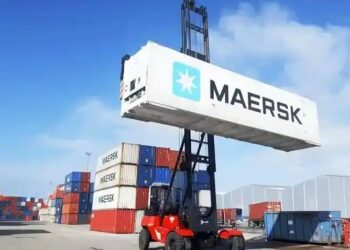
For exporters, this means segmentation is critical. Full Container Load (FCL) remains optimal for high-volume shipments—furniture, industrial machinery, and automotive components—where schedule reliability and unit cost outweigh speed. Less-than-Container Load (LCL), however, has matured beyond its legacy role as a ‘small seller workaround’. Digital LCL platforms now offer consolidated air–sea hybrid solutions, dynamic pricing APIs, and blockchain-enabled customs pre-clearance, reducing typical LCL dwell time at origin ports by 37% year-on-year. Leading carriers like COSCO and Maersk have embedded predictive analytics into their booking engines, allowing shippers to simulate cost–time–carbon trade-offs before committing.
- COSCO: Leverages state-backed infrastructure investments across 12 Belt and Road Initiative (BRI) port terminals, enabling seamless transshipment with minimal demurrage risk.
- Maersk: Offers end-to-end visibility via its ‘TradeLens’ successor platform, integrating container tracking, customs documentation, and carbon reporting into a single dashboard.
- Emerging Trend: ‘Green Chartering’—a growing number of shippers now require vessels to meet IMO 2030 decarbonization benchmarks, driving demand for biofuel-ready ships and LNG-powered fleets.
Air Cargo: The Premium Lifeline Facing Regulatory Headwinds
Air freight volumes grew 5.1% globally in 2026, with Asia-Pacific carriers posting 7.4% growth—outpacing both ocean and rail segments. This expansion is fueled less by traditional high-value manufacturing and more by the insatiable demand for speed-as-a-service: emergency restocking for Amazon FBA, just-in-time replenishment for Temu’s semi-managed model, and time-sensitive medical device deliveries. Yet this ‘golden channel’ faces unprecedented headwinds. The EU’s abolition of the €150 VAT exemption threshold for low-value consignments has eliminated the economic rationale for millions of direct-to-consumer (DTC) air parcels, triggering a 22% contraction in sub-2kg express volumes to Europe in Q1 2026.
The response? A rapid bifurcation. On one side, premium express services—like DHL’s Economy Select and FedEx’s International Priority—have doubled down on mid-tier B2B shipments (e.g., spare parts, retail samples) with guaranteed 3–5 day door-to-door SLAs and integrated VAT deferment. On the other, regional players are winning with hyper-localized networks: Shunfeng International (SF Express) now operates 18 dedicated cargo flights weekly between Shenzhen and Seoul, achieving same-day pickup to next-day delivery—a capability unmatched by global incumbents. Crucially, air cargo’s value proposition has shifted from raw speed to certainty: real-time customs status updates, bonded airport warehousing, and automated duty calculation reduce landed cost volatility by up to 31%.
- DHL: Maintains the largest privately owned air fleet among integrators, with 220+ aircraft and 98.7% on-time performance for priority lanes.
- FedEx: Dominates North America–Europe corridors with its Memphis hub’s 92% overnight sorting accuracy and AI-powered customs risk scoring.
- SF Express: Captured 41% market share in China–Japan–Korea air parcel segment in 2026 by co-locating fulfillment centers inside Incheon and Narita airports.
Rail & Road: The Eurasian Corridors Rewriting Transit Economics
If ocean freight is the backbone and air cargo the nervous system, rail and road are the circulatory system—connecting continental interiors with surgical precision. The China–Europe Railway Express (CEREX) carried 1.82 million TEUs in 2025, a 14% YoY increase, and its evolution in 2026 marks a tectonic shift: the launch of the ‘ASEAN Fast Train’ from Hanoi to Duisburg via Shenzhen’s Pinghu South terminal enables 12-day transit from Vietnam to Germany—52% faster than sea, at 20% of air freight cost, and emitting 93% less CO₂ than air. This isn’t just about speed—it’s about regulatory alignment. CEREX now integrates EU-compliant phytosanitary certificates, Uyghur-language customs declarations, and automated border crossing at Malaszewicze, cutting administrative delays by 65%.
Even more disruptive is the surge in TIR (Transports Internationaux Routiers) road transport. With China’s Customs General Administration formally including cross-border e-commerce goods and bonded inventory under TIR scope in early 2026, TIR volumes surged 89% YoY. A TIR-certified truck departing Shenzhen for Moscow now completes the journey in 11 days—75% faster than rail—with zero unsealing at borders and full VAT deferral eligibility. This ‘one-truck, one-seal, one-guarantee’ model has transformed road from a short-haul adjunct into a strategic long-haul alternative, especially for high-margin electronics and branded apparel where inventory turnover and cash flow velocity are paramount.
- Pinghu South Platform: Handles 42% of all CEREX departures from Guangdong, offering dual-use rail–road transfer hubs for last-mile flexibility.
- 4PX (递四方): Launched ‘Rail+Last-Mile’ bundles in Q2 2026, delivering directly from rail terminals to Polish e-shoppers’ doors within 24 hours of arrival.
- TIR Operators: Over 272 licensed TIR operators in China (up from 128 in 2024), with deep integration into Shenzhen’s Qianhai and Yantian bonded zones for tax-efficient consolidation.
Overseas Warehousing: The Silent Engine of Customer Loyalty
Overseas warehouses are no longer static storage facilities—they are localized commerce engines. In 2026, 73% of top-performing cross-border sellers use multi-warehouse strategies, deploying different facility types for distinct functions: high-turnover ‘fulfillment hubs’ near metro areas (e.g., WINIT’s Dallas DC for US Prime shipping), specialized ‘reverse logistics centers’ for refurbished electronics (e.g., Chain4Zhou’s Warsaw facility with ISO 14001-certified refurb lines), and ‘compliance gateways’ for VAT-registered stock in EU member states. The true competitive advantage lies in orchestration: synchronizing inbound headhaul mode (e.g., bulk railway shipments to Poland), local inventory allocation algorithms, and platform-specific fulfillment rules (Amazon SEND, Temu Semi-Managed, Shein Direct).
Advanced WMS platforms now ingest real-time sales velocity, weather forecasts, and even social media sentiment to adjust safety stock levels dynamically. For example, Chain4Zhou’s AI engine reduced overstock in its German warehouse by 28% while improving in-stock rate for flash-sale SKUs to 99.4%. Critically, overseas warehousing solves the ‘last mile paradox’: it transforms international shipping from a cost center into a profit center. Sellers using localized fulfillment report 3.2x higher repeat purchase rates and 41% lower return processing costs versus cross-border direct shipping.
- WINIT: Operates 37 self-owned warehouses across 12 countries, with API-native integration to Shopify, Magento, and SAP S/4HANA.
- Chain4Zhou (谷仓): Processes 1.2 million parcels monthly across its EU–US–AU network, with proprietary ‘Smart Replenishment’ software predicting optimal shipment timing and mode mix.
- New Frontier: ‘Micro-warehouses’—pop-up fulfillment units in Tier-2 cities (e.g., Lyon, Nashville) activated during peak season, reducing urban delivery costs by 35%.
The Matrix Imperative: Why Modality Blending Is Now Non-Negotiable
The defining characteristic of 2026’s supply chain leaders is not mastery of any single modality—but fluency in modality blending. Consider a smart home device manufacturer launching in France: Q1 uses air freight for initial 500-unit sample batch (speed + customs control); Q2–Q3 shifts to CEREX for 20,000 units (cost + green credentials); Q4 deploys TIR trucks for urgent restock during Black Friday (flexibility + speed); all while maintaining 3,000 units in WINIT’s Paris warehouse for same-day dispatch. This ‘elastic menu’ reduces total landed cost by 18% and improves perfect order rate to 99.1%.
Success requires three foundational capabilities: (1) Real-time multimodal rate and capacity APIs (e.g., integrating Maersk’s Spot, DHL’s Rate Calculator, and TIR tariff databases); (2) Unified visibility platforms that track containers, railcars, trucks, and pallets on a single map; and (3) Carbon accounting modules that auto-calculate Scope 3 emissions per shipment, feeding ESG reporting and tender compliance. As the World Economic Forum’s 2026 Logistics Readiness Index confirms, companies with mature multimodal orchestration score 2.7x higher on resilience metrics and achieve ROI on logistics tech investments in under 14 months.
Ultimately, the question ‘What’s the best way to ship?’ has been replaced by ‘What’s the right sequence, timing, and trade-off for this product, this customer, this quarter?’ In 2026, logistics isn’t just moving goods—it’s moving strategy forward.
Source: WL123 Cross-Border Logistics Navigation Ecosystem Platform, “Five Mainstream Cross-Border Logistics Modes Explained for Export Enterprises”, published February 2026. https://www.wl123.com/wu-liu-wiki/jiao-cheng-zhi-nan/13878.html