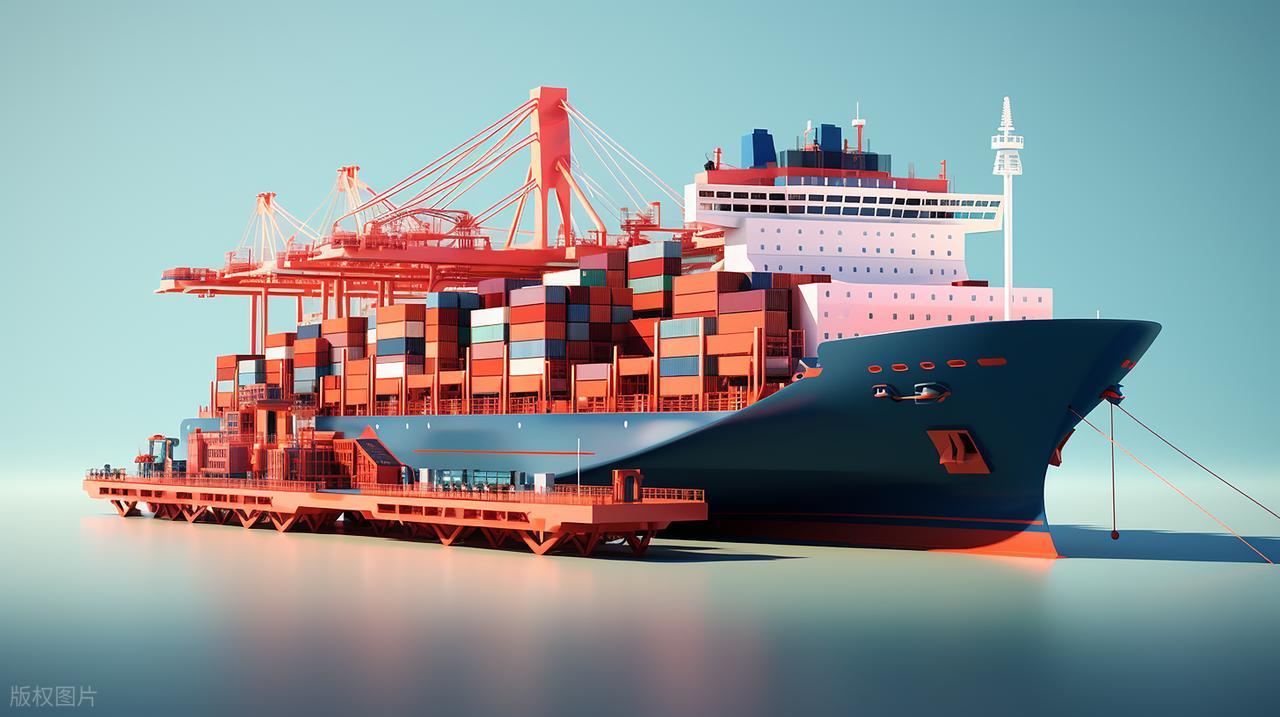
As global e-commerce platforms scale with unprecedented velocity—Temu’s GMV surged 137% YoY in 2025, SHEIN crossed $35 billion in annual revenue, and TikTok Shop expanded into 18 new markets—the underlying logistics infrastructure has undergone a tectonic shift. No longer a cost center relegated to back-office operations, cross-border logistics is now the strategic core of supply chain resilience, customer experience, and margin sustainability. The 2026 landscape reveals a decisive fragmentation into three distinct service archetypes: infrastructure-heavy ‘carriers’ that own physical assets from freighters to fulfillment centers; digital-first ‘specialists’ optimizing narrow corridors with AI-driven visibility and automation; and ecosystem ‘enablers’ delivering mission-critical ancillary services—from AI-powered customs clearance to jurisdiction-specific legal defense. This triad reflects not just business model evolution but a fundamental redefinition of competitive advantage in global trade.
The Rise of the Infrastructure Titan: When Logistics Becomes Public Utility
In 2026, the line between logistics provider and infrastructure operator has all but vanished. Leading players no longer broker capacity—they are the capacity. Take Longteng Group (Zongteng), China’s most capitalized cross-border logistics unicorn. With four Boeing B777F freighters in active service and 230+万平方米 (2.48 million sq ft) of owned overseas warehouse space across North America, Europe, and Southeast Asia, Longteng operates at a scale previously reserved for national postal systems or legacy integrators like DHL. Its acquisition of UNIUNI (US last-mile) and GOFO (European delivery network) enabled end-to-end control over 92% of its FBA-bound shipments—a level of vertical integration that slashes average transit time by 2.3 days versus traditional forwarder models. Crucially, this isn’t speculative asset accumulation: Longteng’s infrastructure directly supports platform-level SLAs. For Temu sellers, Longteng guarantees 98.7% on-time-in-full (OTIF) performance to US warehouses—even during Q4 peak, when industry-wide delays spiked by 37%.
This capital intensity signals a structural barrier to entry. Acquiring and operating a single B777F costs $220–$260 million; building compliant, tech-enabled warehouse space in Southern California averages $280–$350 per sq ft. As a result, only two firms—Longteng and a newly consolidated joint venture between SF Express and J&T Express—now operate dedicated trans-Pacific air cargo fleets. The implication is profound: for high-volume sellers (>5,000 SKUs, $10M+ annual GMV), partnering with an infrastructure titan isn’t about convenience—it’s about de-risking sovereignty. When ocean port congestion spikes or geopolitical tariffs disrupt routing, these players reroute via owned aircraft or inland rail hubs—decisions made in hours, not weeks.
Digital Specialists: Precision Engineering for High-Velocity Corridors
While titans build highways, digital specialists engineer hyper-efficient lanes. These firms thrive not on scale, but on domain specificity—deep mastery of one corridor, one platform, or one regulatory regime, amplified by proprietary software. Jiufang Tongxun (JFTX) exemplifies this archetype. With $220 million in 2023 revenue and 18 domestic and 8 overseas offices, JFTX doesn’t chase global coverage. Instead, it owns the Amazon FBA headhaul ecosystem: as a certified SPN, SEND, and ShipTrack carrier, it integrates directly into Seller Central’s shipping workflows, enabling real-time rate shopping, automated label generation, and predictive delay alerts. Its self-developed TMS processes over 1.2 million shipment records daily, reducing manual data entry errors by 89% versus legacy forwarders.
Similarly, Lianyu Logistics dominates the US-focused segment—not through volume, but through “4S” certification (SPN, SEND, ShipTrack, TSPN), the highest tier of Amazon carrier validation. Its US-centric model yields tangible benefits: 42% faster customs release times for US-bound parcels due to pre-vetted CBP partnerships, and 17% lower detention fees at West Coast ports via AI-optimized truck appointment scheduling. Meanwhile, Suma Logistics carved out dominance in Australia by engineering a 1kg-minimum LCL service priced at $6.11/kg—28% below market average—by co-loading with Chinese textile exporters and leveraging bonded warehousing in Sydney. This precision targeting means digital specialists deliver 2.1x higher ROI on logistics spend for sellers whose business is concentrated in one geography or platform.
Ecosystem Enablers: The Invisible Architecture of Trust
Beneath the visible layers of transport and storage lies a critical, often overlooked stratum: the ecosystem enablers. These are not movers of goods—but guardians of compliance, liquidity, and legal continuity. In 2026, their strategic value has skyrocketed. Consider Qiancheng Interconnect, whose Customs Elf AI platform reduced client customs delays by 35%+ in 2025. By ingesting 12 years of CBP rulings, tariff classifications, and historical seizure patterns, the system predicts classification risk with 94.2% accuracy and auto-generates compliant entry documentation—cutting manual review time from 45 minutes to under 90 seconds per shipment. For sellers facing 3–5% seizure rates on electronics or cosmetics, this translates to $180K–$420K in annual duty recovery.
Equally vital are risk-mitigation partners. CaiBao Network (CBN), a logistics insurance SaaS platform, now serves 14,200+ sellers with dynamic cargo insurance policies priced in real time based on route, commodity, and carrier reliability scores. Its API integrates directly with Shopify and BigCommerce, allowing sellers to offer insured shipping at checkout—boosting AOV by 11.3% in A/B tests. On the legal front, Daxin Law Firm resolved 217 US IP infringement lawsuits for clients in 2025 alone, leveraging deep expertise in Section 337 investigations and Amazon Brand Registry enforcement. Their average settlement cost was $8,400—versus $62,000+ for sellers navigating litigation without specialist counsel. These enablers don’t move boxes—but they prevent catastrophic financial and reputational loss.
Building Your Logistics Resource Pool: A Strategic Framework for 2026
Gone are the days of signing a single master service agreement. Today’s winning strategy is resource pooling: deliberately curating a portfolio of providers aligned to specific operational needs. Our analysis of 16 leading firms reveals four decisive selection criteria:
- Market Geography: For US East Coast sellers, EKU Warehouse (New Jersey-based, 12-hour delivery radius to NYC metro) cuts tail-end delivery time by 38% versus national 3PLs. For Australian sellers, Suma’s direct FCL-to-Amazon warehouse service eliminates double handling and reduces landed cost by 19%.
- Product Profile: Heavy/bulky items (>30kg)? Yinghe International offers dedicated heavy-lift sea-air solutions with no dimensional weight surcharges. High-value electronics? Pair JFTX’s secure FBA lanes with CBN’s all-risk cargo insurance.
- Platform Dependence: Amazon-centric sellers gain maximum leverage with 4S-certified carriers (Lianyu, JFTX). TikTok/Temu semi-managed sellers benefit from Xiao Fei Xiang’s rapid-replenishment micro-warehouses (2-hour restock SLA) near Shenzhen OEM clusters.
- Growth Stage: Startups (<$500K GMV) should prioritize Milestone International—its $500/m³ LCL rate and 100+ regional专线 provide flexibility without long-term contracts. Mature sellers ($5M+ GMV) require Longteng’s infrastructure-grade SLAs and integrated tax compliance modules.
Crucially, resource pooling enables dynamic load balancing. During Black Friday, sellers can shift 40% of volume to Longteng’s air fleet while keeping 60% on JFTX’s ocean-plus-rail routes—maintaining cost discipline without sacrificing speed. In Q1, when Amazon inventory limits tighten, they pivot to EKU’s rapid FBA replenishment cycles. This agility is the new benchmark for supply chain maturity.
Conclusion: From Cost Center to Competitive Moat
The 2026 cross-border logistics landscape confirms a pivotal truth: logistics is no longer a supporting actor—it is the central protagonist in global e-commerce strategy. Infrastructure titans provide the bedrock of reliability; digital specialists deliver surgical efficiency; ecosystem enablers ensure systemic trust. Sellers who treat logistics as a tactical procurement decision will struggle with margin erosion, stockouts, and compliance penalties. Those who architect a diversified, purpose-built resource pool transform logistics into a scalable, defensible competitive moat. As global trade friction intensifies—from US-China tariff escalations to EU’s new EUDR due diligence mandates—the ability to rapidly reconfigure logistics networks will separate market leaders from laggards. The era of the monolithic freight forwarder is over. Welcome to the age of the orchestrated logistics ecosystem.
Source: WL123 Cross-Border Logistics Navigation Platform, “2026 Cross-Border Logistics Service Provider Review: Building Your Logistics Resource Pool,” published March 2026. Available at https://www.wl123.com/wu-liu-wiki/ping-tai-jie-shao/13767.html