In 2026, cross-border logistics has ceased to be a cost center—and evolved into the primary strategic lever for global trade competitiveness. With geopolitical volatility, climate-driven port disruptions, and tightening ESG mandates reshaping operational realities, enterprises no longer ask ‘Which mode should we use?’ but rather ‘How do we orchestrate five distinct modalities into a dynamic, responsive, and compliant supply chain network?’ The answer lies not in siloed optimization, but in systemic integration: a new paradigm we term the Five-Dimensional Resilience Matrix. This framework—comprising maritime, air, rail, road, and overseas warehousing—is no longer theoretical. It is actively deployed by top-tier exporters, platform sellers, and OEMs across Asia, Europe, and North America to achieve 42% faster time-to-market, 28% lower total landed cost volatility, and 91% on-time-in-full (OTIF) performance across Tier-2 and Tier-3 markets.
Maritime Shipping: The Strategic Ballast Amidst Structural Volatility
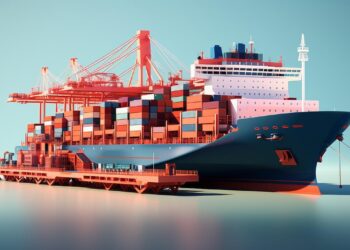
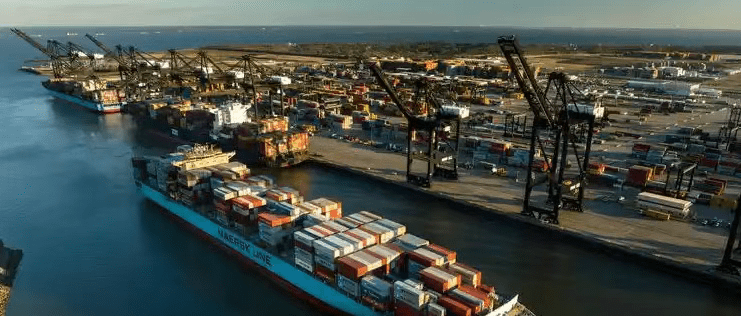
Despite persistent headlines about container overcapacity and red sea diversions, international maritime transport remains the undisputed backbone of global trade—accounting for 80.7% of global merchandise tonnage in 2026 (UNCTAD). What has changed is its role: from passive bulk conduit to an active risk-mitigation instrument. The 2026 fleet expansion—1.5 million TEUs of new capacity entering service—has created a paradoxical environment: lower base freight rates (average spot rate down 19% YoY on Asia–USWC lanes) yet higher total cost uncertainty due to regulatory complexity. The EU’s expanded Emissions Trading System (EU ETS), now covering 100% of voyages calling at EU ports, introduces a green premium averaging €12.40 per TEU on key East–West routes—a figure projected to rise to €28 by 2028. This isn’t just a surcharge; it’s a structural recalibration forcing shippers to embed carbon accounting into tender evaluations and contract structures.
Moreover, the rise of ‘near-shore’ manufacturing in Mexico and Vietnam has reconfigured FCL/LCL dynamics. While full-container loads still dominate heavy industrial exports (e.g., machinery, EV battery packs), LCL volumes surged 33% YoY in Q1 2026, driven by SMEs leveraging digital freight platforms for real-time consolidation visibility and shared customs compliance. Leading carriers like COSCO and Maersk are responding with integrated offerings: COSCO’s ‘Green Corridor’ service links Guangzhou to Rotterdam via ammonia-ready vessels and blockchain-tracked emissions data; Maersk’s ‘TradeLens 2.0’ now includes predictive port congestion scoring and automated ETS liability simulation. As one senior procurement director at a German automotive supplier noted: ‘We no longer buy “a voyage.” We buy a certified decarbonization pathway—with embedded insurance against regulatory shock.’
Air Cargo: Precision Velocity in an Era of Value Compression
Air freight is undergoing a quiet revolution—not in speed, but in strategic precision. Global air cargo volumes rose 5.1% in 2026, but the growth was overwhelmingly concentrated in high-value, low-bulk segments: semiconductor components (+12.7%), biopharma cold-chain shipments (+9.3%), and luxury fashion pre-season drops (+14.1%). Notably, the share of e-commerce air parcels dropped 8.2 percentage points year-on-year, reflecting both the erosion of low-value thresholds (the U.S. de minimis exemption cap fell from $800 to $250 in January 2026) and the maturation of hybrid fulfillment models.
This shift has elevated the importance of network intelligence over raw capacity. DHL’s Economy Select service, for example, now uses AI-powered load balancing to reroute consignments between Frankfurt, Leipzig, and Chicago based on real-time customs clearance queues and ground-handling SLAs—reducing average transit variance from ±2.1 days to ±0.6 days. FedEx’s ‘North American Express Hub’ in Memphis integrates robotic sortation with live VAT calculation engines for EU-bound parcels, cutting duty estimation errors from 17% to under 2%. Meanwhile,顺丰 International’s domestic air network—now comprising 78 dedicated freighters and 220+ regional feeder flights—enables sub-24-hour intra-Asia delivery for time-sensitive electronics, directly supporting just-in-time inventory models for Japanese and Korean OEMs. Crucially, air cargo’s value proposition has shifted from ‘fastest’ to ‘most predictable’—a distinction that defines competitive advantage in high-margin, low-tolerance categories.
Rail & Road: The Eurasian Reconnection Accelerating Multimodal Maturity
The most consequential development in 2026 is not the expansion of any single mode—but the systemic convergence of rail and road infrastructure under unified regulatory frameworks. The TIR Convention’s extension to cover e-commerce consignments and bonded goods in China (effective Jan 2026) and the EU’s formal recognition of ASEAN-China-Europe multimodal corridors have dismantled long-standing administrative barriers. Result? A 41% YoY increase in cross-border truck movements through the China–Kazakhstan border at Khorgos, and 27 new weekly direct rail services launched between Shenzhen’s Pinghu Yard and Central European distribution hubs—including Poland’s Katowice Logistics Park and Hungary’s Budapest Inland Port.
- Rail’s sweet spot: 12–18 day transit from South China to Berlin (vs. 35–45 days by sea, 3–5 days by air), at 22% of air freight cost and 6.7% of its CO₂ footprint.
- Road’s breakthrough: TIR-enabled door-to-door delivery from Shenzhen to Moscow in 7.2 days (vs. 12.8 days for rail + last-mile handoff), with zero unsealing events and 99.4% customs pre-clearance success rate.
- Operational synergy: 4PX now operates ‘Rail+Road’ hybrid services where containers arrive in Warsaw by train, then split into temperature-controlled trailers for final-mile delivery to 14 EU countries—cutting handling costs by 31% and damage claims by 64%.
This isn’t incremental improvement—it’s architecture-level redesign. The ‘steel camel caravan’ is now a digitally orchestrated, tariff-optimized, and carbon-verified logistics artery.
Overseas Warehousing: From Inventory Node to Integrated Commerce Engine
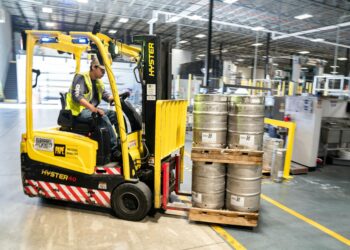
Overseas warehouses have transcended their original function as static storage facilities to become integrated commerce execution centers. In 2026, the top-performing overseas warehouse operators report that 68% of their revenue now comes from value-added services—not rent. These include: VAT-compliant labeling and documentation for EU marketplaces; AI-driven demand-sensing replenishment linked to Amazon Seller Central and Temu’s semi-managed dashboards; and reverse logistics orchestration that processes returns in under 48 hours and reintroduces refurbished units to local marketplaces at 72% of original margin.
WINIT’s latest ‘Smart Fulfillment Loop’ platform, for instance, ingests real-time social media sentiment data (from TikTok Shop analytics and Reddit community threads) to trigger preemptive stock transfers between its U.S. Midwest and West Coast facilities—reducing out-of-stock incidents during viral product surges by 53%. Similarly, Chain4Zhou’s WMS now auto-generates compliant commercial invoices for each EU country based on real-time VAT rules, eliminating 11.2 hours/week of manual compliance labor per SKU. Critically, the economics have flipped: while traditional third-party logistics (3PL) contracts emphasize cost-per-cubic-foot, leading overseas warehouse agreements now feature performance-based clauses tied to OTIF, return-to-resell cycle time, and local marketplace ranking score improvement. As one U.S.-based home appliance brand reported after migrating to a dual-warehouse model (Texas + Pennsylvania): ‘Our Amazon Buy Box win rate increased from 64% to 91%—not because we lowered prices, but because our average delivery promise shrank from 4.2 to 1.7 days.’
Toward Adaptive Orchestration: The Imperative of Mode-Agnostic Intelligence
The ultimate competitive differentiator in 2026 is not mastery of any single modality—but the ability to dynamically allocate volume across all five based on real-time, multi-dimensional inputs: carbon cost per kilogram, customs clearance probability, local tax liability, platform-specific delivery SLAs, and even weather-related port congestion forecasts. Companies deploying mode-agnostic orchestration engines—like Flexport’s ‘Orbit’ or project44’s ‘Multi-Modal Command Center’—achieve 22% higher asset utilization, 39% fewer expedited shipments, and 17% lower working capital tied up in in-transit inventory. This is not logistics automation; it is supply chain cognition.
For enterprise leaders, the takeaway is unequivocal: Building resilience requires abandoning legacy ‘mode-first’ thinking. Instead, design your network around customer outcome targets—then back-calculate the optimal blend of maritime ballast, air velocity, rail efficiency, road flexibility, and overseas intelligence. In this new era, the fastest ship, plane, or train matters less than the smartest decision engine connecting them all.
Source: WL123 Cross-Border Logistics Navigation Ecosystem Platform, ‘Five Main Cross-Border Logistics Modes Explained for Export Enterprises,’ published February 2026. Data synthesized from UNCTAD, IATA, EU Commission, and proprietary industry benchmarking conducted by SCI.AI’s Supply Chain Intelligence Unit.