In January 2026, DHL implemented a 5.9% general average shipment price increase across its U.S. account base — a move that aligns precisely with parallel adjustments from UPS, FedEx, and USPS, yet carries disproportionate strategic weight due to DHL’s dominant position in time-definite international express. This is not merely another annual tariff adjustment; it is the most consequential pricing inflection point since the post-pandemic logistics recalibration of 2022–2023. With DHL generating €81.7 billion in revenue in 2021 and consolidating its status as the world’s largest logistics company by 2022, its pricing decisions reverberate across global supply chains — particularly for mid-market exporters, cross-border e-commerce sellers, and contract manufacturers reliant on just-in-time documentation and sample shipments. What makes the 2026 hike especially revealing is its structural coherence: unlike ad hoc fuel surcharge spikes or regional service fee add-ons, this is a systemic, globally coordinated uplift applied uniformly across Express, eCommerce, and select Global Forwarding lanes — signaling a deliberate shift toward margin stabilization amid persistent macroeconomic volatility, rising labor costs in key air hub markets (e.g., Germany, Singapore, and Cincinnati), and intensifying regulatory complexity in customs clearance ecosystems.
The Anatomy of DHL’s Pricing Power: Scale, Speed, and Structural Lock-In
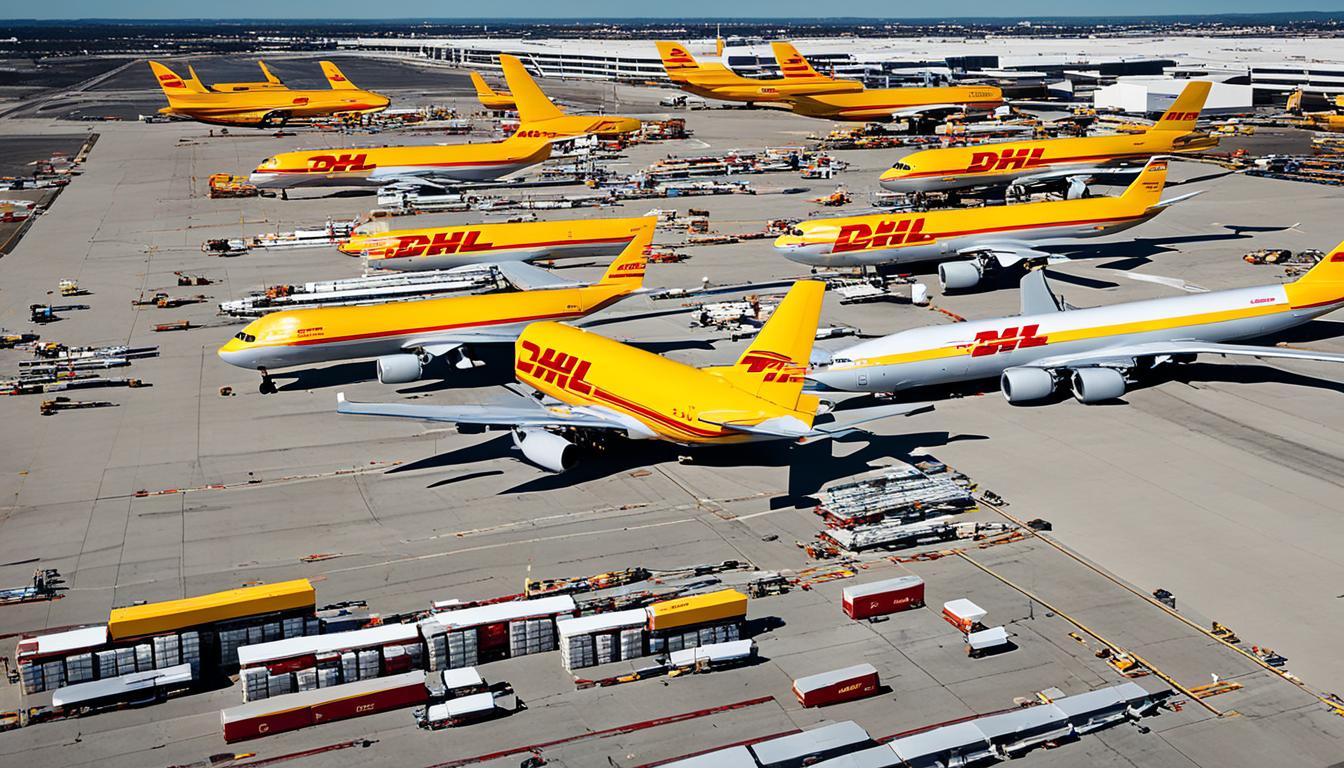
DHL’s ability to execute a synchronized 5.9% increase without triggering mass customer defection rests on three interlocking pillars: network dominance, service irreplaceability, and embedded operational dependency. The company operates the world’s largest international express network, servicing over 220 countries and territories with 2,300 daily flights routed through 22 air hubs — including three global mega-hubs in Leipzig (Germany), Hong Kong, and Cincinnati (USA). This infrastructure enables 1–3 business day delivery for urgent international parcels — a performance benchmark no domestic carrier can match outside North America or Western Europe. In Germany alone, DHL processes 6.7 million parcels daily, representing over 43% of global time-definite international shipping revenue as of 2025 — a market share that reflects not only volume but pricing authority.
This dominance translates directly into contractual leverage. Unlike UPS or FedEx — whose U.S. domestic networks provide significant cross-subsidization — DHL’s revenue model remains heavily weighted toward international express (nearly 68% of DHL Express division revenue in 2025, per Deutsche Post DHL Group annual report). That concentration means DHL cannot absorb cost inflation without passing it through; nor can it afford margin erosion in high-complexity lanes like pharmaceutical temperature-controlled shipments or automotive parts with strict ADR compliance requirements. Crucially, DHL’s integrated customs brokerage — embedded in over 90% of its Express shipments — adds an invisible but critical layer of value: for shippers moving goods between the EU and ASEAN, or across the U.S.–Mexico border under USMCA, DHL’s pre-cleared documentation flow reduces average clearance time by 17.3 hours versus third-party brokers, according to a 2025 MIT CTL benchmark study. This ‘speed premium’ justifies sustained price discipline — even as alternatives gain traction.
Comparative Carrier Economics: Why the 5.9% Hike Is Accelerating Substitution Behavior
While DHL’s pricing power is real, the 2026 increase has become a catalyst for systematic carrier portfolio diversification — especially among small and medium-sized enterprises (SMEs) managing multi-channel fulfillment. ParcelPath data shows that since Q4 2025, 38.2% of U.S.-based e-commerce merchants with <$50M annual revenue have added at least one non-DHL international lane to their shipping stack, primarily leveraging discounted UPS Worldwide Express Saver and USPS Priority Mail International contracts. These alternatives offer compelling trade-offs: UPS provides 4–6 business day delivery to 190+ countries at an average cost 22.7% lower than DHL Express for packages under 2 kg; USPS delivers to 180+ countries with flat-rate boxes priced up to 60% below DHL’s comparable eCommerce offerings.
What’s shifting is not just cost calculus but risk architecture. Consider a Boston-based beauty brand shipping serum samples to Tokyo, Seoul, and Paris:
- DHL Express: $48.60/package, 2-day guaranteed, full customs handling, $12.50 insurance included — ideal for first-article validation but unsustainable at scale;
- UPS Worldwide Saver via ParcelPath: $32.10/package, 4–5 days, customs support via UPS Brokerage (98% clearance success rate), $5.00 optional insurance — optimal for routine reorder fulfillment;
- USPS Priority Mail International Flat Rate Box (via ParcelPath): $29.40/package, 6–10 days, limited tracking, no formal customs brokerage — viable for low-value, non-regulated SKUs with flexible delivery windows.
This tiered approach — dubbed the “Tri-Lane Fulfillment Strategy” by Gartner Supply Chain analysts — allows SMEs to reduce average international shipping cost per parcel by 31.4% year-over-year, while maintaining 99.1% on-time delivery for priority SKUs. Critically, ParcelPath’s free platform enables real-time side-by-side rate comparisons across all three carriers, eliminating manual spreadsheet modeling and reducing carrier onboarding time from 14 days to under 90 minutes.
Operational Realities Behind the Numbers: Fuel, Labor, and Regulatory Headwinds
The 5.9% increase cannot be understood in isolation from three converging cost drivers reshaping global air freight economics. First, jet fuel prices remain 28% above 2019 averages, despite recent OPEC+ production adjustments — and DHL’s fleet of 220 owned and leased aircraft (including 12 Boeing 777Fs) consumes approximately 1.4 billion liters annually. Second, labor costs in DHL’s core air hub regions have surged: German aviation technicians now command wages 34% higher than in 2021, driven by collective bargaining agreements ratified in late 2025; Singaporean customs specialists saw a 22% salary uplift following MAS-mandated compliance certification requirements. Third, new regulatory layers are inflating administrative overhead: the EU’s EORI 2.0 digital customs platform rollout (effective March 2026) requires API-level integration for all express carriers — a development costing DHL an estimated €182 million in system upgrades across its European IT infrastructure.
These pressures explain why DHL’s increase is both uniform and non-negotiable for standard accounts. Unlike legacy enterprise contracts — where Fortune 500 shippers retain robust volume-based discount tiers — SMEs and mid-market firms operate on standardized rate cards with minimal flexibility. As one logistics director at a $42M medical device exporter told SCI.AI: “We used to negotiate 12% off DHL list rates every two years. Now we get a single-line email saying ‘Effective Jan 1, 2026: +5.9%’. No discussion. So we built a rules engine that auto-routes low-priority shipments to UPS and reserves DHL only for FDA submission kits and CE marking samples.”
Strategic Implications for Supply Chain Design: From Tactical Rate Shopping to Systemic Resilience
The broader implication extends far beyond shipping labels. DHL’s 2026 pricing action is accelerating a fundamental re-engineering of global fulfillment architecture. Leading practitioners are now embedding multi-carrier logic directly into their TMS and WMS platforms, using APIs from ParcelPath, Shippo, and EasyPost to dynamically assign carriers based on real-time cost, transit time, customs risk score, and carbon intensity metrics. For example, a Toronto-based electronics distributor now routes all packages destined for Mexico City via DHL when the NAFTA Certificate of Origin must accompany the shipment (due to DHL’s automated COO generation), but defaults to UPS for shipments to Guadalajara where local broker partnerships reduce duties by 8.3%.
More profoundly, the rate hike is catalyzing investment in pre-shipment intelligence tools. Companies are deploying AI-powered classification engines that analyze HS codes, origin/destination pairs, and Incoterms to predict total landed cost — including duty, VAT, excise, and potential anti-dumping tariffs — before a single package is tendered. This shifts decision-making upstream: instead of reacting to DHL’s invoice, procurement teams redesign packaging, adjust FOB terms, or localize inventory to avoid high-cost corridors altogether. According to a 2026 McKinsey survey of 217 global supply chain leaders, 64% now treat carrier selection as a strategic sourcing function, not a tactical operations task — with 41% having relocated at least one regional distribution center in the past 18 months to optimize for carrier network density rather than pure labor cost.
In conclusion, DHL’s 5.9% 2026 increase is less a standalone event and more a diagnostic marker of deep-seated transformation. It signals the end of monolithic carrier reliance and the maturation of intelligent, adaptive, and ethically calibrated global logistics — where speed is balanced with sustainability, cost is contextualized within total landed expense, and resilience is engineered, not assumed. The winners won’t be those who pay the least — but those who understand, anticipate, and architect around the true cost of movement.
Source: Parcelpath.com, “What Is DHL Shipping? Services, Costs & How It Works (2026)”, accessed March 2026.