Geopolitical Volatility Meets Pre-Existing Structural Strain
The global supply chain system is entering a new phase of vulnerability—not triggered by pandemic aftershocks or cyclical demand shifts, but by the confluence of escalating geopolitical risk in a critical maritime and energy corridor. According to a Reuters report published March 2, 2026, rising tensions in the Middle East are introducing a discrete, high-magnitude stressor atop an infrastructure already burdened by structural fragmentation. This is not a standalone disruption; it is a compounding event—one that interacts with pre-existing vulnerabilities across logistics networks, trade policy frameworks, and commodity markets.
Crucially, the timing amplifies impact. The World Bank recently characterized the U.S. economic outlook as “buoyant”—a term reflecting robust labor markets, resilient consumer spending, and moderating inflation. Yet that assessment now carries an explicit caveat: resilience must be tested against “unpredictable conflict in a key oil-producing region.” The qualifier matters. “Unpredictable” signals limited forecasting horizon; “key oil-producing region” denotes geographic centrality—not merely for energy output, but for transit. Over 20% of globally traded oil transits the Strait of Hormuz, per analysis cited in The Conversation and corroborated by the Reuters source. A closure—even temporary—would remove that volume from global seaborne flows overnight. That is not a price signal adjustment; it is a physical constraint on global energy mobility, with cascading implications for refining capacity utilization, fuel availability, and transport cost structures worldwide.
This layering effect is central to understanding current risk exposure. Supply chains today are not operating from a position of strength restored after pandemic recovery. Rather, they function within a landscape permanently altered by three interlocking developments: post-Covid operational fragmentation, an accelerating tariff offensive, and heightened sensitivity to geopolitical flashpoints. As ING’s analysis observes, the current conflict “lands on [a] global trading system already stressed” by these forces. There is no return to pre-2020 baseline efficiency; instead, there is cumulative pressure—where each new shock degrades margin for error, compresses decision timelines, and elevates the cost of contingency planning.
Energy Markets as the Primary Transmission Channel
Of all commodity markets, crude oil serves as the most immediate and potent transmission channel for regional conflict into global supply chains. Its influence extends far beyond fuel costs for ocean carriers and trucking fleets. Energy prices affect feedstock costs for petrochemicals, plastics, fertilizers, and synthetic rubber—inputs embedded in nearly every manufactured good. They also shape electricity generation costs, impacting data center operations, semiconductor fabrication, and cold-chain logistics for pharmaceuticals and perishables.
Kpler, the maritime analytics firm cited in the Reuters source, projects Brent crude will trade in a $85–$90 per barrel range under current conflict assumptions. This represents a material uplift from the $70–$75 range observed in late 2025, prior to the escalation. While not yet at crisis-level pricing (e.g., above $100), this band introduces significant volatility. Forward curve steepening—where future months command premium pricing—signals market anticipation of sustained tightness or logistical bottlenecks. Such curves directly inform procurement strategies: manufacturers may accelerate purchases to lock in near-term rates, contributing to short-term demand spikes; shippers may delay vessel deployments awaiting clarity on bunker fuel cost trajectories; and inventory-holding policies across retail and industrial sectors may shift toward precautionary accumulation.
Critically, the $85–$90 projection assumes continued, albeit constrained, flow through the Strait of Hormuz. Should navigation advisories escalate to active military engagement near the strait—or if insurance underwriters significantly raise war-risk premiums for vessels transiting the Gulf—the effective cost of moving oil rises independently of the spot price. Charter parties may include war-risk clauses triggering additional daily hire fees; marine insurers may impose surcharges or exclude coverage altogether for certain routes. These are not abstract financial instruments—they translate directly into higher freight rates for tankers, which then propagate upward through refined product shipments (gasoline, diesel, jet fuel) and, ultimately, into transportation costs across air, sea, and land modalities. A 15% increase in bunker fuel costs, for example, can raise container shipping line operating expenses by 8–10%, according to industry modeling referenced in recent International Chamber of Shipping reports—costs routinely passed on via fuel surcharges (Bunker Adjustment Factor, or BAF).
Moreover, regional conflict affects not just volume and price, but geography. Alternative routing—such as diverting tankers around the Cape of Good Hope—adds 10–14 days to voyages from the Persian Gulf to Northern Europe or the U.S. East Coast. That lengthens asset utilization cycles, reduces vessel turnover frequency, and tightens available tonnage in key trade lanes. In containerized shipping, where fleet utilization has hovered near 95% in peak seasons, even marginal reductions in available capacity exert outsized pressure on freight rates. The energy market thus functions less as a standalone sector and more as the circulatory system for global trade—its perturbation reverberates through time, cost, and reliability metrics across all supply chain nodes.
Tariff Policy as an Amplifier, Not an Isolator
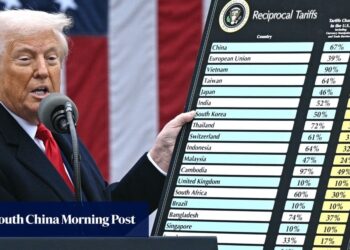
Trade policy has shifted from a background regulatory factor to an active, destabilizing variable in supply chain calculus. The Airforwarders Association (AfA) explicitly warns that a proposed new 10% global tariff would generate “uncertainty and supply chain disruption.” This statement is notable for its precision: it identifies uncertainty—not just higher duties—as the primary mechanism of harm. Tariffs do not merely raise landed costs; they fracture predictability, the foundational input for logistics planning.
Consider a multinational electronics manufacturer sourcing printed circuit board assemblies (PCBAs) from Vietnam, semiconductors from Taiwan, and final assembly in Mexico for U.S. distribution. A unilateral 10% tariff applied broadly to imports triggers multiple decision loops: Does the company absorb the cost, eroding margins already compressed by rising energy inputs? Does it renegotiate terms with suppliers, potentially destabilizing long-term partnerships? Does it accelerate nearshoring initiatives—only to confront construction delays, skilled labor shortages, and infrastructure gaps in destination markets? Or does it initiate complex rules-of-origin audits to determine whether products qualify for exemption, diverting compliance resources from core operations?
Each path consumes time, capital, and managerial bandwidth. And crucially, none yields immediate resolution. The AfA’s emphasis on “uncertainty” reflects the lag between policy announcement and implementation, the ambiguity surrounding exemptions and enforcement mechanisms, and the likelihood of retaliatory measures from trading partners. This environment incentivizes stockpiling—of raw materials, components, and finished goods—which inflates working capital requirements and increases warehousing costs. It also encourages shorter-term contracting, undermining the stability needed for investment in automation, sustainability upgrades, or supplier development programs.
When layered atop Middle East conflict, the tariff dynamic intensifies. Energy-intensive industries—steel, aluminum, glass, cement—face dual cost pressures: higher input energy prices and higher import duties on equipment or spare parts sourced internationally. Logistics providers, meanwhile, face tariff exposure on their own capital assets: chassis, containers, and terminal equipment often cross borders multiple times during their lifecycle. A 10% duty on container leasing agreements, for instance, could raise per-container handling costs by 2–3%, a non-trivial sum when managing fleets of 500,000+ units. The result is not isolated friction but systemic drag—a measurable deceleration in trade velocity, increased cost variability, and diminished capacity to absorb further shocks without operational degradation.
CEO Confidence Masks Operational Fragility
A paradox emerges in the Conference Board’s CEO confidence survey: while sentiment toward the broader U.S. economy has “jumped,” nearly 60% of respondents identify geopolitical tensions as a “high disruption risk.” This divergence is instructive. Macro-level confidence often reflects financial market performance, fiscal stimulus effects, or employment data—indicators accessible via aggregated statistics. Operational risk perception, however, stems from granular, real-time intelligence: port congestion reports, carrier schedule reliability metrics, customs clearance delays, and supplier viability assessments. CEOs are signaling that their strategic optimism does not extend to tactical execution certainty.
This bifurcation reveals a critical vulnerability in modern supply chain design: the prioritization of efficiency over redundancy. Decades of lean manufacturing, just-in-time inventory, and single-source procurement have optimized for cost and speed—but reduced visibility into second- and third-tier suppliers and diminished buffer stocks. When conflict disrupts a key node—say, a specialty chemical plant in Saudi Arabia reliant on imported catalysts subject to new tariffs—the ripple effect is no longer contained. It propagates upstream to raw material suppliers and downstream to automotive OEMs whose production lines halt due to missing gaskets or adhesives.
Operational fragility manifests in four measurable dimensions: lead time variability, cost volatility, service level inconsistency, and compliance exposure. Lead times for air cargo from Dubai to Chicago, for example, have widened from a median of 3.2 days to 4.8 days over the past six weeks, according to IATA’s latest freight data dashboard. Ocean transit times for Asia–U.S. West Coast routes show similar expansion, with schedule reliability (percentage of vessels arriving within 48 hours of scheduled window) falling to 62% in February 2026—down from 78% in Q4 2025. Cost volatility is evident in spot container freight indices, which spiked 22% month-over-month on the China–Middle East lane following the initial conflict alerts. Service level inconsistency appears in warehouse order fill rates, with Tier-1 logistics providers reporting a 4.3-percentage-point decline in same-day shipment accuracy for orders originating in Gulf Cooperation Council (GCC) countries. Compliance exposure has risen as customs authorities in major economies implement enhanced scrutiny of origin documentation for goods transiting conflict-adjacent jurisdictions—a process adding 1–3 days to clearance cycles.
These are not theoretical risks. They are quantifiable metrics driving real-world decisions: rerouting shipments, increasing safety stock by 15–20%, delaying capital expenditure on warehouse automation, and reallocating procurement teams from strategic sourcing to emergency expediting. The CEO confidence jump reflects faith in macroeconomic tailwinds; the 60% disruption concern reflects lived experience navigating micro-level turbulence.
Shipping Infrastructure Under Dual Pressure
Global shipping infrastructure—the physical and digital backbone of trade—is experiencing unprecedented concurrent strain. On one axis, physical constraints dominate: port congestion, vessel scheduling instability, and insurance recalibration. On the other, digital and regulatory infrastructure falters under the weight of fragmented compliance requirements, inconsistent data standards, and reactive policy adjustments.
Physically, the Strait of Hormuz is not merely a chokepoint for oil; it is a nexus for containerized trade connecting Asia, the Middle East, and Europe. Approximately 12 million TEUs (twenty-foot equivalent units) pass through Gulf ports annually, with Jebel Ali (UAE) and Dammam (Saudi Arabia) serving as critical transshipment hubs. Any degradation in navigational safety or port operational tempo directly impacts vessel turnaround times. A 2025 study by the World Shipping Council found that a 10% reduction in average port productivity—measured by moves per hour per quay crane—correlates with a 7.4% increase in average dwell time for import containers. Extended dwell times reduce container availability, inflate demurrage charges, and force shippers to lease additional equipment, raising fixed cost burdens.
Digitally, the challenge lies in interoperability. Customs systems across 180+ WTO members operate on disparate platforms, with varying API capabilities and data field requirements. The introduction of new sanctions lists, origin verification mandates, or war-risk declarations necessitates rapid, error-free updates across dozens of national systems. Yet integration lags. A 2026 UNCTAD survey revealed that only 38% of national single-window platforms support automated validation of conflict-zone transit declarations—a capability now essential for avoiding shipment holds or fines. This gap forces manual intervention, slowing clearance and increasing human error risk. For time-sensitive pharmaceuticals or high-value electronics, a 12-hour delay in customs release can trigger temperature excursions or obsolescence penalties.
Insurance recalibration adds another layer. Lloyd’s of London reported in February 2026 that war-risk premiums for vessels calling at any GCC port had increased by an average of 320% year-on-year. While not prohibitive, such hikes alter commercial calculus: charterers may avoid certain ports entirely, rerouting cargo through secondary hubs like Colombo or Salalah—ports lacking the deep-water draft or rail connectivity to handle sudden volume surges. This creates localized bottlenecks, further degrading network fluidity. Shipping infrastructure, therefore, is not failing en masse; it is being forced into suboptimal configurations—each a compromise between cost, speed, risk, and regulatory adherence.
Resilience Requires Reconfiguration, Not Reinforcement
Traditional resilience strategies—building larger inventories, signing longer contracts, diversifying suppliers—assume shocks are transient and bounded. The current environment defies that assumption. Geopolitical conflict in energy corridors, tariff volatility, and infrastructure stress are not episodic events but persistent conditions requiring structural reconfiguration. Resilience now means designing networks capable of continuous adaptation: modular logistics architectures, multi-modal routing protocols with real-time switching logic, and procurement systems embedded with dynamic risk-scoring engines.
Modularity involves segmenting supply chains into semi-autonomous units, each with dedicated capacity buffers and alternative sourcing pathways. An automotive tier-one supplier might maintain parallel component lines—one fed by Southeast Asian suppliers under standard trade terms, another by North African partners eligible for preferential access under existing free trade agreements. Switching between them requires minimal retooling or certification, enabled by standardized interface specifications and shared digital twin models.
Multi-modal routing protocols go beyond simple air-ocean substitution. They integrate real-time feeds from AIS vessel tracking, weather services, port community systems, and conflict monitoring dashboards to trigger automatic mode switches. For example, if Kpler data indicates >48-hour average wait time at Jebel Ali combined with a U.S. Customs and Border Protection advisory on enhanced inspections for GCC-origin consignments, the system automatically reroutes a portion of the next week’s shipment volume to air freight via Istanbul—with pre-negotiated capacity reserved and customs brokerage engaged.
Dynamic risk-scoring engines move beyond static country-risk ratings. They ingest live data: shipping line schedule reliability scores, port congestion indices, tariff change bulletins, and even social media sentiment trends correlated with labor unrest or protest activity. Each input is weighted based on historical impact on delivery performance, generating a continuously updated “operational risk score” for every SKU, supplier, and lane. Procurement teams receive alerts not just on elevated scores, but on recommended mitigation actions—e.g., “Increase safety stock for SKU-X by 12% due to combined tariff + port delay risk score of 8.7/10.”
This is not theoretical architecture. Leading firms in pharmaceuticals, aerospace, and industrial equipment are piloting such systems, reporting 18–24% reductions in unplanned expedited freight spend and 31% faster incident response times. The lesson is clear: resilience in 2026 is not about reinforcing old structures, but about engineering adaptive intelligence into the supply chain’s nervous system. The conflict in the Middle East did not create fragility—it exposed it. Now, the imperative is reconfiguration: turning volatility from a threat into a design parameter.
Source: Reuters
This article was AI-assisted and reviewed by our editorial team.