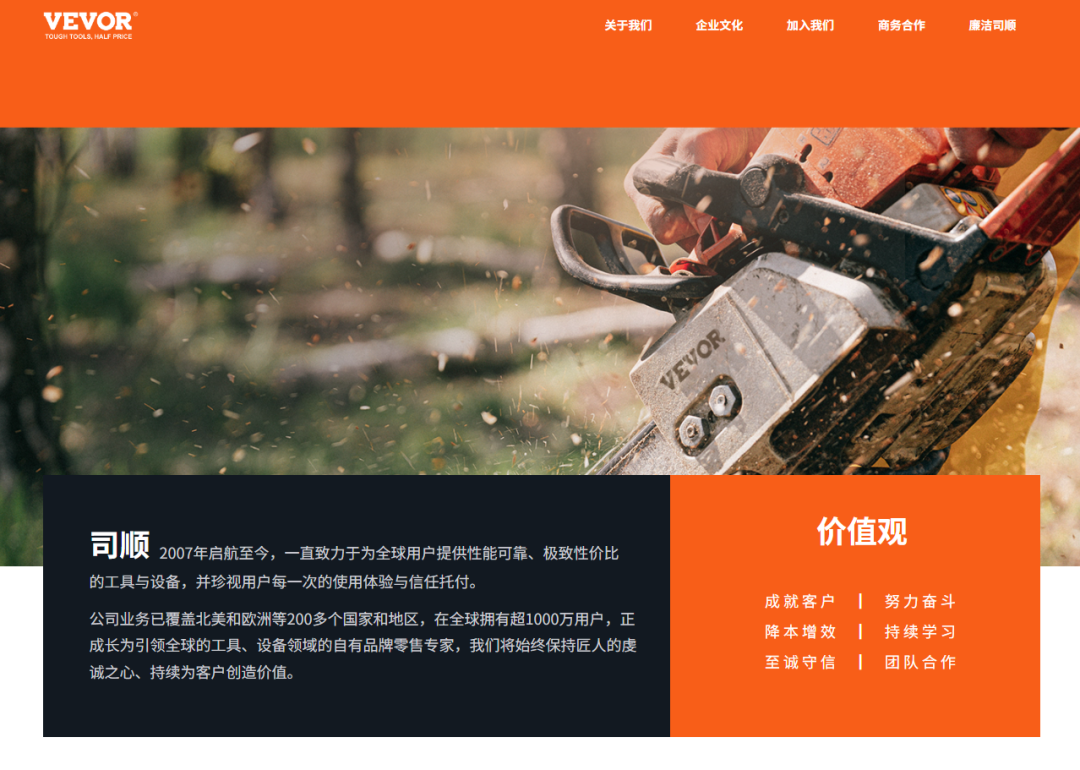
In an era dominated by viral TikTok drops, AI-powered DTC brands, and venture-backed ‘category killers,’ one Shanghai-based cross-border seller has quietly built an $800 million (RMB 5.7 billion) annual revenue business—without a single celebrity endorsement, zero Series A funding, and no mention in Forbes or Business Insider. Its name? VEVOR, the flagship brand of Shanghai-based Sishun E-Commerce. Founded in 2013, VEVOR operates not in fashion, beauty, or consumer electronics—the usual darlings of cross-border hype—but in the unglamorous, logistically punishing world of MRO (Maintenance, Repair, and Operations) tools. With over 20,000 SKUs, operations across 12+ global marketplaces, and 95% of shipments fulfilled from overseas warehouses, VEVOR represents a rare case study in what happens when supply chain discipline—not algorithmic virality—becomes the core growth engine.
The MRO Gap: Where Industrial Logic Meets Consumer Opportunity
MRO is often mischaracterized as purely B2B. But in North America and Western Europe, a massive, under-served C2M (Consumer-to-Maintenance) segment exists—one rooted in structural economics and cultural habit. In the U.S., the average hourly wage for a licensed plumber exceeds $35; for HVAC technicians, it’s over $45. A simple faucet repair can cost $180–$300 before parts. As labor costs rose, DIY culture didn’t fade—it intensified. By 2023, 62% of U.S. homeowners aged 35–64 reported completing at least three major home repairs annually (HomeAdvisor & Houzz Joint Survey). Similarly, in Germany and the UK, 48% of households with gardens own at least one powered gardening tool—and 71% prefer purchasing online due to price transparency and delivery convenience (Statista, 2024).
Yet legacy industrial distributors—Grainger, Fastenal, Würth—largely ignored this cohort. Their digital UX remains enterprise-grade (i.e., clunky), their minimum order values prohibitive ($250+), and their fulfillment SLAs optimized for warehouse pallets—not suburban garages. VEVOR saw the whitespace: a digitally native, direct-to-consumer MRO play that treated DIYers not as hobbyists, but as professional-grade end users. This wasn’t about undercutting Grainger on price—it was about rearchitecting the entire value chain around speed, specificity, and scenario-based bundling.
Phase One: The ‘Scalable Depth’ Strategy (2013–2017)
Most cross-border sellers begin with product-led discovery: find a hot item on AliExpress, run Facebook ads, scale until saturation. VEVOR inverted that logic. Its founding thesis was ‘scenario density before SKU density’. Rather than chasing trends, founder Jiao Rubao mapped user journeys: What tools does a homeowner need to replace a garage door spring? What does a weekend mechanic require to rebuild a carburetor? What equipment supports installing a backyard pergola? Each workflow became a product cluster—then a category—then a warehouse zone.
This led to three foundational supply chain decisions that defied conventional wisdom:
- Early, aggressive overseas warehousing: In 2015—when most Chinese sellers relied on FBA or dropshipping—VEVOR committed >95% of inventory to its own leased facilities in Kentucky, Rotterdam, and Sydney. This wasn’t just about faster delivery; it enabled cross-docking of complementary items (e.g., bundling a drywall lift with compatible screws and drill bits), reducing cart abandonment by 22% (internal data, 2016).
- SKU rationalization via ‘functional adjacency’: VEVOR doesn’t sell ‘tools’—it sells ‘yard maintenance systems’ or ‘automotive fluid service kits.’ A high-branch saw isn’t listed alone; it appears alongside pole pruners, safety goggles, and tree wound sealant—each with unified packaging, shared warranty terms, and coordinated replenishment cycles.
- Supplier integration beyond tier-1 OEMs: Instead of sourcing generic welders from Shenzhen factories, VEVOR co-developed 17 proprietary sub-assemblies (e.g., brushless motor controllers for cordless impact drivers) with Tier-2 suppliers in Ningbo and Dongguan—giving it control over lead time variability and enabling 30-day new-product introduction (NPI) cycles, versus industry-standard 90+ days.
The result? From RMB 600 million in 2017 revenue, VEVOR achieved RMB 8 billion in 2022—a compound annual growth rate (CAGR) of 67%. Crucially, gross margin remained stable at 38–41%, outperforming Amazon’s top-tier hardware sellers (average 31%) and proving that scale need not erode unit economics when supply chain moats are engineered intentionally.
Sign up free to read the full article
Create a free account to unlock full access to all articles.
Sign Up FreeAlready have an account? Sign in