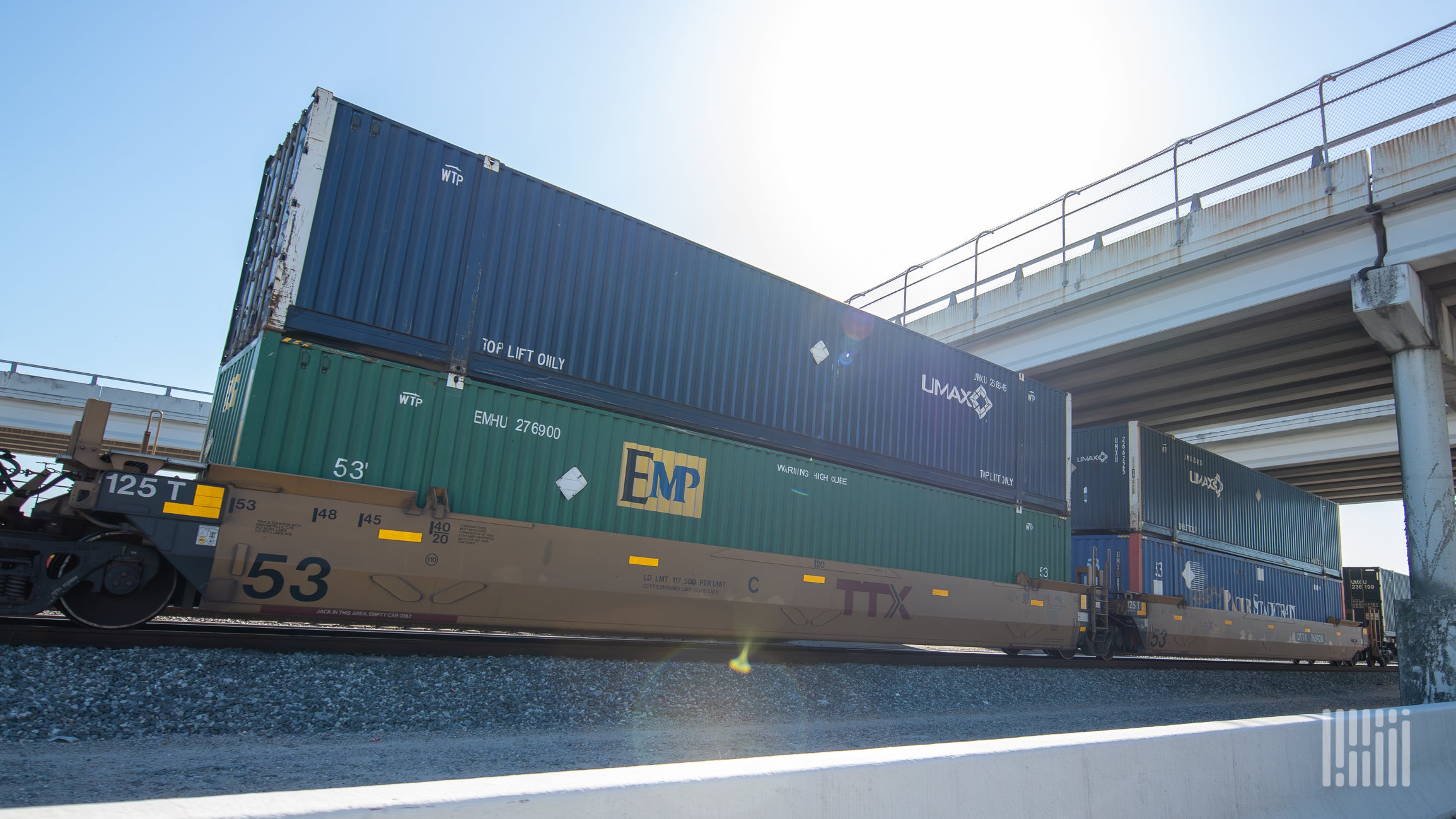
Multimodal demand is only 2% lower than the peak of COVID at the end of 2020, but spot rates are 42% lower than they were then. Has rail solved all its problems?
National and international multimodal loaded container volumes grew by 10% in 2023, while spot rates decreased by about 8%. This seems contradictory.
Typically, demand is closely tied to price changes for most goods. However, the domestic transportation market has not followed this pattern due to an oversupply of capacity in recent years.
This summer saw a surge in container imports approaching pandemic-era levels as we moved into autumn. This was the primary driver behind the growth in U.S. domestic freight demand.
During the pandemic, railroads were heavily criticized for their inability to handle record freight volumes from ports. The infrastructure around railway stations and ports bore most of the blame.
Fairly speaking, these volumes had never been seen before and no one could have predicted them. Rail companies were also incentivized to operate as leanly as possible to boost investor profitability—making them less adaptable.
Loss of Market Share
The historically high demand and limited infrastructure capacity led to extreme service failures, prompting shippers to shift a significant amount of cargo to the trucking market. Multimodal demand decreased by 13% from October 2020 to 2021, while trucking bids increased by about 2%.
To regain market share, railways had to invest in better infrastructure and containers to prepare for future opportunities. With a new round of imports entering the port market, this seems to be paying off.
By the end of August, loaded container volumes grew year-over-year by 13%, while trucking bids only increased by 2%. Loaded domestic containers grew by 10%, and smaller international sizes saw an increase of 16%.
Weakening Itself?
The growth in market share is positive for railways and multimodal providers overall, but it may not be as advantageous as it appears on the surface. They are transporting more goods but preventing disruptions in the trucking market, thereby keeping rates low.
The multimodal market depends on long-haul trucking markets—it helps soften bid markets by absorbing some of the most disruptive freight to increase multimodal prices.
Multimodal is primarily for long-distance transportation, with the largest U.S. shipping route being from Los Angeles to Chicago. This requires a single truck driver nearly four days to complete and at least an equal amount of time to return. Due to primary freight routes running west-to-east, it’s difficult to find enough cargo to profitably return to California.
For shippers, this is a short-term victory but with slightly improved long-term effects. Improvements in railway and port infrastructure are long-term efficiency gains that could help mitigate future market fluctuations, but the growth of multimodal market share is only a short-term mechanism for maintaining market softness.
The longer the long-haul trucking market remains oversupplied, the more capacity will exit the market. This will make it easier for long-haul trucking capacity to be affected by demand shocks in the future, thereby pushing up all rates.
About this Week’s Chart
This week’s chart from FreightWaves is an interesting data point selected from SONAR to describe the state of the freight market. One chart is chosen from thousands possible in SONAR, helping participants visualize the freight market in real-time. Every week, a market expert posts a chart with commentary on the homepage, and this week’s chart is stored on FreightWaves.com for future reference.
SONAR aggregates data from hundreds of sources, presenting it in charts and maps while providing commentary on real-time information relevant to freight market experts.
The FreightWaves Data Science and Product teams release new datasets weekly and enhance the customer experience.
To request a SONAR demo, click here.
Zach Strickland, FW Market Expert and Analyst
Zach Strickland, known as the “Sultan of SONAR,” updates market dynamics weekly. Zach is also one of FreightWaves’ market experts. With a degree in finance, Strickland started his career in banking before transitioning to transportation, taking on various roles including full truckload and less-than-truckload sectors. He has over 13 years of experience in the industry, focusing on data, pricing, and analysis.
Source: FreightWaves