Skip to content

Ocean · Supply Chain · Warehousing & Transport

IMO Proposes “Pricing Mechanism”: An Effective Measure for Reducing Ship Emissions of Greenhouse Gases

UN IMO Considering a "Pricing Mechanism" to Accelerate Transition to Zero Emissions in International Shipping

Original source: Source information pending

IMO Proposes “Pricing Mechanism”: An Effective Measure for Reducing Ship Emissions of Greenhouse Gases

Ask SCI.AI about this story

📋 本文要点

UN IMO Considering a "Pricing Mechanism" to Accelerate Transition to Zero Emissions in International Shipping

IMO Proposes a Pricing Mechanism to Reduce Ship GHG Emissions

Author: Stas Margaronis

The United Nations International Maritime Organization (IMO) is considering implementing a “pricing mechanism” to accelerate the transition of international shipping from greenhouse gases (GHGs) to zero emissions. This proposal was made during the Marine Environment Protection Committee (MEPC) meeting held at IMO headquarters in London from September 30 to October 4.

On October 10, the IMO announced that the MEPC has made progress in formulating interim measures aimed at reducing GHG emissions to achieve the goals set out in the 2023 IMO Strategy for Reducing Greenhouse Gas Emissions from Ships. The proposed regulations are scheduled to be adopted by the end of 2025, based on previously approved short-term measures focused on improving vessel energy efficiency. The interim measures under discussion include:

  • Technical elements, such as global marine fuel standards that stipulate a gradual reduction in the GHG intensity of marine fuels;
  • Economic elements, including a pricing mechanism for shipping GHG emissions.

Maersk Proposes Incentive Measures

Vincent Clerc, CEO of A.P. Moller-Maersk, urged the International Maritime Organization (IMO) on August 27 to take measures that incentivize ocean carriers to achieve net-zero carbon emissions from vessels. Clerc proposed assessing a fee per container for carriers using fossil fuels to encourage them to build zero-emission or near-zero emission powered ships.

Hyundai Heavy Industries Announces Successful Testing of “Carbon-Free” Ammonia Fuel Engine

HD Hyundai Heavy Industries announced the successful development of an ammonia dual-fuel (DF) engine, a carbon-free fuel technology, which has received type approval from seven major classification societies. The company conducted successful type approval tests on its first HiMSEN ammonia DF engine “H22CDF-LA” at its Engine Technology Center in Ulsan, South Korea.

Challenges of Ammonia Fuel

The use of ammonia as a fuel still faces several obstacles, including high toxicity and corrosiveness, as well as difficulties in burning ammonia in internal combustion engines. However, technological advancements are addressing these issues.

MEPC Progress Highlighted by IMO

The IMO stated that the MEPC has made progress on the following issues:

  1. Vessel energy efficiency
  2. Designation of new emission control areas
  3. Designation of new particularly sensitive sea areas
  4. Ballast water management
  5. Mitigation of marine litter
  6. Air pollution prevention
  7. Underwater radiated noise from commercial vessels
  8. Pollution prevention and response
  9. Ship recycling

Stas Margaronis
West Coast Correspondent


Source Website:
Ask SCI.AI Finished reading? Continue with SCI.AI. Explore the related policy, route, company and historical context. Continue asking
Stay ahead of supply chain shifts

One email a week: the stories that matter and new risk events — in English, free.

Prefer RSS? Articles Risk events

Xeneta: Asia-US West Coast spot rates jump 343% on Iran war
Warehousing & Transport

Xeneta: Asia-US West Coast spot rates jump 343% on Iran war

Asia-U.S. West Coast container spot rates were 343% above their February 28 level in October, just 14% below the pandemic-era record, according to freight-rate intelligence provider Xeneta. The company forecasts a 5% decline in long-term contract rates for 2027, with the global container fleet expected to grow 6.8% while demand rises between 2.5% and 4%. Xeneta chief analyst Peter Sand traces the volatility to the Red Sea conflict in 2024, U.S. tariffs in 2025 and the Strait of Hormuz closure in 2026, and warns that fuel costs and route disruptions could still upend the outlook.

AI hardware demand lifts air cargo rates 30% year over year
Warehousing & Transport

AI hardware demand lifts air cargo rates 30% year over year

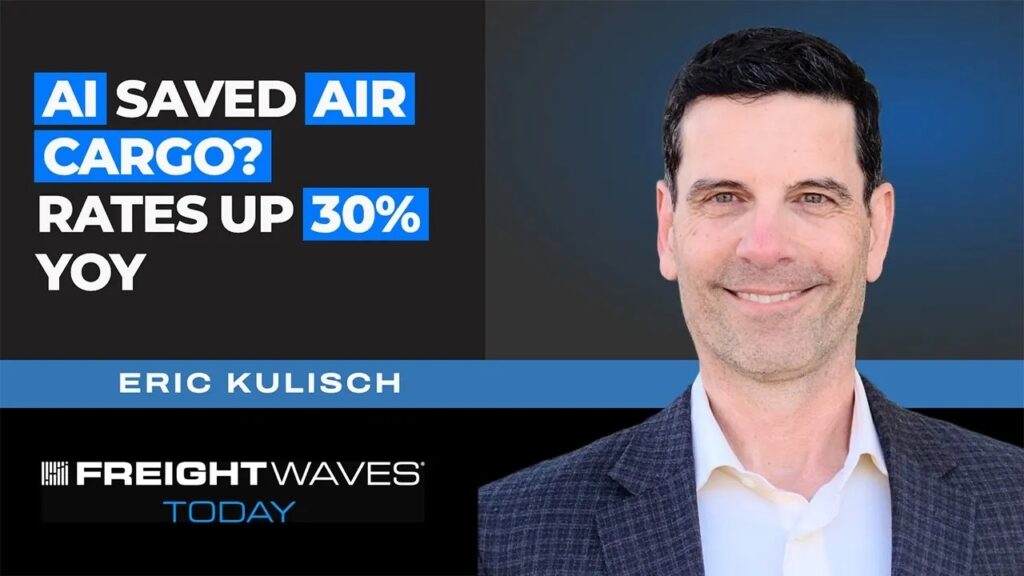
Air cargo rates are up 30% year over year and volumes have grown about 6%, according to FreightWaves, as surging AI equipment demand offsets slower e-commerce and automotive flows. The strength has defied forecasts of a 2025 softening after a down 2024. Meanwhile, Walmart is deploying Wing and Zipline drones across nearly 300 stores; Zipline raised $1.5 billion and Wing plans a $125 million Texas factory ahead of anticipated FAA beyond-line-of-sight rules.

Truckload rejections hold at 12.8% as peak season stalls
Risk & Resilience

Truckload rejections hold at 12.8% as peak season stalls

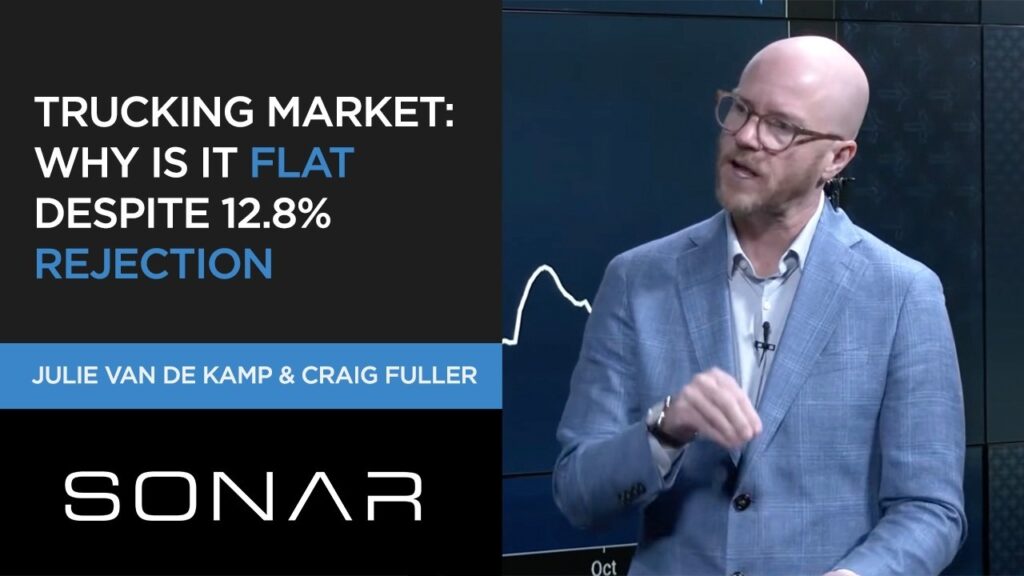
Truckload tender rejections are holding near 12.8%, roughly double the 6% recorded a year earlier, yet FreightWaves analysts Julie Van de Kamp and Craig Fuller say the market shows little of the tightening momentum normally seen ahead of peak season. The rejection index has slipped only about one percentage point in 20 days, even as November's Outbound Tender Volume Index averages 11,434, up 12% year over year and 3% from October. Refrigerated freight is the exception, with reefer rejections at 21% versus 12.6% last year, and a super El Niño could add further pressure on reefer capacity this winter.

Welcome Back!

Login to your account below

Create New Account!

Fill the forms below to register

Retrieve your password

Please enter your username or email address to reset your password.

Scan to share via WeChat

Open WeChat and scan the QR code to share

QR Code

Add New Playlist