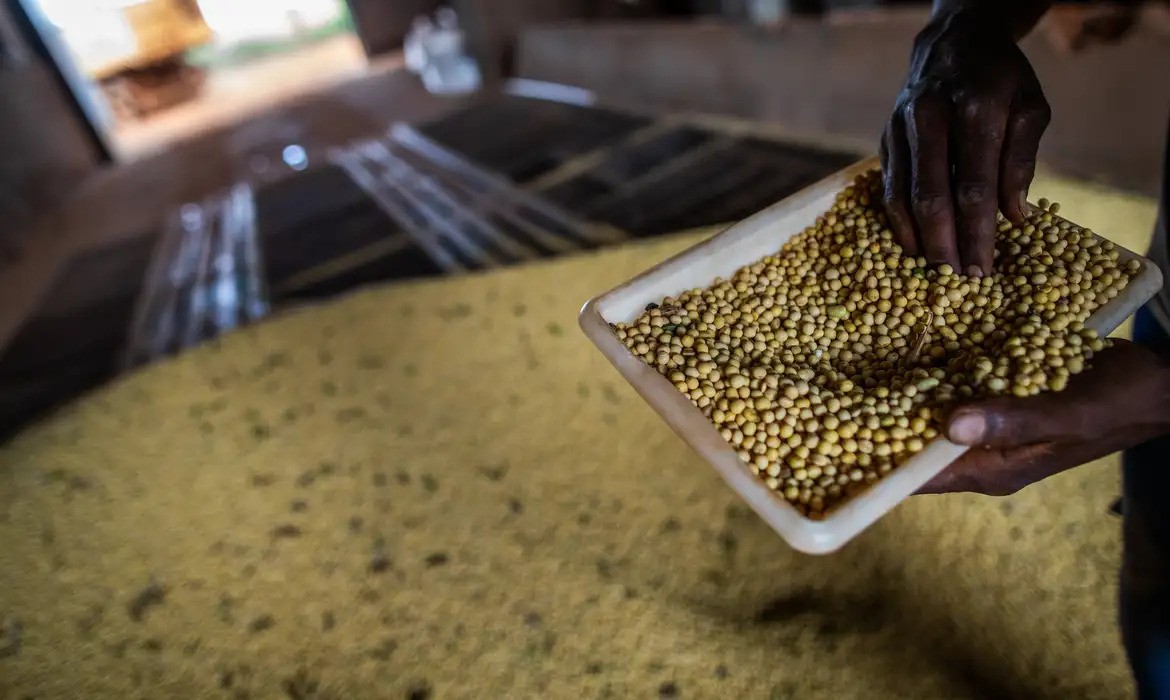
Brazil's Northeast exported $22.3 billion between January and October 2026, up 4.8% year on year, as agriculture rose 13.9% and the extractive industry 8.6%, according to Sudene. Imports grew faster at 14.7% to $26.2 billion, leaving a $3.9 billion trade deficit. Bahia and Maranhão accounted for 68.4% of regional sales, with soybeans leading both states. China bought $6.1 billion, up 13.2%, while U.S. purchases fell 4.9% to $2.5 billion. Manufacturing slipped 0.7% overall but led October exports at about $1.4 billion.
According to movimentoeconomico.com.br, agricultural and extractive exports drove Brazil’s Northeast region to $22.3 billion in foreign sales between January and October 2026, a 4.8% increase over the same period in 2025, data from the Northeast Development Superintendency (Sudene) showed.
Agriculture and mining lead gains as manufacturing slips
Farm sales rose 13.9% and extractive industry exports — which cover mineral and petroleum extraction — climbed 8.6%, according to the Sudene figures released on the Data Nordeste platform. The manufacturing sector, by contrast, contracted about 0.7%.
Imports outpaced exports, growing 14.7% to $26.2 billion. That left the region with a trade deficit of roughly $3.9 billion for the ten-month period, the source states.
Total trade flows — the combined value of the Northeast’s exports and imports — reached $48.5 billion, up 9.9% year on year, according to Sudene.
Bahia and Maranhão concentrate regional sales
Bahia and Maranhão together accounted for 68.4% of the Northeast’s overseas sales. Bahia exported $11 billion, or 49.1% of the regional total, while Maranhão shipped $4.3 billion, or 19.3%.
Soybeans topped the export list in both states, at $2.6 billion in Bahia and $2.1 billion in Maranhão. In Bahia, fuel oils followed at $1.4 billion and gold at $1.1 billion, with manufacturing contributing $6.2 billion, or 56.4% of state exports.
Maranhão’s calcined alumina, the raw material for aluminum, totaled $855.1 million, and chemical wood pulp used in papermaking reached $614.1 million. Agriculture and manufacturing held near-equal shares of the Maranhão list, at $2.2 billion and $2.1 billion respectively.
China remains top partner as U.S. purchases decline
China bought $6.1 billion of Northeast goods in the year to date, up 13.2%, while sales to the United States fell 4.9% to $2.5 billion. The Netherlands received $1.4 billion, a 52.4% increase.
The three countries are the region’s main trading partners when exports and imports are combined, according to Sudene.
Piauí leans on soybeans; Ceará and Pernambuco rely on factories
Piauí, fifth in the regional ranking, exported $1.3 billion, or 5.6% of the total. Soybeans made up $1.1 billion, or 84.6% of state sales, and agriculture overall accounted for $1.2 billion, or 92.3%.
Ceará ranked third with $1.98 billion, or 8.9% of the Northeast total. Semi-finished iron and steel products reached $1 billion, and manufacturing supplied $1.7 billion, or 85% of state sales.
Pernambuco, fourth, exported $1.7 billion, or 7.7% of the regional total. Fuel oil led at $289.9 million, followed by automobiles at $226.5 million and petroleum coke at $203 million; factories accounted for $1.4 billion, or 82.3% of state exports.
Smaller states: copper, oil and footwear shape the list
Rio Grande do Norte exported $1.2 billion, or 5.3% of regional sales, led by fuel oil at $407.9 million and gold at $291.6 million. Manufacturing contributed $912.4 million, or 78.4% of the state total.
Alagoas, seventh, sold $520 million abroad, or 2.3% of the regional total. Copper ore reached $234.4 million — matching the state’s extractive industry total — and cane sugar brought in $207.1 million, while manufacturing exported $276.8 million.
Sergipe, eighth, recorded $292.9 million in exports, or 1.3% of the total. Crude petroleum led at $189.7 million, followed by orange juice at $52.5 million; the extractive industry accounted for $191.6 million and manufacturing for $99.9 million.
Paraíba closed the ranking with $119.6 million, or 0.5% of the total. Footwear totaled $57 million and pineapple juice $10.6 million, with manufacturing supplying $101.2 million of state sales.
October: soybeans, cotton and mangoes stand out
In October alone, manufacturing led Northeast exports at about $1.4 billion. Agriculture sold $938.3 million abroad during the month, and the extractive industry $162.7 million.
Within agriculture, soybeans contributed $514.8 million of the sector’s October total. Cotton followed at $141.9 million and mangoes at $62.5 million.
In the extractive industry, copper ore sulfides represented 53.3% of monthly sales at $86.7 million, with nickel ores next at $46.6 million.
The Sudene survey does not include state-by-state export variation against 2025, nor does it report sector-level export values for the regional year-to-date total — only growth rates.
Source: movimentoeconomico.com.br
Compiled from international media by the SCI.AI editorial team.