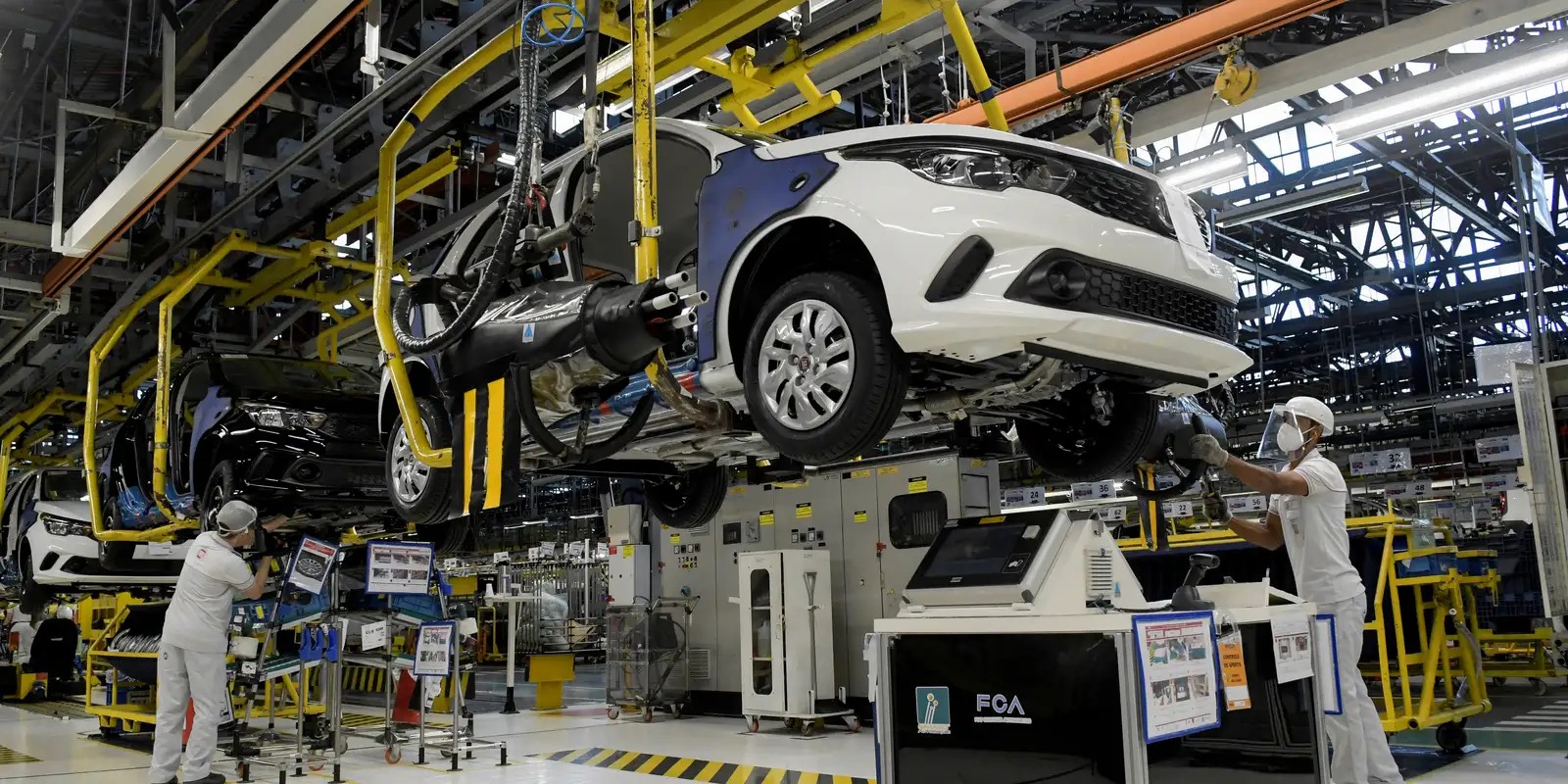
Brazil's National Confederation of Industry (CNI) cut its 2026 GDP growth forecast from 2% to 1.6%, according to its third-quarter Conjunctural Report released Wednesday. The revision reflects weaker expected performance in manufacturing, now seen contracting 0.7%, and services, revised down to 1.6% growth. Industry growth was lowered to 1.3% from 2.1%, while agriculture was raised to 2.5%. The CNI projects inflation at 5.15%, a Selic rate ending 2026 at 13.25%, a primary deficit of R$ 54.6 billion and a trade surplus of US$ 77.3 billion.
According to Agência Brasil, the Confederação Nacional da Indústria (CNI) has lowered its projection for Brazilian economic growth in 2026 from 2% to 1.6%, citing a weaker expected performance in manufacturing and services. The revision was published in the confederation’s third-quarter Conjunctural Report, released on Wednesday, October 28.
The downgrade reflects a more pessimistic outlook for the transformation industry and the services sector, while the agriculture and livestock sector had its growth estimate revised upward. According to the entity, high interest rates and slowing domestic demand continue to weigh on production.
The CNI now expects the industrial sector to grow 1.3% in 2026, down from the 2.1% previously estimated, while manufacturing is projected to contract 0.7%. Services are seen expanding 1.6%, below the earlier 1.9% forecast, and agriculture is expected to grow 2.5%, up from 1.8%.
Industry loses momentum
The industrial sector is expected to feel the effects of the economic slowdown most intensely. The CNI cut its growth projection for the sector from 2.1% to 1.3%, mainly due to the negative performance expected for manufacturing. For that segment, the confederation revised its estimate from growth of 0.6% to a decline of 0.7%.
Among the factors pressuring activity are reduced domestic demand, the high cost of credit, rising production costs and competition from imported products, according to the report. The extractive industry is expected to grow 9.1%, while construction is forecast to rise 1.5%, supported by infrastructure investments and the expansion of the Minha Casa, Minha Vida housing program.
Services and agriculture
The services sector also had its projection reduced, from 1.9% to 1.6%. The revision takes into account the stability of services volume since the end of 2025 and the slowdown in commerce, especially in segments most dependent on credit.
In the opposite direction, the agriculture and livestock estimate was raised from 1.8% to 2.5%, driven by a more favorable outlook for the second corn crop.
Labor market and inflation
The CNI estimates that the employed population will grow 1.2% in 2026, while the unemployment rate should fall from 5.3% to 5% by the end of the year. The mass of real earnings, which accounts for inflation, is expected to increase 4.6%.
Inflation, however, is likely to accelerate in the final months of the year. The projection for the Broad National Consumer Price Index (IPCA) is a rise of 5.15%, above the 4.26% recorded in 2025. The entity expects the Central Bank to cut the Selic rate by 0.25 percentage point at each of the two remaining meetings in 2026, ending the year at 13.25%.
Public accounts
The CNI projects a primary deficit of R$ 54.6 billion in the federal government’s accounts in 2026, equivalent to 0.4% of GDP. Considering the rules that exclude certain expenses from the fiscal target, the result would be a surplus of R$ 12.6 billion.
The entity estimates that gross public debt will advance from 78.6% to 83.7% of GDP by the end of the year.
Foreign trade
Brazil’s trade balance is expected to post a surplus of US$ 77.3 billion in 2026, nearly 30% above the 2025 result. Exports should total US$ 386.7 billion, growth of 10.3% compared with the previous year. Imports are estimated at US$ 309.4 billion, up 6.4%.
Source: agenciabrasil.ebc.com.br
Compiled from international media by the SCI.AI editorial team.