Skip to content

Warehousing & Transport

Analysis

India port capacity rises 22% to 2.8B tonnes, gaps persist

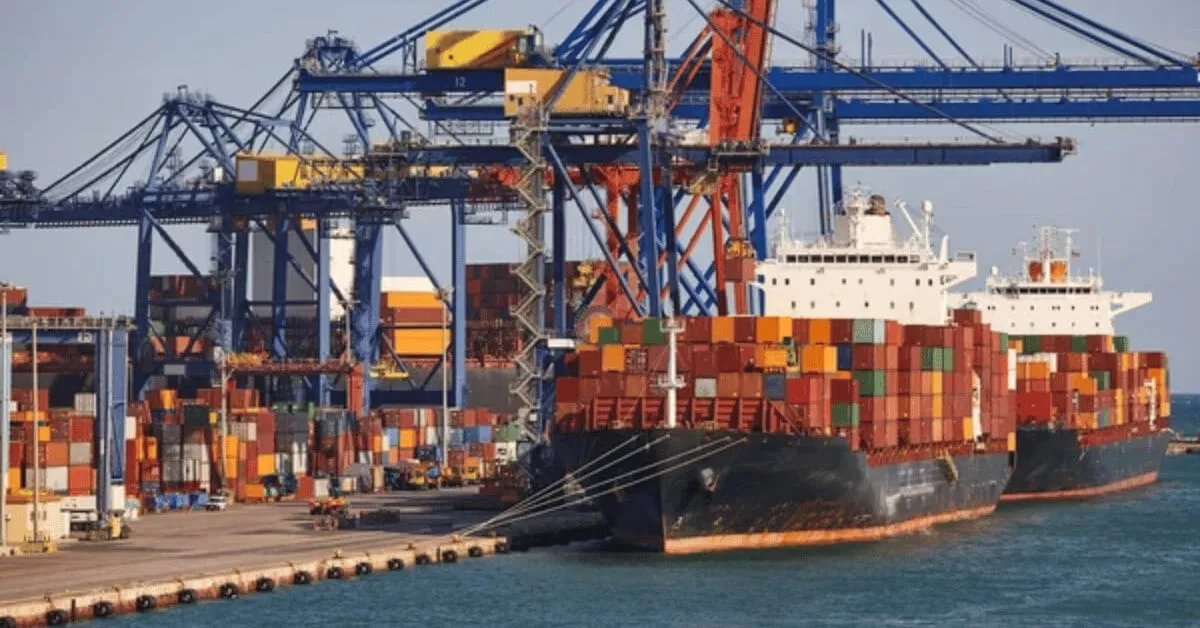
India's annual port cargo handling capacity has risen 22% since 2017-18, from 2.3 billion tonnes to 2.8 billion tonnes, according to a joint report by FICCI and Kearney released at the Maritime India Conference & Expo 2026 in Mumbai. Cargo handling at major and non-major ports grew 38% to 1,668 million tonnes, while capacity utilization edged up from 52% to 59%. Vessel turnaround time fell 18% to about 49 hours. Yet post-customs delays persist: the 2025 National Time Release Study found the gap between clearance and vessel departure reached 158 hours, or 84% of total time. International ports still handled roughly 75% of India's transshipment containers as of May 2025.

Original source: marineinsight.com

India port capacity rises 22% to 2.8B tonnes, gaps persist

Ask SCI.AI about this story

📋 本文要点

India's annual port cargo handling capacity has risen 22% since 2017-18, from 2.3 billion tonnes to 2.8 billion tonnes, according to a joint report by FICCI and Kearney released at the Maritime India Conference & Expo 2026 in Mumbai. Cargo handling at major and non-major ports grew 38% to 1,668 million tonnes, while capacity utilization edged up from 52% to 59%. Vessel turnaround time fell 18% to about 49 hours. Yet post-customs delays persist: the 2025 National Time Release Study found the gap between clearance and vessel departure reached 158 hours, or 84% of total time. International ports still handled roughly 75% of India's transshipment containers as of May 2025.

According to marineinsight.com, India’s annual cargo handling capacity has grown 22% since 2017-18, but persistent logistics gaps continue to hold back trade efficiency, according to a joint report by FICCI and consultancy Kearney.

Capacity and throughput gains

National port capacity climbed from 2.3 billion tonnes to 2.8 billion tonnes a year, ANI reported on November 3. The figures were released at the Maritime India Conference & Expo 2026, hosted by the Federation of Indian Chambers of Commerce & Industry in Mumbai.

Cargo handling across major and non-major ports rose from 1,209 million tonnes to 1,668 million tonnes, a 38% increase. Despite that volume growth, port capacity utilization moved only from 52% to 59%, leaving considerable headroom unused.

Efficiency at major ports also improved, with average vessel turnaround time falling 18% to around 49 hours. Jawaharlal Nehru Port Authority, Pipavav and Mundra were ranked among the top 30 dockyards in the Container Port Performance Index 2025 published by the World Bank.

Post-clearance delays dominate total time

Delays after customs discharge remain a major hurdle. According to the 2025 National Time Release Study covering four key seaports, export approvals required an average of 30 hours.

The gap between official clearance and vessel departure stood at 158 hours, accounting for 84% of total time. The report characterizes this interval as reflecting logistics activity and scheduled waiting rather than purely avoidable delay.

“The gap shows logistics activity and scheduled waiting, not just avoidable delay.” — FICCI-Kearney report

Transshipment reliance on foreign hubs

As of May 2025, international ports handled around 75% of India’s transshipment containers. Vizhinjam began operations that month, adding deep-water capacity to the domestic network.

The report states that shifts in shipping-line rotations reflect continuing structural challenges in building domestic transshipment capability, according to ANI. It benchmarks India’s commercial corridors against major hubs including Shanghai-Ningbo, Singapore, Jebel Ali and Rotterdam.

Recommendations for investment and links

The report calls for dedicated development plans for transshipment hubs, container ports and export corridors, and recommends aligning port investment strategy with inland transport and shipping services.

  • Prioritize road and rail links around cargo flows
  • Use shipment-time data to identify bottlenecks
  • Develop specific plans for transshipment hubs, container ports and export corridors

These measures are positioned as necessary to convert capacity growth into trade efficiency gains, with the report urging that investment planning be coordinated across port, inland transport and shipping services rather than treated in isolation.

Source: marineinsight.com

Compiled from international media by the SCI.AI editorial team.
Ask SCI.AI Finished reading? Continue with SCI.AI. Explore the related policy, route, company and historical context. Continue asking
Stay ahead of supply chain shifts

One email a week: the stories that matter and new risk events — in English, free.

Prefer RSS? Articles Risk events

Lufthansa Cargo Q3 operating profit jumps 230% to €162m
Warehousing & Transport

Lufthansa Cargo Q3 operating profit jumps 230% to €162m

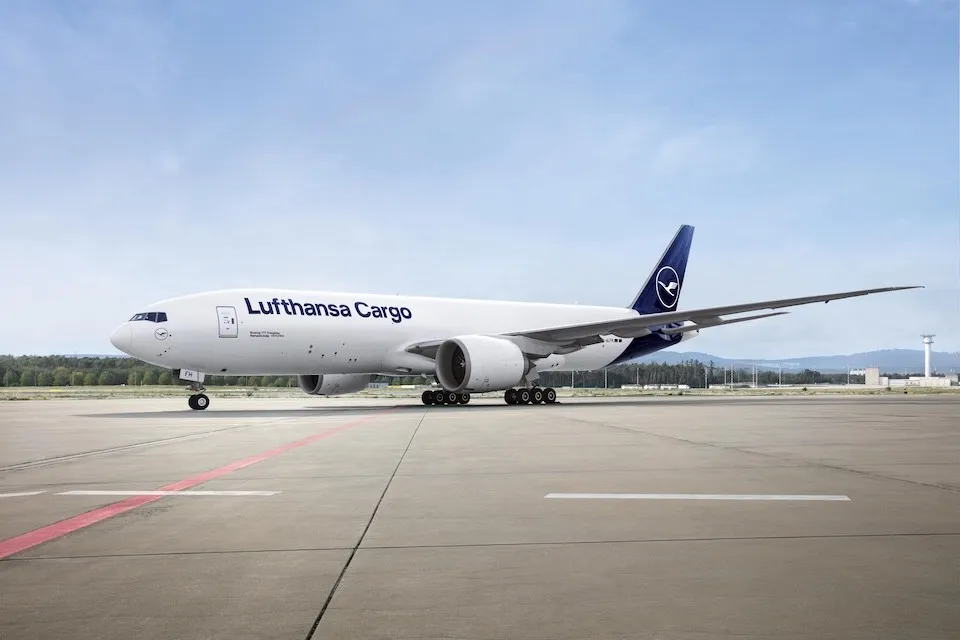
Lufthansa Cargo's logistics division lifted third-quarter earnings before interest and tax by 230% to €162m, with revenues up 26% to €1bn. Volumes rose 11% to 2,546m revenue cargo tonne kilometres and capacity grew 5% to 4,010m available RCTK, pushing the load factor to 63.5%. Temperature-controlled freight revenues climbed 33% on pharma and semiconductor demand, and added India flights supported volumes and yields. Costs rose 16% to €924m on higher fuel and charter expenses. The carrier also completed its acquisition of Germany-based handler LUG aircargo handling.

Expeditors Q3 revenue jumps 42% on hyperscaler airfreight demand
Disruptions

Expeditors Q3 revenue jumps 42% on hyperscaler airfreight demand

Expeditors International posted a strong third quarter, with revenue up 42% year-on-year to $4.1 billion and operating income rising 55% to $445.4 million. Diluted earnings per share climbed 61% to $2.65, beating consensus estimates by 42 cents. Airfreight volumes grew 13% overall, accelerating to 19% in September, while ocean freight rose 12%. CEO Daniel Wall credited hyperscaler demand and record global air tonnage, with South Asia a key market. Headcount edged up 1.4% to 20,463, though Global Technology and corporate roles declined.

Schneider taps Norfolk Southern as eastern rail partner
Sustainability

Schneider taps Norfolk Southern as eastern rail partner

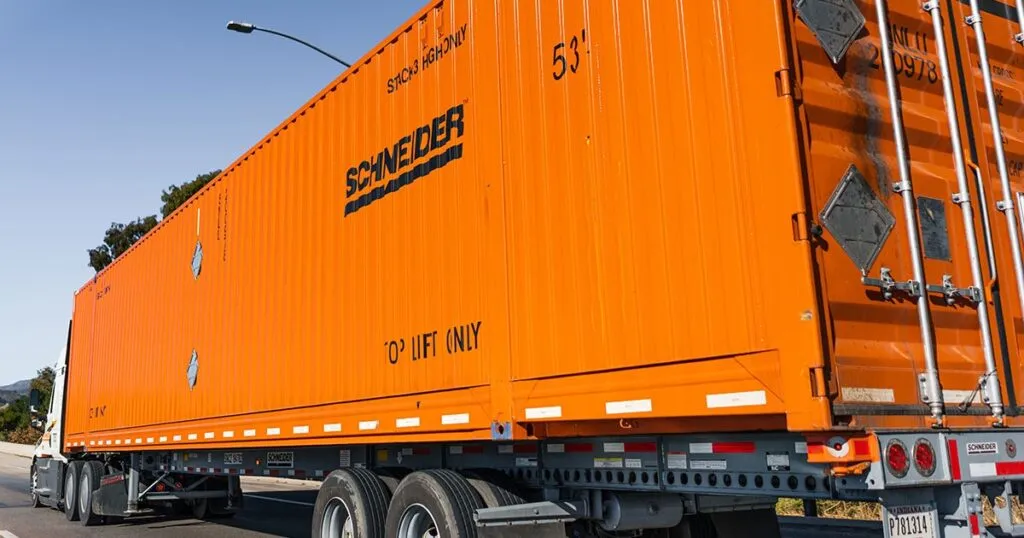
Schneider named Norfolk Southern its primary eastern rail provider on Oct. 29, with the agreement taking effect Jan. 1. The Green Bay, Wis.-based carrier, No. 4 among intermodal and drayage players, expects Norfolk Southern's network to expand its reach, support new freight and truckload conversions, and potentially enable single-line transcontinental service with Union Pacific. Schneider's intermodal unit posted Q3 revenue excluding fuel surcharges of $287.7 million, up 2%, while operating profit jumped 35% to $22.6 million and the operating ratio improved to 92.1. TD Cowen analyst Jason Seidl sees negative implications for Hub Group and CSX.

Welcome Back!

Login to your account below

Create New Account!

Fill the forms below to register

Retrieve your password

Please enter your username or email address to reset your password.

Scan to share via WeChat

Open WeChat and scan the QR code to share

QR Code

Add New Playlist