The Trump administration plans to end South Africa's AGOA eligibility on 1 January 2027, putting between 3,000 and 10,000 jobs at risk, according to africa.businessinsider.com. South Africa was AGOA's biggest beneficiary in 2025, exporting about $1.7 billion of goods, including citrus, vehicles and wine. Without preferences, citrus faces duties of 1.5 to 2.5 US cents per kilogram, while mandarins, lemons and grapefruit also carry a 12.5% Section 301 tariff. Growers warn the US market cannot easily be replaced.
According to africa.businessinsider.com, the Trump administration plans to end South Africa’s eligibility for the African Growth and Opportunity Act (AGOA) on 1 January 2027, a move that labor representatives say could cost between 3,000 and 10,000 South African jobs and disrupt the citrus supply chain that links growers in the Western Cape to American importers, distributors and retailers.
Preferential access set to expire
South Africa was AGOA’s biggest beneficiary in 2025, exporting roughly $1.7 billion of goods to the United States under the program. Those preferential shipments covered vehicles and automotive components, citrus, wine and other agricultural products — sectors whose factories, orchards and commercial relationships were built around American buyers.
Even so, AGOA exports represent only about 1% of South Africa’s total global exports, the source notes. The damage would therefore be concentrated in specific industries and communities rather than spread evenly across the economy, with agriculture and manufacturing expected to face the greatest pressure.
Workers in the Western Cape, including communities that depend on fruit processing and export agriculture, are considered particularly exposed to the loss of duty-free entry.
Tariff math stacks against growers
Without AGOA, South African citrus would face ordinary US import duties of approximately 1.5 to 2.5 US cents per kilogram, depending on the fruit and the shipping period. Mandarins, lemons and grapefruit would also continue to face a separate 12.5% Section 301 tariff, meaning those products could be hit by both the standard duty and the additional levy once preferences end.
Oranges are exempt from the additional tariff, but they would still lose duty-free treatment under AGOA and become subject to the applicable standard US duty, according to the report.
The added costs would leave South African growers at a disadvantage against competitors such as Chile and Peru, which benefit from trade agreements with the United States and have shorter shipping routes to the American market.
US market proves hard to replace
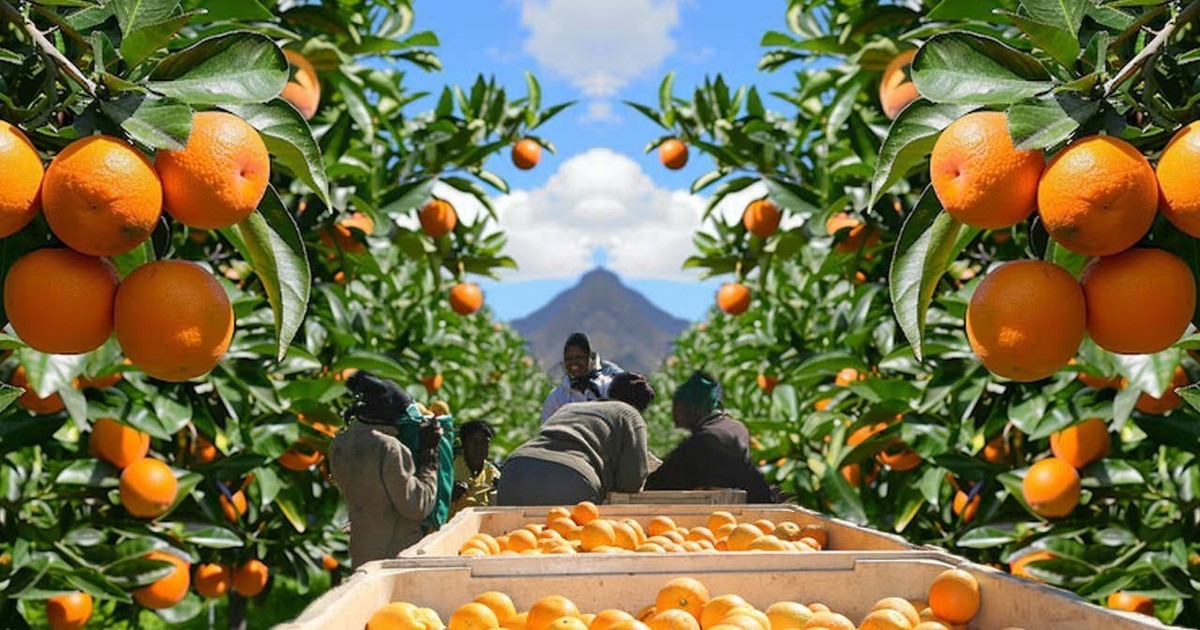
The Citrus Growers’ Association of Southern Africa said the US market cannot easily be replaced. Orchards have been planted specifically to meet American demand, while alternative export markets have different plant-health requirements, consumer preferences and seasonal needs.
South African citrus also reaches the United States during its off-season, complementing rather than directly replacing domestic production. Growers argue the imports help keep fruit available throughout the year and support American businesses involved in shipping, handling, distribution and retail.
“Thousands of people in the US are employed in importing, handling, distribution and retail because of South African citrus.” — Citrus Growers’ Association of Southern Africa
The association warned that the value chain on both sides of the Atlantic was now under threat. Moneyweb reported on Tuesday that citrus growers had described the decision as a serious blow to producers in both regions.
Autos already under tariff pressure
Some South African industries were already under pressure before the AGOA decision. Passenger vehicles, selected automotive components, steel and aluminium face a 25% US tariff under separate trade measures.
As a result, South African vehicle-export earnings from the US fell to about R8 billion in 2025 from R17.7 billion a year earlier, according to figures cited by the country’s business sector.
Washington said South Africa failed to meet AGOA eligibility requirements because of barriers affecting American trade and investment, corruption and conduct deemed contrary to US national-security and foreign-policy interests. The Office of the US Trade Representative did not provide a detailed list of the measures South Africa must change to retain eligibility.
Previous US complaints have included South African restrictions affecting American poultry and pork, tariffs on wine and spirits, and Pretoria’s preferential trading arrangements with the European Union.
Diversification unlikely to arrive in time
South Africa’s government says it will continue discussions with Washington while supporting vulnerable exporters and accelerating efforts to find other markets.
Diversification, however, may not come quickly enough for farms and factories whose production, infrastructure and commercial relationships were built specifically around American buyers. For citrus growers in the Western Cape, the gap between the loss of AGOA access and the opening of replacement markets is the central risk.
Source: africa.businessinsider.com
Compiled from international media by the SCI.AI editorial team.