Apparel supply chain investment is pivoting from volume growth to yield and efficiency, with warehouse automation spending reaching an estimated $30 billion this year. Amazon raised its 2026 capex forecast to about $220 billion from $131 billion in 2025, UPS has automated 63 percent of hub volume and invested over $100 million in RFID, and FedEx is pushing capex down toward 4 percent of revenue while returning $4.1 billion in spin-off proceeds to debt reduction. Maersk has earmarked $10 billion to $11 billion for ports and integrated logistics, and Gartner sees global IT spending rising 14.2 percent to $6.37 trillion.
According to wwd.com, the apparel supply chain’s biggest players are shifting capital away from volume growth and toward yield and efficiency, with high-density warehouse automation, robotics and AI absorbing the largest share of investment. Analysts estimate global warehouse automation spending reached $30 billion this year, while more than 4.7 million commercial warehouse robots have been deployed across over 50,000 facilities globally in recent years.
Robotics and AI take the largest share
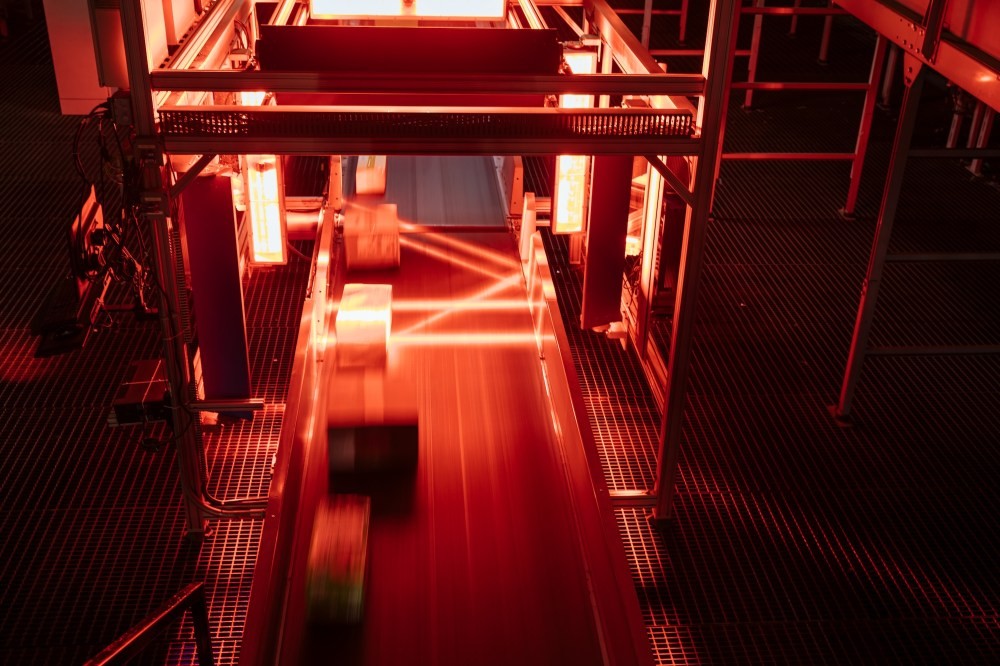
The most visible spending is on warehouse automation. Large companies are moving from manual picking to Autonomous Mobile Robots (AMRs), automated storage and retrieval systems (AS/RS) and robotic de-palletizing, according to the report. Capital is also flowing to computer-vision AI for zero-touch quality checks, auto-traying and barcode verification.
Amazon alone operates more than 600,000 logistics robots across its global hubs. In early August, the company raised its 2026 capital expenditure forecast to about $220 billion, up from $131 billion in 2025, with most of the money directed at generative AI, cloud infrastructure and logistics automation.
The company plans large-scale data center campuses worldwide and is securing specialized hardware including Nvidia GPUs and in-house AWS Trainium and Inferentia chips. It is also investing in power and grid infrastructure and seeking custom utility agreements to support data center demand. Higher memory and hardware component costs are contributing to the elevated capex figure as well.
UPS scales RFID while FedEx cuts capital intensity
UPS has automated 63 percent of hub volume and is eyeing construction of 400 fully automated buildings by 2028. It is retrofitting legacy hubs with RFID tracking and automated sorting to reduce misloads and manual scanning, and has invested over $100 million in RFID to date.
RFID sensing now covers all UPS package delivery vehicles and delivery facilities in the U.S., plus every package shipped through more than 5,500 The UPS Store locations. The company said it is the first major logistics provider to roll out the technology across its entire integrated network.
“We’re lighting up customers’ supply chains in real time with RFID, enabling precise tracking, faster insights, a smarter network and smarter packages. This is the most significant visibility advancement in the past decade at UPS and in our industry.” — Matt Guffey, executive vice president and chief commercial and strategy officer at UPS
FedEx is taking a different route, shifting to a lower capital-intensity model that brings capex down toward about 4 percent of total revenue. It is consolidating express air freight, ground logistics and freight networks into a single unified network and spending on modernization of existing hubs rather than duplicate facilities, alongside digital logistics infrastructure, automated sorting, predictive analytics and dynamic delivery routing.
In a July 21 research note, analyst Wiltone Asuncion noted that FedEx separated its trucking division, collected a $4.1 billion dividend on the way out and routed it into retiring long-dated debt to stay leverage-neutral while lowering interest expense. FedEx also raised its dividend 5 percent post-spin, a sixth consecutive annual increase, and plans up to $1 billion in opportunistic buybacks through the rest of calendar 2026 to offset dilution.
Maersk targets ports, green fuels and nearshoring
A.P. Moller–Maersk has earmarked between $10 billion and $11 billion in capex for more integrated logistics and high-margin terminals, aimed at expanding critical port infrastructure and upgrading logistics services. In the quarter ended June 30, its gross capex spending was $931 million.
The carrier is continuing to invest in green fleet decarbonization, including dual-fuel methanol vessels, to support its 2040 net-zero greenhouse gas emissions target. Beyond hub automation and RFID, capital is being reallocated toward nearshoring corridors such as U.S.–Mexico border hubs and port and rail terminals to accommodate shifting trade routes and tariff policies, and toward fleet electrification, charging infrastructure and automated packaging systems.
AI and cloud spending climbs
Enterprise software capital is increasingly flowing into Warehouse Execution Systems (WES) and digital twins that simulate layouts, predict congestion and dynamically reroute inventory. Infrastructure spending is also rising to expand cloud capacity and AI compute for real-time visibility, demand sensing and automated routing.
Gartner expects global IT spending to reach $6.37 trillion this year, up 14.2 percent from 2025, according to a recent research report from the tech and business insights company.
“Data center systems and infrastructure as a service are the top growth segments, reflecting accelerating investment in AI infrastructure, cloud platforms and intelligent applications. Building the compute capacity required for AI is the largest infrastructure project ever attempted by humanity.” — John-David Lovelock, distinguished vice president and analyst at Gartner
Lovelock added that despite the strong growth in spending, “this is not a rising tide lifts all boats market trend,” and that technology budgets are being reallocated rather than expanded evenly. Demand is so great, the report notes, that there is currently a global shortage of memory chips.
Source: wwd.com
Compiled from international media by the SCI.AI editorial team.