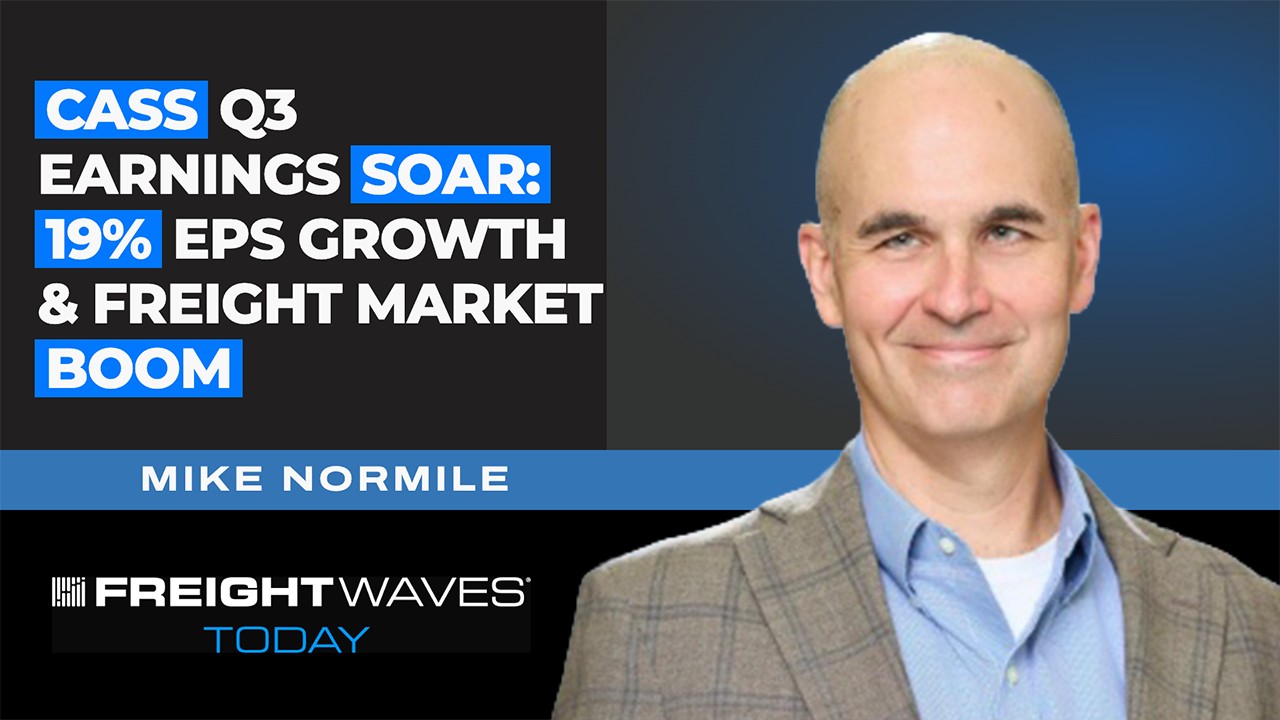
Cass Information Systems posted third-quarter net income of $10.6 million, or $0.81 per share, with earnings per share up 19% year over year as higher freight rates, fuel surcharges and elevated interest rates lifted results. Transportation dollar volumes rose 14.5% versus the prior-year quarter, while the average freight invoice value climbed roughly $150, about $40 of which came from fuel surcharges. CFO Mike Normile said 70% of Cass's funding is non-interest-bearing, helping push net interest margin above 4% with the 10-year Treasury above 5%.
Cass Information Systems reported third-quarter net income of $10.6 million, or $0.81 with earnings up 19% year over year, driven by higher freight rates, fuel surcharges, and elevated interest rates.
Transportation dollar volumes climbed 14.5% compared to the same quarter last year, signaling a meaningful recovery for the freight payment and analytics company after an extended period of near-zero interest rates and a prolonged freight recession.
“We lived with 0% interest rates and a freight recession now for a while,” said Mike Normile, executive vice president and CFO of Cass Information Systems. “Coming out of that, you can see the earnings power that Cass has.”
Freight invoice values rise $150 on fuel and contract repricing
Normile broke down what is driving higher invoice values: the average dollar amount freight invoice rose roughly $150 compared to the third quarter of the prior year.
Of that increase, approximately $40 — about 25% of the total gain — was attributable to fuel surcharges, with the remainder reflecting contract rates repricing in a higher-rate environment.
“Fuel surcharge was a big factor there — it was about 25% of the total,” Normile said. “The rest was just contract rates repricing in a higher environment.”
The momentum appears to be building into the fourth quarter. September’s average invoice was higher than the full third-quarter average, Normile noted, and because Cass processes invoices on a 30-to-45-day lead before payment, rising rates continue to flow through the company’s revenue in the form of higher payment float and financial fees.
Clients typically fund invoices five to seven days before they are due, giving Cass a spread it can invest in short- and longer-term instruments.
Non-interest-bearing float lifts net interest margin above 4%
That funding dynamic is central to Cass’s interest income story. Unlike traditional banks, 70% of Cass’s funding is non-interest-bearing — largely payment float from clients.
With the 10-year Treasury above 5%, Normile said the company is able to generate a significantly wider spread on that float than it could in a near-zero-rate environment, pushing the company’s net interest margin above 4%.
His personal view is that rates will stay “higher for longer,” which he said would allow Cass to continue expanding that margin. When rates are elevated, Cass invests longer-term to protect itself against a future rate decline.
AI data extraction, dividend hike target freight complexity
Cass is reinvesting the revenue tailwind into technology, including AI-enabled data extraction systems. Normile said the company has seen considerable success applying AI on the facility-payment side and is now committing more resources to the freight side, which he described as more complex.
The company also raised its dividend in the fourth quarter — more than the usual increment — which Normile said reflects management’s and the board’s confidence in continued earnings growth.
Looking ahead, he said the primary focus is onboarding new clients won on the Cass Pay platform so their invoice volumes begin flowing through the company’s processing pipes and expanding the revenue base.
- Cass Q3 EPS rose 19% to $0.81 with transportation dollar volumes up 14.5% on higher freight rates and fuel surcharges.
- Average freight invoice value increased ~$150 year over year; roughly $40 — about 25% — came from fuel surcharges alone.
- With 70% non-interest-bearing funding and the 10-year Treasury above 5%, Cass’s net interest margin topped 4% and CFO expects rates to stay higher for longer.
Source: FreightWaves
Compiled from international media by the SCI.AI editorial team.