Skip to content

Japan & Korea Supply Chain

Analysis

Exotec deploys Skypod in Japan with 37 robots, 89,000 m² facility

Exotec has launched two Skypod automated storage systems in Japan: one at Mitsubishi Shokuhin’s Soka FSDC handling ~13,000 SKUs, and another at Trusco Nakayama’s 89,000 m² Planet Aichi facility deploying 37 robots and 32,000 bins. Both installations target labour shortages and throughput growth through 2040. Executed with IHI Logistics Industrial Systems, they mark Skypod’s first use in Japan’s food distribution sector and reinforce Exotec’s mobile ASRS architecture.

Original source: roboticsandautomationnews.com

Exotec deploys Skypod in Japan with 37 robots, 89,000 m² facility
📋 本文要点

Exotec has launched two Skypod automated storage systems in Japan: one at Mitsubishi Shokuhin’s Soka FSDC handling ~13,000 SKUs, and another at Trusco Nakayama’s 89,000 m² Planet Aichi facility deploying 37 robots and 32,000 bins. Both installations target labour shortages and throughput growth through 2040. Executed with IHI Logistics Industrial Systems, they mark Skypod’s first use in Japan’s food distribution sector and reinforce Exotec’s mobile ASRS architecture.

According to Robotics & Automation News, Exotec has commissioned two Skypod automated storage and retrieval systems in Japan—one at Mitsubishi Shokuhin’s new Food Service Distribution Centre (FSDC) in Soka, and another at Trusco Nakayama’s Planet Aichi logistics centre.

Food distribution automation milestone

Mitsubishi Shokuhin implemented Skypod to address labour shortages and improve working conditions across its warehouse operations. The system manages nearly 13,000 product references—including food, alcoholic beverages, and professional supplies—and marks the first deployment of Skypod in Japan’s food distribution sector. The project supports the company’s broader logistics infrastructure strategy targeting sustained growth through 2040.

The FSDC in Soka was designed to automate ambient temperature operations, reduce operator travel distances, and maintain high customer service levels—key priorities amid tightening labour availability in Japanese warehousing.

This implementation was executed in partnership with IHI Logistics Industrial Systems, reinforcing Exotec’s collaboration model for market entry into highly advanced logistics ecosystems.

Industrial logistics scale-up at Planet Aichi

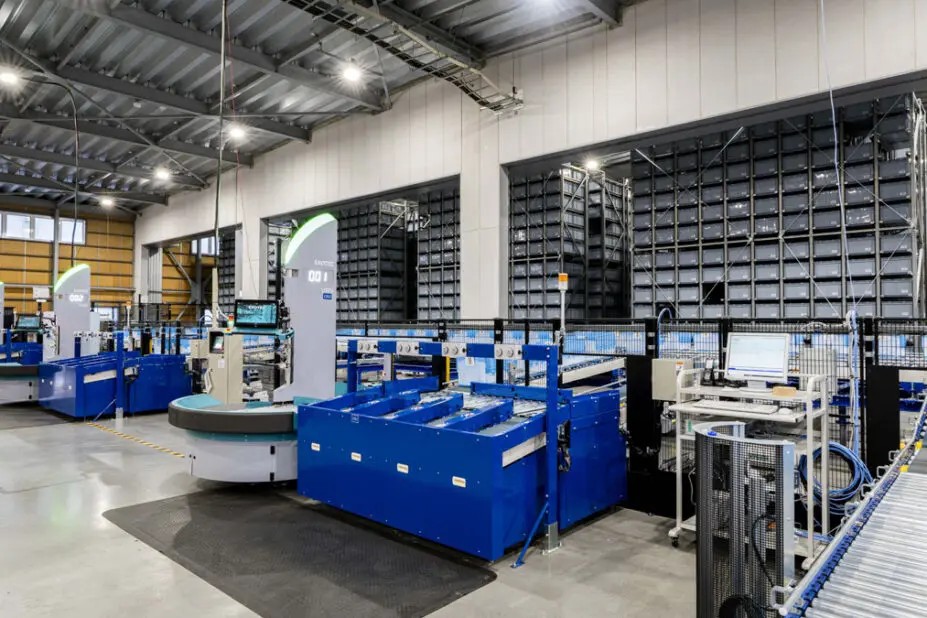
Trusco Nakayama’s Planet Aichi logistics centre—the group’s largest—covers approximately 89,000 square meters and is built to support rapid SKU expansion, with stored product references projected to exceed one million SKUs in the coming years. The fully operational Skypod system there includes nearly 32,000 bins, 37 robots, and four picking stations.

The system automates order fulfilment for tools, consumables, safety equipment, and industrial supplies—directly improving productivity, picking accuracy, and storage space utilisation. Both deployments underscore how warehouse automation technologies are being adopted across diverse sectors to meet rising throughput demands and workforce constraints.

Romain Moulin, CEO of Exotec, said:

“Japan is one of the world’s most demanding and innovative markets when it comes to logistics. The new systems at Mitsubishi Shokuhin and Trusco Nakayama demonstrate Skypod’s ability to meet very different requirements while providing a concrete response to the challenges of productivity, labour availability and service quality.” — Romain Moulin, CEO of Exotec

Skypod’s technical differentiation

Unlike conventional shuttle-based automated storage and retrieval systems (ASRS), Skypod is described by Exotec as a “mobile ASRS”. Its robots perform both horizontal transport and vertical retrieval—eliminating the need for fixed shuttles on each rack level. This architecture enables greater flexibility and density in high-throughput, space-constrained environments like those found in Japanese urban logistics hubs.

The October 20, 2026 announcement follows prior international deployments, including Lyreco’s €25 million logistics modernisation in France—a fact cited in related coverage on the source site.

Source: Robotics & Automation News

Compiled from international media by the SCI.AI editorial team.
Ask SCI.AI Finished reading? Continue with SCI.AI. Explore the related policy, route, company and historical context. Continue asking
South Korea Launches $3.52B Semiconductor Fund, Samsung Rises 6.7%
Japan & Korea Supply Chain

South Korea Launches $3.52B Semiconductor Fund, Samsung Rises 6.7%

On September 23, 2026, South Korean President Lee Jae-myung announced a plan to double semiconductor production and secure the AI supply chain, unveiled at the Korea Investment Summit in New York. The government launched a ₩5 trillion ($3.52 billion) semiconductor fund and another ₩5 trillion for trade financing. Samsung Electronics surged 6.7% amid the announcement; its $1.38 trillion market cap reflects 70% revenue dependence on semiconductors and mobile devices. SMCI, with a $27.22 billion valuation, stands to benefit from rising AI server demand. The June 29, 2026 investment plan underscores South Korea’s strategic pivot toward technological sovereignty.

India, Japan Ink Next-Gen Pact Targeting JPY 10 Trillion Investment
Japan & Korea Supply Chain

India, Japan Ink Next-Gen Pact Targeting JPY 10 Trillion Investment

Union Commerce and Industry Minister Piyush Goyal concluded a four-day Japan visit on August 27, advancing the India-Japan Next Generation Economic Partnership. The initiative targets JPY 10 trillion in Japanese private investment in India over the next decade, as set during PM Modi’s 2025 Japan visit. Goyal’s delegation — nearly 200 strong — engaged over 200 industry participants across Tokyo, Osaka, and a third city, yielding early outcomes including a robotics firm’s commitment to invest in and manufacture in India. Discussions emphasized semiconductors, AI, clean energy, defence-linked manufacturing, space, and robotics for ageing societies — all under the framework of resilient supply chains and economic security.

South Korea, Brazil Ink Deal to Restart Mercosur FTA Talks
Japan & Korea Supply Chain

South Korea, Brazil Ink Deal to Restart Mercosur FTA Talks

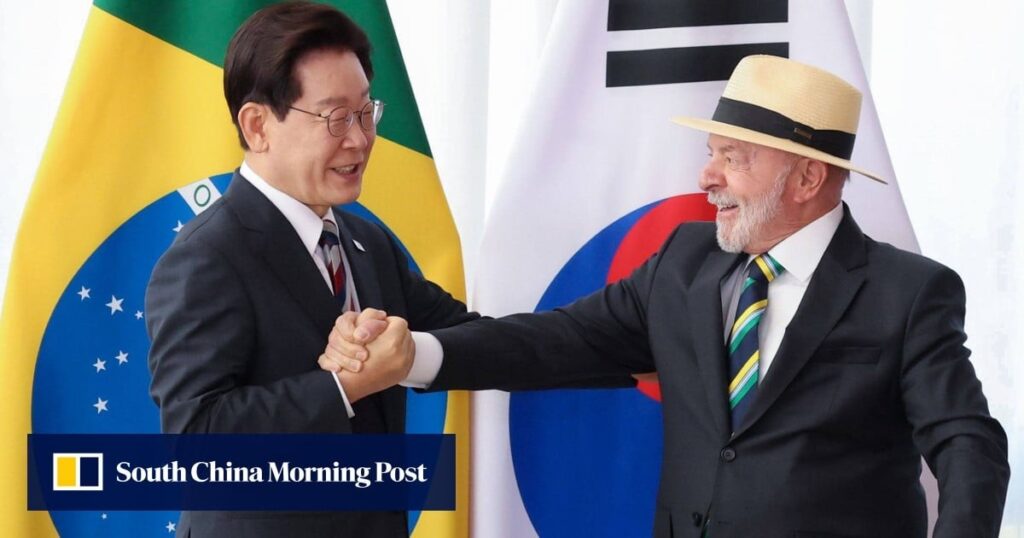
South Korean President Lee Jae Myung and Brazilian President Luiz Inacio Lula da Silva agreed on 29 July 2026 to restart free-trade negotiations with Mercosur — the South American bloc of Argentina, Brazil, Paraguay, Uruguay, and Bolivia. A joint working group will prepare a formal declaration for the Mercosur summit in December 2026. Talks, launched in 2018, stalled in late 2021 amid manufacturing-sector concerns. Analysts say Seoul must back diplomacy with real investment and technology transfer. Mercosur’s $3.5 trillion GDP and 270 million consumers make it a high-stakes opportunity for Korean exporters and supply chain planners.

Welcome Back!

Login to your account below

Create New Account!

Fill the forms below to register

Retrieve your password

Please enter your username or email address to reset your password.

Scan to share via WeChat

Open WeChat and scan the QR code to share

QR Code

Add New Playlist