Skip to content

Warehousing & Transport

Analysis

COSCO launches Jiangyin–Manzanillo container route in 22 days

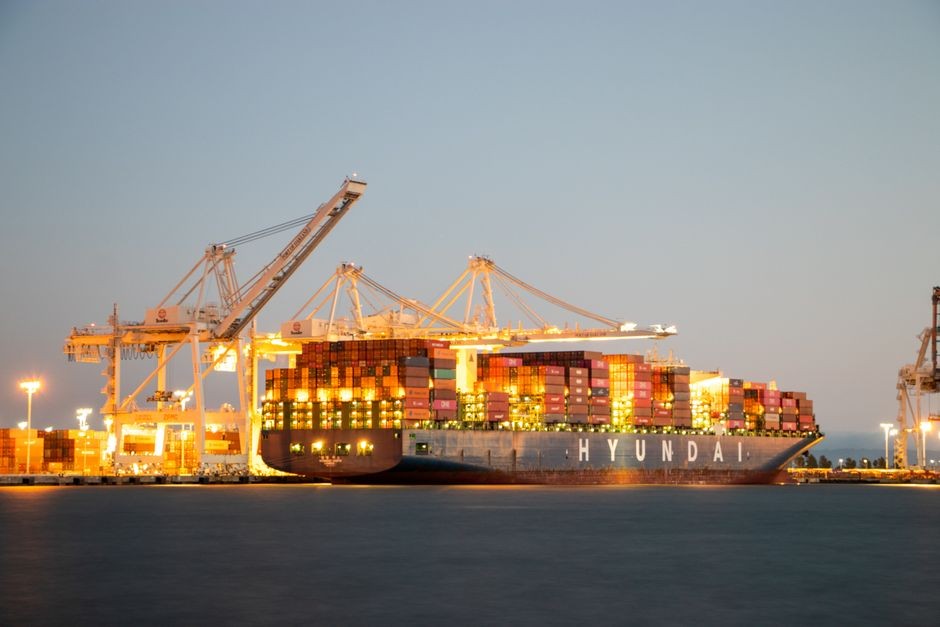
COSCO Shipping Specialised Carriers launched a direct container service from Jiangyin to Manzanillo on 24 September 2026, carrying 500 containers aboard the CSPC Jade. The 22-day route cuts 15 days versus traditional transhipment, targeting Panama Canal bottlenecks. A prior March voyage used the 1,070 teu Tian Lu to Antwerp. Nanjing’s new North Africa service follows 2024 and 2025 Northern Sea Route tests. These moves aim to reduce logistics costs for Yangtze manufacturing hubs producing electronics, automotive parts, and photovoltaics.

Original source: theloadstar.com

COSCO launches Jiangyin–Manzanillo container route in 22 days

Ask SCI.AI about this story

According to The Loadstar, COSCO Shipping Specialised Carriers launched a direct container shipping service from Jiangyin, China, to Manzanillo, Mexico, on 24 September 2026, carrying 500 containers of machinery and finished goods aboard the general cargo ship CSPC Jade.

Yangtze River ports expand deep-sea reach

Jiangyin and Nanjing — two major Yangtze River ports — have recently advanced ocean-going ambitions through new container services. Last Friday, COSCO initiated a container route from Nanjing to North Africa, building on test voyages conducted in 2024 and 2025 via the Northern Sea Route. These developments reflect a coordinated push by Yangtze River ports to establish deep-sea container shipping routes aimed at cutting logistics costs and improving supply chain efficiency for local and hinterland enterprises.

The lower reaches of the Yangtze host critical manufacturing hubs producing home appliances, electronics, automotive parts, and photovoltaics — sectors highly sensitive to logistics cost and time. Traditionally, cargo from this hinterland required barge transport to Shanghai or Ningbo, adding port handling fees, short-haul transport charges, and transit delays. Direct routes eliminate transhipment, reducing complexity and cost exposure.

Time savings and strategic routing

The new Jiangyin–Manzanillo service takes 22 days, cutting approximately 15 days compared to conventional transhipment routes. This timing appears calibrated to mitigate disruptions caused by Panama Canal bottlenecks. Some cargo will be moved onward from Manzanillo into the United States via rail or truck. In March, COSCO Shipping Specialised Carriers also executed a one-off voyage from Jiangyin to Antwerp, Belgium, using the 1,070 teu vessel Tian Lu.

These services collectively signal a structural shift: Yangtze River ports are no longer just inland nodes but emerging origin points for global containerized trade. The 1,070 teu capacity of the Tian Lu, combined with the 500 containers deployed on the CSPC Jade, underscores the scale of initial deployment — modest by mega-vessel standards but operationally significant for river-port integration.

Source: The Loadstar

Compiled from international media by the SCI.AI editorial team.
Ask SCI.AI Finished reading? Continue with SCI.AI. Explore the related policy, route, company and historical context. Continue asking
Stay ahead of supply chain shifts

One email a week: the stories that matter and new risk events — in English, free.

Prefer RSS? Articles Risk events

Xeneta: Asia-US West Coast spot rates jump 343% on Iran war
Warehousing & Transport

Xeneta: Asia-US West Coast spot rates jump 343% on Iran war

Asia-U.S. West Coast container spot rates were 343% above their February 28 level in October, just 14% below the pandemic-era record, according to freight-rate intelligence provider Xeneta. The company forecasts a 5% decline in long-term contract rates for 2027, with the global container fleet expected to grow 6.8% while demand rises between 2.5% and 4%. Xeneta chief analyst Peter Sand traces the volatility to the Red Sea conflict in 2024, U.S. tariffs in 2025 and the Strait of Hormuz closure in 2026, and warns that fuel costs and route disruptions could still upend the outlook.

AI hardware demand lifts air cargo rates 30% year over year
Warehousing & Transport

AI hardware demand lifts air cargo rates 30% year over year

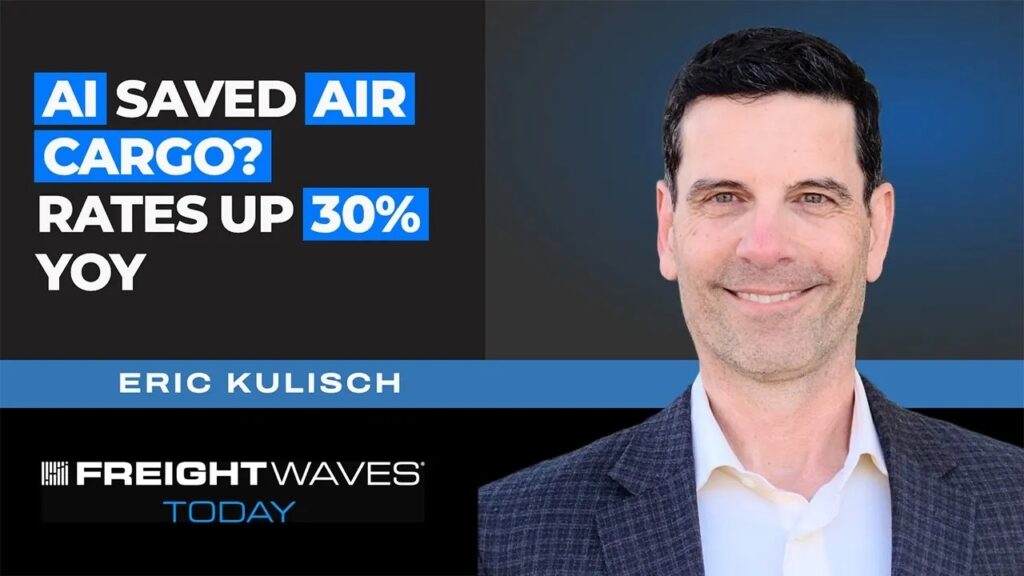
Air cargo rates are up 30% year over year and volumes have grown about 6%, according to FreightWaves, as surging AI equipment demand offsets slower e-commerce and automotive flows. The strength has defied forecasts of a 2025 softening after a down 2024. Meanwhile, Walmart is deploying Wing and Zipline drones across nearly 300 stores; Zipline raised $1.5 billion and Wing plans a $125 million Texas factory ahead of anticipated FAA beyond-line-of-sight rules.

Truckload rejections hold at 12.8% as peak season stalls
Risk & Resilience

Truckload rejections hold at 12.8% as peak season stalls

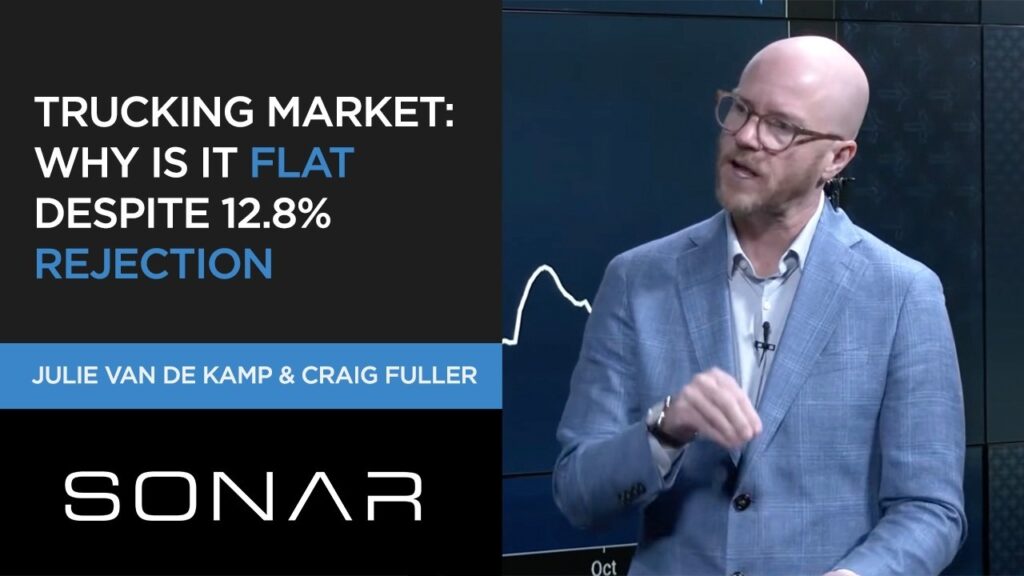
Truckload tender rejections are holding near 12.8%, roughly double the 6% recorded a year earlier, yet FreightWaves analysts Julie Van de Kamp and Craig Fuller say the market shows little of the tightening momentum normally seen ahead of peak season. The rejection index has slipped only about one percentage point in 20 days, even as November's Outbound Tender Volume Index averages 11,434, up 12% year over year and 3% from October. Refrigerated freight is the exception, with reefer rejections at 21% versus 12.6% last year, and a super El Niño could add further pressure on reefer capacity this winter.

Welcome Back!

Login to your account below

Create New Account!

Fill the forms below to register

Retrieve your password

Please enter your username or email address to reset your password.

Scan to share via WeChat

Open WeChat and scan the QR code to share

QR Code

Add New Playlist