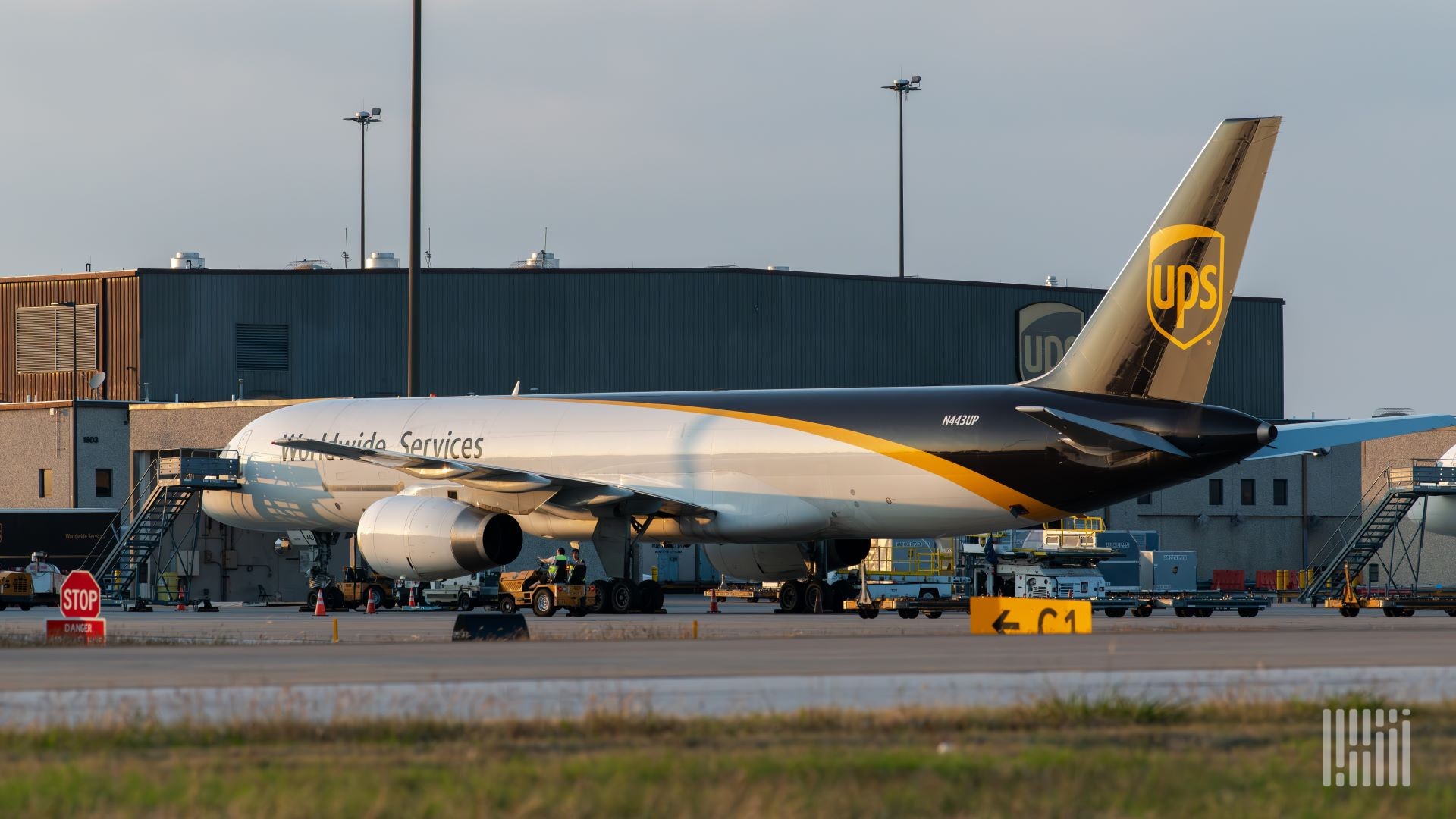
According to FreightWaves, United Parcel Service has restructured its leadership and operations to prioritize integrated global logistics over traditional parcel delivery, accelerating a strategic pivot that includes eliminating 2 million pieces per day of Amazon volume and laying off 30,000 workers.
New leadership for global operations
Nando Cesarone was elevated from president of U.S. operations to executive vice president and chief global operations officer, overseeing UPS’s global air network, airport gateways, surface transportation, building and engineering operations, Intelligent Network of the Future initiatives, automotive operations, and sustainability functions. His appointment reflects UPS’s intensified focus on scalable, cross-border infrastructure rather than domestic last-mile execution.
The company also named Matt Guffey as chief U.S. domestic officer, responsible for small package delivery, Roadie same-day service, Happy Returns, The UPS Stores, and Mail Innovations—the delivery partnership with the U.S. Postal Service. Guffey previously served as chief commercial and strategy officer.
UPS is creating a new role—chief global commercial strategy officer—to lead global strategy, marketing and communications, product management, and pricing. A search is underway to fill the position, underscoring the company’s effort to centralize commercial decision-making across geographies.
Strategic exit from low-margin e-commerce
Over an 18-month period, UPS eliminated 50% of its Amazon volume, or approximately 2 million pieces per day, because those shipments were no longer economical to handle. This phase-out was largely completed by the end of June. Concurrently, UPS closed 150 parcel sort centers, consolidating capacity around higher-yield segments.
The company explicitly stated it intends to deemphasize last-mile delivery of e-commerce packages and instead focus on high-value, premium market segments—including healthcare, industrial, and automotive logistics—as well as services for small- and medium-sized businesses. Healthcare logistics alone now represents a nearly $12 billion business for UPS.
Kate Gutmann, president of international, healthcare and supply chain solutions, will retire after a 37-year career at the company. During her six-year tenure in that role, she played a key part in scaling UPS’s healthcare logistics capabilities and guiding the international segment through rising U.S. protectionism.
Financial and market implications
UPS stock closed at $104.23 on Monday, August 31, 2026, essentially flat for the year. That price marks a decline from $127 per share two years ago and $169 per share on August 31, 2023. The reorganization coincides with normalized e-commerce growth following the pandemic boom and intensifying competition from low-cost delivery providers.
The new operating model standardizes processes globally while preserving local flexibility—a design intended to deliver greater consistency, agility, and scale to customers. UPS emphasized that this shift reflects its evolution from a traditional small package carrier into an integrated logistics provider.
Source: FreightWaves
Compiled from international media by the SCI.AI editorial team.