According to supplychaindigital.com, a World Bank report warns that East Asia’s maritime supply chains face acute strain from port congestion, ageing vessels, safety deficiencies, and urgent decarbonisation demands.
Maritime Backbone Under Pressure
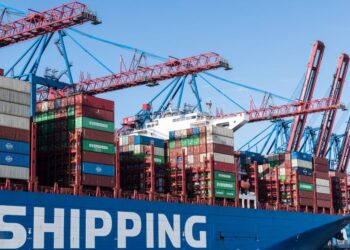
Maritime transport serves as the core supply chain backbone across East Asia and the Pacific, supporting between 16 and 18 million people whose livelihoods depend on global, regional, and domestic trade flows. The sector links producers, consumers, and energy systems — moving bulk commodities, consumer goods, and fuel across extensive archipelagos and high-volume corridors that feed manufacturing and retail networks. Yet these interconnected logistics systems are now under growing strain: gateway ports like Shanghai and Singapore achieve rapid vessel turnaround, but smaller archipelagic terminals suffer slower cargo handling and longer waiting times — disruptions that ripple into feeder services and hinterland deliveries.
The report Ports, Ships and Fuels: Maritime Efficiency, Safety and Sustainability in East Asia and Pacific frames maritime policy through a supply chain lens. It notes that ocean shipping remains the most energy-efficient transport mode, emitting 11 to 17 grams of CO₂ per ton-nautical mile — far less than heavy road freight (70 grams) or aviation (up to 515 grams). Between 2008 and 2024, global seaborne trade expanded by nearly 50%, while energy use rose only 5%, avoiding about 1.8 million barrels of oil a day and saving roughly US$60 billion a year in fuel costs.
Safety Gaps and Ageing Fleets
From a supply chain risk perspective, safety vulnerabilities in domestic fleets represent a critical exposure. The World Bank reports that 28% of vessels are more than 20 years old, and 18% are older than 25 years — significantly increasing risks of fuel inefficiency and operational incidents. In 2024, Port State Control inspections under the Tokyo Memorandum of Understanding conducted more than 32,000 inspections, resulting in nearly 1,200 detentions for serious safety or environmental failures — disruptions that directly interrupt cargo flows.
East Asia and the Pacific supply more than 40% of the global seafarer workforce, making high-quality training and strict crew certification essential to reducing human error. This becomes even more critical as operators adopt alternative fuels such as green methanol and green ammonia — substances with high toxicity and flammability that require gas-detection systems, specialised protective equipment, and emergency-response training.
Fuel Transition and Infrastructure Gaps
The report stresses that long-term sustainability hinges on shifting away from conventional fossil fuels, which still constitute more than 99% of global marine fuel consumption. Bunker fuel accounts for 40 to 60% of vessel operating costs — making propulsion and fuel decisions highly sensitive to price signals and market expectations. While liquefied natural gas (LNG) currently dominates alternative fuel deployment — with more than 470 LNG-fuelled vessels in service — achieving net-zero goals requires large-scale adoption of green methanol and green ammonia across regional bunkering networks.
Yet green methanol production remains minimal: current projects yield only 0.034 million tonnes, while an additional 13.2 million tonnes remain at feasibility stage. Meanwhile, green ammonia faces intense competition — agriculture and chemical manufacturing consume more than 181 million tonnes annually and can absorb higher prices more easily than shipping. The World Bank argues that clear regulatory direction and harmonised global standards are urgently needed to de-risk investment in dual-fuel vessels, low-carbon fuel production, and new bunkering infrastructure.
Governance and Investment Imperatives
Re-engineering maritime routes into low-carbon transport corridors demands major capital commitments across ports, fleets, and energy supply chains serving regional and global trade. In developing economies across the region, port activity generates about 21.5 million tonnes of CO₂e each year, with ships responsible for 70 to 95% of air pollution inside port boundaries — affecting local communities and logistics workers. Digital appointment systems and Just-In-Time arrivals could cut anchorage time and reduce port-area emissions by up to 25%, improving schedule predictability.
“Maritime supply chains are the circulatory system of regional economies. When they function well, businesses become more competitive, markets become more accessible and communities prosper. This report is a call to protect workers, strengthen maritime safety and seize the opportunities presented by a more efficient and sustainable maritime future.” — Carlos Felipe Jaramillo, Vice President for East Asia and Pacific, World Bank
The World Bank underscores that sustainability in the maritime sector is at a decisive inflection point — where long-term success depends on the availability, affordability, and scalability of alternative fuels. Without coordinated governance, targeted investment, and cross-sectoral alignment, resilience gains in efficiency and safety risk being undermined by systemic environmental and operational vulnerabilities.
Source: supplychaindigital.com
Compiled from international media by the SCI.AI editorial team.