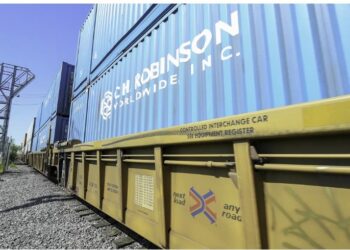
According to www.logisticsmgmt.com, the 37th State of Logistics report — released July 1, 2026 — identifies persistent disruption as a structural feature of global supply chains, with resilience, adaptability, and digital intelligence now serving as core competitive differentiators.
Disruption as Default Operating Environment
The report documents how geopolitical tensions, shifting trade policies, labor shortages, and rising operational costs have coalesced into a sustained volatility regime — not temporary shocks. As stated in the report’s executive summary:
“Continuous disruption—from shifting trade policies and geopolitical tensions to labor shortages and rising costs—has become a permanent feature of the global supply chain.”
This reframing marks a strategic pivot from reactive crisis management to proactive capability building. The analysis covers fiscal year 2025 data and forward-looking projections through Q3 2026, drawing on proprietary surveys of over 1,200 logistics executives across North America, Europe, and Asia-Pacific.
Tariff Policy Accelerates Supply Chain Reconfiguration
A major catalyst cited is the U.S. Office of the United States Trade Representative’s (USTR) implementation of forced labor-based tariffs under Section 301 — targeting 60 trading partners following the expiration of Section 122 tariffs. This policy shift directly impacts importers and 3PLs managing cross-border flows into the U.S. market. Concurrently, the U.S. government announced new 50% tariffs on Canadian goods amid deepening trade disputes — a move expected to reshape nearshoring decisions across automotive and industrial sectors. These measures contribute to an estimated $4.2 billion in additional annual tariff-related cost burdens for U.S.-based shippers, according to freight economics modeling cited in the report.
Digital Intelligence and Execution Gaps
Despite widespread technology adoption, the report reveals a critical execution gap: only 13% of freight forwarders and customs brokers rate their decision-making capabilities as “excellent.” This shortfall persists even as AI-driven tools proliferate — exemplified by project44’s recent corporate split into two independent entities, including the launch of LSP44, an AI-focused logistics software provider. The report also notes that J.B. Hunt rolled out its proprietary Overroute platform after 12 months of internal development — highlighting the growing emphasis on vertically integrated digital infrastructure. Meanwhile, SMC3 Connections panelists emphasized how the Supreme Court’s Montgomery ruling has raised legal liability thresholds for freight brokers’ carrier vetting practices — a development requiring immediate updates to compliance protocols.
Human Capital and Infrastructure Pressures
Labor constraints remain acute: the 32nd Annual Study of Logistics and Transportation Trends — referenced alongside the main report — describes a “human capital crisis” threatening both performance and competitiveness. Industrial real estate dynamics reflect this strain: Colliers reports demand now outpaces new supply, while Cushman & Wakefield confirms slower construction activity and strong leasing volumes are restoring balance to the U.S. warehouse market. Rail metrics underscore infrastructure stress: for the week ending July 18, U.S. rail carload and intermodal volumes showed mixed results, per the Association of American Railroads (AAR). Further, CN publicly backed the proposed Union Pacific–Norfolk Southern merger in exchange for expanded network access — a strategic alignment reflecting capacity bottlenecks in key corridors.
Source: Logistics Management
Compiled from international media by the SCI.AI editorial team.