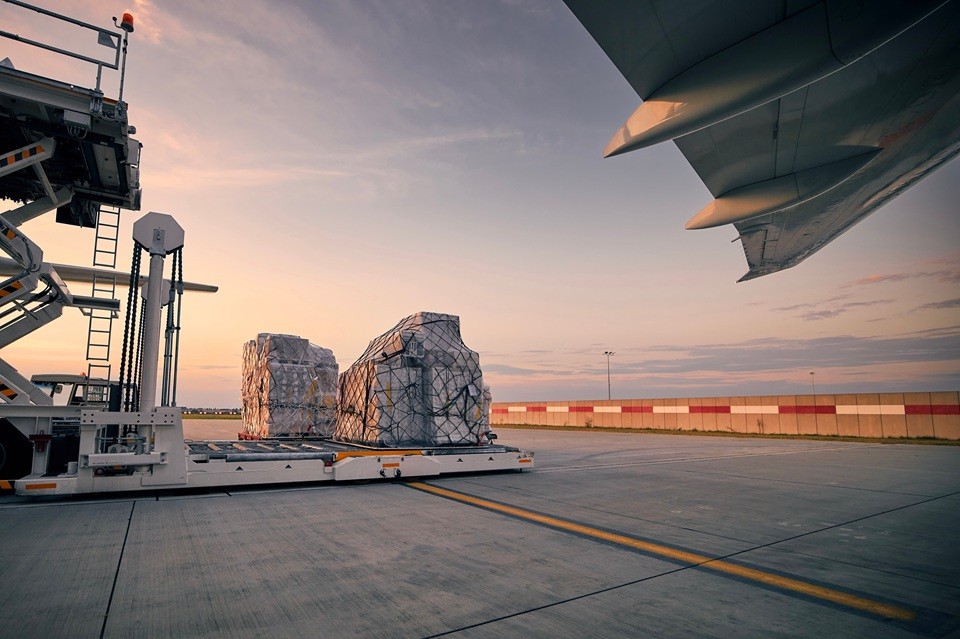
According to www.aircargonews.net, air cargo volumes between the Asia Pacific (APAC) region and Europe declined by 15% year on year in week 28 (6–12 July 2026), as reported by WorldACD Market Data.
EU customs policy triggers sharp volume declines
The drop follows the European Union’s implementation on 1 July 2026 of a temporary €3 customs duty per low-value parcel imported from outside the EU — ending the long-standing de minimis import tariff exemption. EU member states had agreed in December 2025 to introduce this charge for parcels valued below €150, pending the launch of the EU Customs Data Hub in 2028. WorldACD attributed the decline directly to this regulatory shift, stating:
“the impact of the removal by the EU of de minimis import tariff exemptions since 1 July”
Hong Kong and China hit hardest
Hong Kong — identified as an e-commerce hotspot — recorded a 23% year-on-year decline in air cargo volumes to Europe in week 28, following four consecutive week-on-week drops. Volumes from mainland China fell 15% year on year and 13% week on week during the same period. These figures reflect sustained pressure on cross-border e-commerce logistics, particularly for small-parcel shipments previously exempt from duties.
Taiwan and broader regional impacts
Volumes from Taiwan to Europe dropped 24% week on week in week 28, with WorldACD citing typhoon Bavi as a key factor:
“particularly affected capacity and chargeable weight from Taiwan and to a lesser extent volumes and capacity from China and other parts of East Asia”
The storm disrupted operations across multiple East Asian air cargo hubs, compounding the effects of the new EU customs regime.
Broader trade lane shifts and context
This APAC–Europe downturn follows earlier trade realignments triggered by U.S. policy changes. When the United States removed its de minimis exemption for goods from China and Hong Kong in May 2025, transpacific capacity and volumes initially fell — prompting a temporary surge in Asia–Europe air freight demand. While China–U.S. volumes largely recovered, Asia–Europe trade has now softened amid tighter EU controls. Notably, no frontloading activity was observed ahead of the 1 July EU rule change — unlike the pre-deadline surges seen before U.S. tariff deadlines last year, according to WorldACD Market Data.
Contrasting sectoral performance
Despite the e-commerce-related slump, other segments showed resilience. In June 2026, semiconductor and AI-related hardware drove an “exceptional demand” surge in air cargo volumes — underscoring how sector-specific drivers can offset broader regulatory headwinds. Meanwhile, airfreight rates are projected to rise 5% to 15% in 2026 due to Middle East conflict pressures, per Xeneta’s Air Freight Outlook 2026 Mid-Year Update published on 17 July 2026.
Source: Air Cargo News
Compiled from international media by the SCI.AI editorial team.