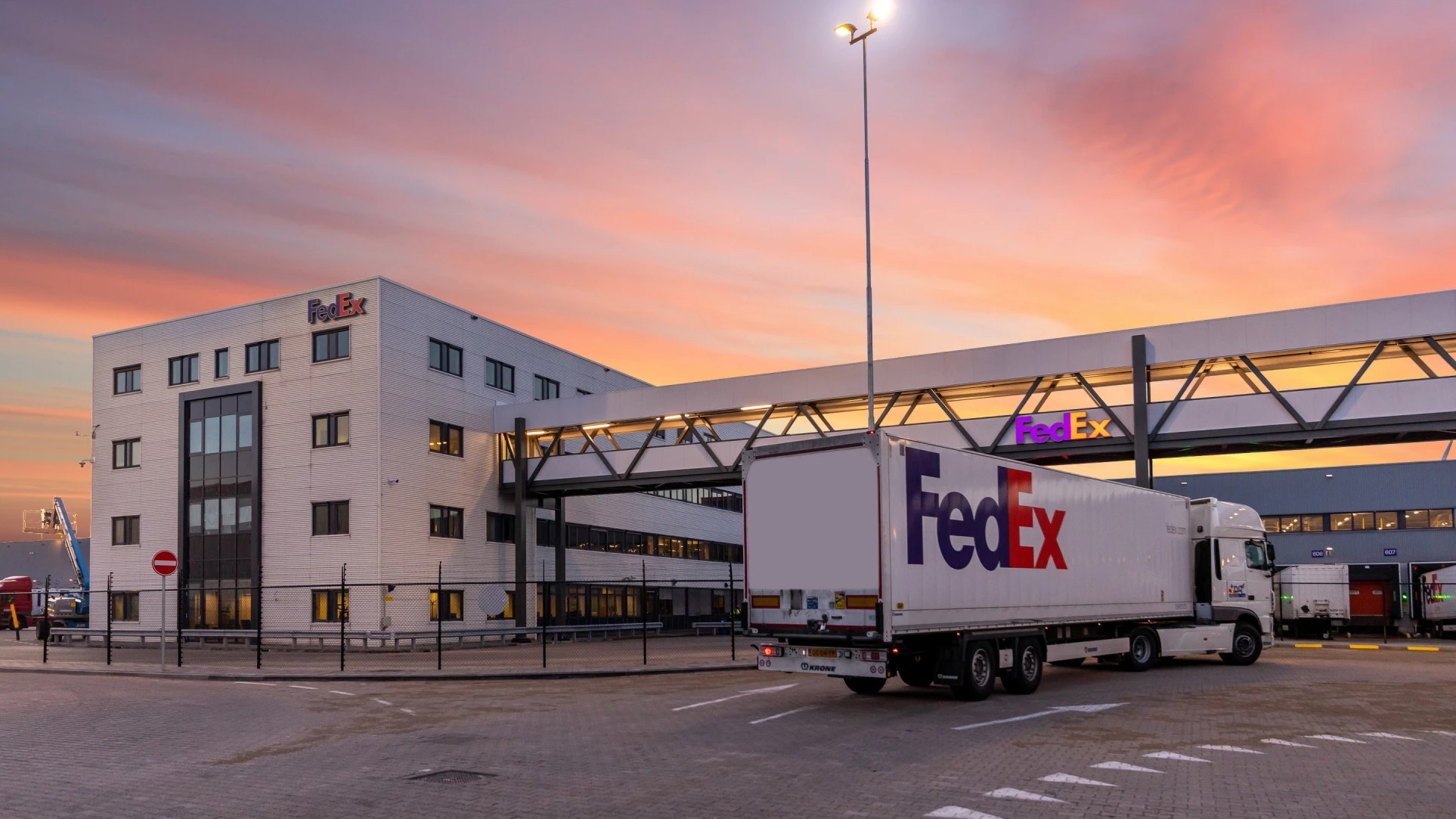
According to FreightWaves, FedEx Corp. is investing $54 million to acquire and develop a new facility adjacent to its existing less-than-truckload (LTL) terminal in Duiven, Netherlands — a move central to its restructured international air cargo strategy focused on premium deferred freight.
Strategic integration of air and road networks
The expansion supports FedEx’s 2024–2026 strategic pivot: the formal integration of its European air freight operations with its LTL-characteristic road network. Following the divestiture of FedEx Freight on Monday, June 01, 2026, FedEx now operates a dedicated deferred air network that runs on an international daytime schedule — carrying time-sensitive but non-urgent heavy freight such as pharmaceuticals, perishables, electronics, and automotive components. This model enables a truck-fly-truck delivery architecture, reducing reliance on full air-only movement and improving aircraft density and ground sorting efficiency.
The company states this deferred air network functions as an extension of its European and U.S. LTL infrastructure — not a standalone LTL service — and targets high-yield shipments that generate 12% market share within the $22 billion global premium air freight segment. That segment sits inside the broader $90 billion deferred air cargo market, which FedEx has prioritized since 2024.
Capacity upgrade at Duiven hub
The Duiven facility — located in the eastern Netherlands near the German border — will see its dock door count increase by 65, bringing the total to 265 docking spaces. The project will also boost palletized freight handling capacity by more than 50%. These upgrades are designed to eliminate intermediate consolidation steps: more shipments will move directly from FedEx customers to final destinations without transiting through third-party hubs.
“Our European road network plays a vital role in supporting this ambition,” said Safia Ladhari, managing director, network operations at FedEx, in a news release.
“It enables us to move intercontinental air freight shipments efficiently across Europe by road, complementing our air operations. This integrated…model is a defining element of our very competitive freight services and offers customers a highly reliable and cost‑efficient solution.”
According to the report, the Duiven site has experienced strong growth in parcel and freight volumes over the past year — especially during peak periods like the year-end season.
Phased execution and operational logic
FedEx plans to execute the expansion in phases. The first phase focuses on meeting baseline operational requirements for the new facility, including utilities, security, and initial staffing. Subsequent phases will emphasize connectivity between the new building and the existing terminal — integrating IT systems, material handling equipment, and real-time visibility platforms to synchronize cross-dock workflows. The investment includes both property acquisition and construction costs, with no separate breakdown provided in the source.
This infrastructure upgrade aligns with industry-wide trends: UPS recently upgraded its US–Mexico industrial shipping service level, and DHL has expanded its European air-road intermodal gateways in Leipzig and Brussels. For supply chain professionals, the shift means greater flexibility in balancing speed, cost, and reliability — particularly for temperature-controlled or high-value consignments where partial air transport remains essential but full air movement is economically inefficient.
Source: FreightWaves
Compiled from international media by the SCI.AI editorial team.