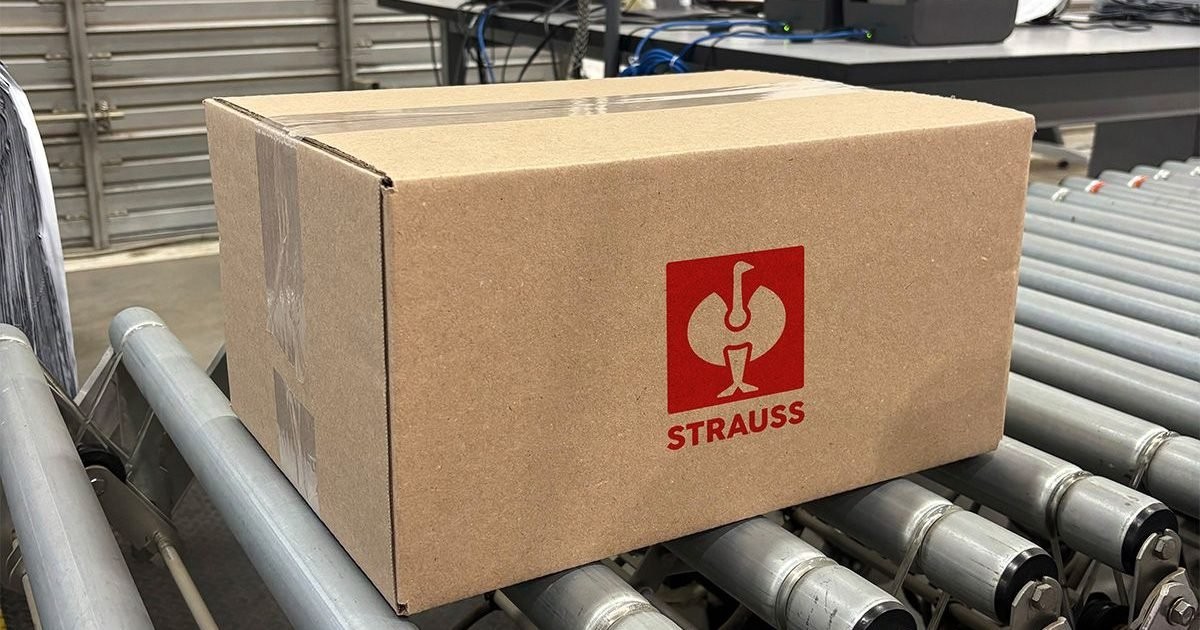
According to supplychaindigital.com, Strauss and DHL Supply Chain have launched an integrated logistics partnership in Westerville, Ohio — a Columbus metro area facility that embeds embroidery and digital print machinery directly into DHL’s distribution center.
Co-located customisation slashes lead times
The facility compresses what was historically a multi-step, off-site custom workwear process — involving blank inventory procurement, third-party shipping, and external embroidery — into a single, in-house workflow. By co-locating advanced customisation equipment inside DHL’s warehouse, Strauss eliminates handoffs and inter-facility transit, enabling orders to move from garment pick to packaged shipment within hours.
This ‘one-touch’ operational model reduces traditional B2B lead times from weeks to days. It also supports profitable small-batch production for mid-sized corporate clients — a capability previously constrained by minimum order volumes and extended turnaround windows. The integration was completed in six months, with go-live occurring on 24 June 2026. The first customer package shipped the same afternoon.
Strategic location and scalable infrastructure
The Westerville, Ohio site was selected for its proximity to Strauss’s US headquarters — also located in Columbus — and its logistical advantage: the facility lies within a one-day drive of nearly 60% of the US population. This geographic alignment shortens last-mile delivery windows and simplifies cross-functional coordination between Strauss’s commercial, product, and logistics teams.
The hub currently supports an annual throughput of up to 1.3 million units, with physical layout and digital architecture designed for rapid scaling. As Strauss pursues growth across North America, the facility’s modular design allows for incremental expansion of both floor space and automation capacity without disrupting live operations.
End-to-end digital integration underway
Strauss is preparing to launch a heavily upgraded US B2B online store that functions as a direct portal into DHL’s warehouse management systems. When corporate buyers upload logos and configure uniform specifications online, those digital assets are automatically routed to the customisation queue in Columbus — eliminating manual data entry, reducing errors, and accelerating time-to-print.
This real-time connectivity reflects a broader shift in third-party logistics (3PL) roles. As Patrick Bennett, CFO of DHL Supply Chain North America, explained:
“By integrating fulfilment and customisation into a single, scalable operation, we’re enabling Strauss to expand its footprint with greater speed, efficiency and consistency.” — Patrick Bennett, CFO, DHL Supply Chain North America
The partnership transforms DHL from a traditional box-mover into a co-manufacturer — absorbing value-added services such as embroidery and digital printing directly into the fulfilment workflow.
Strategic implications for supply chain professionals
For supply chain practitioners, the Strauss-DHL model demonstrates how postponement strategies — delaying final configuration until after order receipt — can reduce working capital tied up in pre-branded inventory and mitigate dead stock risk. It also underscores the growing expectation that 3PLs deliver not just transportation and storage, but embedded manufacturing capabilities aligned with client brand requirements.
From a practitioner standpoint, success hinges on interoperable IT systems, shared KPIs across partners, and joint governance of quality standards at every stage — from garment sourcing through final packaging. The 24 June 2026 go-live date and 1.3 million units per year capacity serve as concrete benchmarks against which other companies evaluating similar co-location models can measure feasibility and ROI.
Source: supplychaindigital.com
Compiled from international media by the SCI.AI editorial team.