According to www.scmp.com, the AI investment surge is delivering uneven economic outcomes — boosting high-tech supply chain economies while exacerbating divergence and financial instability risks globally.
Economic Divergence Amid AI Hype
The article warns that AI’s macroeconomic impact is fundamentally bifurcated: nations deeply embedded in semiconductor fabrication, data center infrastructure, and AI hardware supply chains are experiencing tangible growth momentum, whereas commodity exporters and service-oriented economies with limited digital infrastructure face stagnation or heightened vulnerability. As veteran journalist Anthony Rowley notes, “The AI revolution points to higher economic growth for economies linked to the tech supply chain, with others being left behind.” This dynamic is not theoretical — it’s already visible in capital allocation, equity valuations, and infrastructure spending patterns across Asia and beyond.
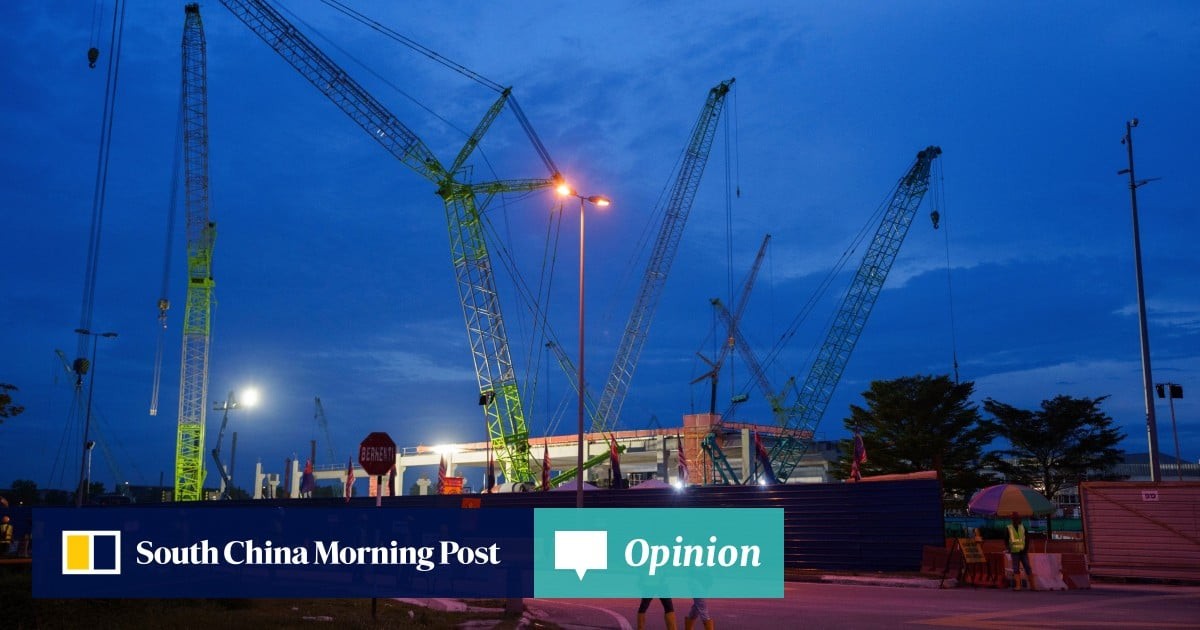
AI-driven investment enthusiasm has spilled far beyond stock markets into physical capital formation, generating real-world bubbles in data center construction, chip fabrication facilities, and cloud infrastructure. According to the report, these surges are tightly coupled: “Where goes the latter, the former goes, too.” That interdependence heightens systemic risk — a correction in hardware demand could trigger cascading effects across financial markets and corporate balance sheets.
IMF Projections Highlight Fragile Optimism
A World Economic Outlook report from the International Monetary Fund (IMF) published on July 8, 2026 anchors the analysis. While offering “pleasant surprises” on recent growth, the IMF simultaneously sounds alarms on fragility. The fund projects global growth of 3 per cent in 2026 and 3.4 per cent in 2027, down from the 3.5 per cent average observed in 2024–25. These figures are broadly unchanged from the IMF’s April forecast — suggesting no upward revision despite AI-related hype.
The report underscores that elevated growth in select Asian economies — including Taiwan, South Korea, and parts of Southeast Asia — stems directly from their role in AI hardware production and data center deployment. In contrast, many emerging markets face mounting debt pressures and currency volatility as capital flows concentrate in AI-adjacent sectors. The IMF’s cautious stance implies that current optimism may be “misplaced,” particularly if AI productivity gains fail to diffuse beyond core technology clusters.
Supply Chain Implications for Practitioners
For supply chain professionals, the AI-driven divergence translates into concrete operational shifts. Companies sourcing semiconductors, advanced packaging materials, or liquid-cooling systems for AI servers are seeing compressed lead times and intensified competition for capacity — especially in Taiwan and South Korea. Meanwhile, logistics providers serving non-tech sectors report flat volumes and pricing pressure. The concentration of AI infrastructure investment in just five major global hubs — Singapore, Tokyo, Seoul, Taipei, and Kuala Lumpur — is reshaping regional freight routing, port call frequency, and warehousing demand.
This geographic skew creates dual challenges: first, over-reliance on a narrow set of geographies increases exposure to geopolitical friction, natural disasters, and export controls; second, it accelerates obsolescence risk for legacy logistics assets outside AI corridors. As one industry analyst observed, “If your network isn’t touching the AI hardware value chain — either upstream in components or downstream in data center operations — you’re not riding the wave. You’re watching it pass by.”
Source: South China Morning Post
Compiled from international media by the SCI.AI editorial team.