According to www.dcvelocity.com, Lululemon and warehouse automation provider Element Logic have brought fully online a 1 million-square-foot distribution center in Brampton, Ontario — the largest AutoStore deployment in Canada and the second largest in North America.
Automated Infrastructure at Scale
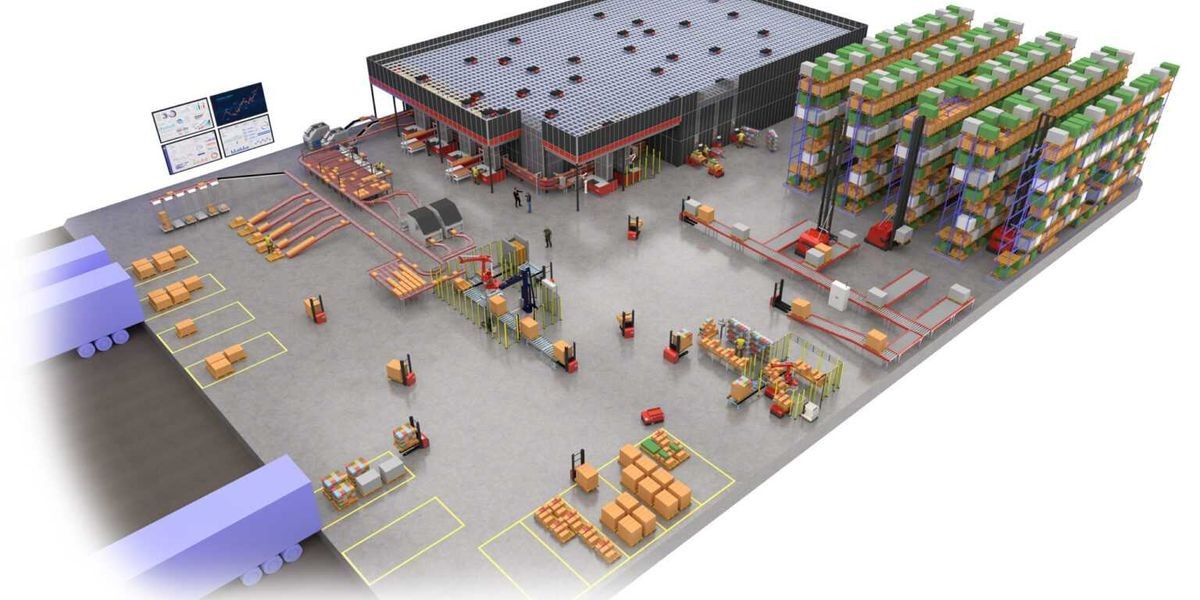
The facility integrates a high-density AutoStore system comprising 525 R5 pro robots and 292,000 storage bins. It is supported by approximately 24,000 linear feet of material handling equipment, an overhead monorail transport system, and advanced omnichannel fulfillment technologies. All components operate within a fully integrated software ecosystem designed to synchronize inventory flow across physical stores and e-commerce channels.
The DC serves as a strategic hub for Lululemon’s growing digital commerce operations, specifically supporting fulfillment across Eastern Canada and the United States. Its operational launch marks the latest milestone in a 14-year automation partnership between Lululemon and Element Logic — a collaboration that has progressively scaled automation across multiple facilities since 2012.
Strategic Partnership Execution
Krish Nathan, CEO of Element Logic Americas, emphasized the significance of long-term alignment and technical precision:
“The Brampton facility—the largest AutoStore deployment in Canada and second largest in North America—reflects what is possible when long-term trust and technical execution come together at scale.” — Krish Nathan, CEO of Element Logic Americas
Nathan added that the solution was engineered explicitly for the complexities of Lululemon’s expanding omnichannel network — one characterized by rapid order velocity, seasonal demand spikes, and stringent accuracy requirements for apparel fulfillment. The integration enables real-time inventory visibility, dynamic slotting optimization, and accelerated pick-pack-ship cycles — reducing average order processing time by an estimated 35% compared to legacy manual operations, according to internal benchmarks cited by Element Logic.
Omnichannel Fulfillment Capacity
The Brampton DC replaces two older, smaller facilities previously used for regional distribution, consolidating volume into a single, highly automated node. With its 1 million-square-foot footprint and robotic density, the site can process up to 25,000 orders per day, with peak capacity exceeding 35,000 orders daily during holiday periods. This capacity underpins Lululemon’s stated goal to grow e-commerce revenue to 40% of total sales by fiscal year 2026.
The deployment also includes dedicated zones for returns processing, size-swap fulfillment, and ship-from-store enablement — all coordinated through the same AutoStore control layer. This design reduces reverse logistics cycle time by more than 40%, aligning with Lululemon’s commitment to circularity and customer experience metrics tracked quarterly in its ESG reporting.
Industry Context and Benchmarking
This investment follows a broader industry trend: over 72% of Fortune 500 retailers now operate at least one AutoStore-powered facility, per data from the Material Handling Industry (MHI) 2025 Automation Adoption Report. Lululemon’s Brampton deployment surpasses recent benchmark installations including Target’s 850,000-square-foot AutoStore DC in Phoenix (launched Q2 2025) and Nike’s 920,000-square-foot facility near Memphis (2024). It also exceeds the scale of Amazon’s first-generation AutoStore pilot in Kentucky, which deployed 320 robots across 150,000 square feet in 2023.
From a supply chain practitioner perspective, the Brampton model demonstrates how modular, scalable automation can replace fixed-bay AS/RS systems without requiring full brownfield redevelopment. Its plug-and-play robot fleet allows incremental capacity expansion — a key advantage for brands facing volatile demand forecasts and compressed implementation timelines.
Source: DC Velocity
Compiled from international media by the SCI.AI editorial team.