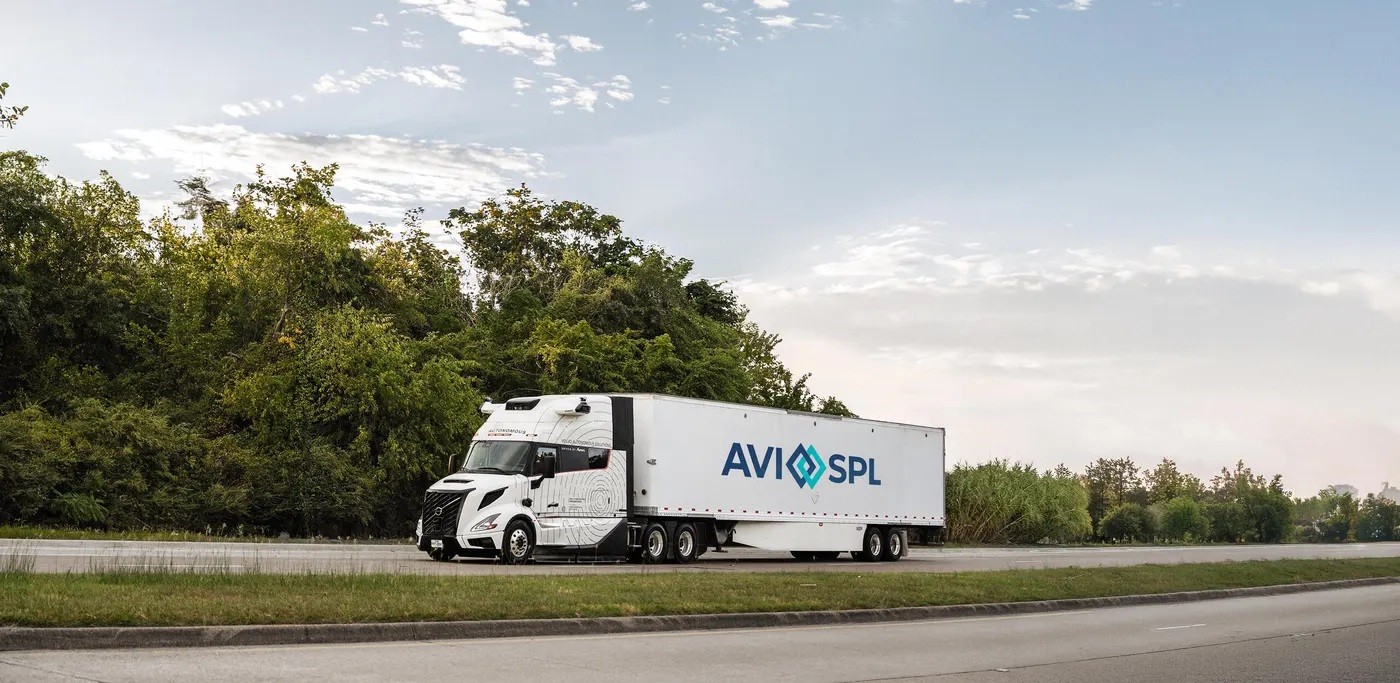
According to FreightWaves, AVI-SPL launched commercial autonomous freight operations on the 239 mile route between Dallas and Houston the week of June 8, 2026, marking the first fully operational, revenue-generating autonomous trucking corridor in the U.S. for the technology solutions provider.
Real-world deployment, not pilot rhetoric
AVI-SPL deliberately announced what it had already achieved—not aspirations or roadmaps. “We think that a lot of people are, especially with AI, saying, ‘This is what we’re going to do [and] we hope to do this,’” said Jeremy Codiroli, vice president of global supply chain at AVI-SPL, in an interview with FreightWaves. “And we wanted to really make a point of saying, ‘We did this. We are doing this. This is not a dream, this is real life.’” The initiative directly addresses structural labor constraints: driver headcount shortages, hiring bottlenecks, and retention challenges across the U.S. trucking industry.
Hardware, software, and safety architecture
The operation relies on the Volvo VNL Autonomous semi-truck—engineered with redundant systems across steering, braking, communication, computation, power management, energy storage, and vehicle motion management—and integrates Aurora Innovation’s Aurora Driver transportation management system (TMS). The Volvo vehicle was assembled at its flagship New River Valley plant in Dublin, Virginia, the largest Volvo Trucks facility globally. Though Level 4 automation does not legally require redundancy, Volvo embedded it from inception as a foundational safety principle. Current deployments include human observers onboard—not drivers—to monitor operations and ensure adherence to plan.
Two-way logistics with circular economy alignment
The Dallas–Houston corridor functions as a true two-way commercial route. On inbound trips, autonomous trucks transport audio-visual electronics and equipment from major Dallas-based vendors to Houston for customer installations. Return trips carry end-of-life electronics from Houston back to Dallas, where recycling partners recover precious metals—directly supporting AVI-SPL’s sustainability initiatives. “The whole point is to be sustainable, and this fits into that perfectly,” Codiroli told FreightWaves. Internal planning processes were overhauled to support autonomy: shipment consolidation increased significantly to maximize truckload utilization, replacing frequent smaller loads.
Timeline to full autonomy and economic impact
Fully driverless operations—without any onboard observers—are scheduled to begin in Q1 2027. Aurora Innovation confirmed this timeline in a June LinkedIn post. Volvo Autonomous Solutions stated in its June 10 Capital Markets Day presentation that removing human constraints enables around-the-clock operation, thereby “doubling asset utilization”—a change the company called “one the industry cannot ignore.” Codiroli projected that autonomous trucking could account for up to 50% of all U.S. highway miles traveled within the next five to ten years.
Strategic leadership in supply chain transformation
Codiroli framed the shift in historic terms: “If you look at the biggest improvements to the supply chain strategy overall, worldwide or just in the U.S., this is one of the biggest opportunities that we’ve seen in decades,” he said. “You would have to look very far back to try to find some kind of comparable change—is it potentially [like] looking back at the invention of the plane? That’s the magnitude of impact that we’re talking about.” He emphasized urgency: “The only people who will be able to ship on time, on a schedule they want, are those that have already embraced autonomous shipping technology and integrated it into their supply chain.” AVI-SPL’s early adoption positions it as a leader in supply chain automation amid tightening labor markets and rising operational complexity.
Source: FreightWaves
Compiled from international media by the SCI.AI editorial team.