According to thuonghieucongluan.com.vn, Hanoi’s export value reached $10.585 billion in the first six months of 2026 — up 5.5% year-on-year — driving accelerated demand for high-performance logistics services across production, trade, and global supply chain integration.
Export Growth and Structural Shifts
The Hanoi Department of Industry and Trade reported that domestic enterprises accounted for 54.2% of the city’s exports in early 2026, contributing $5.737 billion, though this represented a 3.6% decline compared to the same period last year. Meanwhile, foreign-invested enterprises (FDI) generated $4.848 billion, or 45.8% of total exports, rising 18.8%. This divergence underscores growing reliance on FDI-led manufacturing output — particularly in electronics, machinery, and transport equipment — which in turn intensifies demand for time-sensitive, compliant, and traceable logistics solutions.
Import Surge and Input Logistics Pressure
Imports surged even more sharply: $30.911 billion in the first half of 2026, a 39.6% increase over 2025. Domestic firms imported $25.730 billion (83.2% of total imports), up 41.5%, while FDI entities imported $5.181 billion, up 30.9%. Key import categories included transport vehicles and parts ($3.188 billion, +80.9%), petroleum ($3.472 billion, +70.5%), and machinery and equipment ($5.748 billion, +31.3%). These figures signal mounting pressure on inland distribution networks, bonded warehousing, customs clearance capacity, and last-mile delivery infrastructure — especially for just-in-time manufacturing inputs.
Global Disruptions Amplify Logistics Complexity
International volatility significantly impacted operations: energy price swings, elevated ocean freight costs, global inflation, and weakening demand extended transit times, increased fuel expenditures, and triggered container shortages at major ports. As the source states, these conditions “highlight the urgent need to develop logistics with lower costs, greater supply chain resilience, diversified transport routes, and enhanced enterprise autonomy.” The Ministry of Industry and Trade and Hanoi’s Department of Industry and Trade jointly reviewed implementation of Vietnam’s National Logistics Development Strategy 2025–2035 — with a vision to 2050 — during a working session on July 8, 2026.
Market Diversification Drives Multimodal Needs
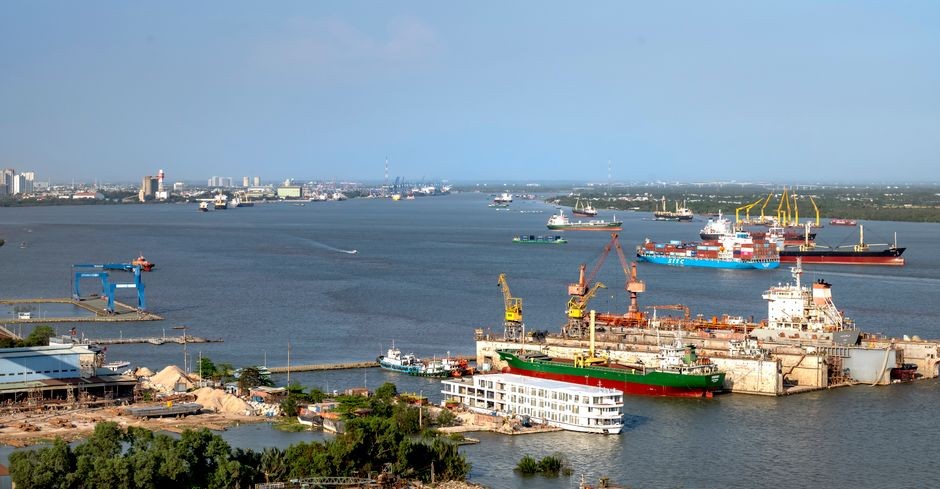
Hanoi’s top export destinations reflect complex routing requirements: the United States ($2.096 billion, +18.7%), ASEAN ($1.863 billion, +2.6%), the EU ($1.461 billion, +23.4%), China ($974 million, +34.8%), and Japan ($953 million, −3.1%). This geographic spread demands seamless integration across air freight via Noi Bai International Airport, inland waterways, dry ports, road networks, and northern seaports — reinforcing Hanoi’s role as a strategic logistics coordination hub for the Red River Delta and northern Vietnam despite lacking an international seaport.
Five Priority Logistics Segments Emerge
The report identifies five core logistics service categories now shaping investment and policy priorities in Hanoi: (1) export-oriented logistics; (2) import logistics for raw materials, machinery, components, fuel, chemicals, metals, and consumer goods; (3) urban logistics supporting wholesale, retail, markets, supermarkets, shopping malls, and convenience stores; (4) e-commerce and cross-border e-commerce logistics; and (5) digital logistics and logistics data platforms aimed at cutting transaction costs, shortening processing times, and minimizing declaration errors. According to the source, “These segments require high-quality warehousing, packaging, cold-chain capabilities, documentation handling, origin tracing, precise delivery windows, technical compliance, and international market connectivity.”
Second-Half Targets and Operational Imperatives
To meet Hanoi’s full-year 2026 export target of $23.256 billion — a 12% increase — the city must generate $12.671 billion in exports during the remaining six months, averaging $2.112 billion per month. Achieving this will require coordinated action on market access, trade promotion, Free Trade Agreement utilization, logistics cost reduction, delivery time compression, and regulatory alignment with destination-market standards. As one official noted during the July 8 meeting:
“Logistics development is no longer optional — it is foundational to sustaining export competitiveness and industrial upgrading in Hanoi.”
Source: thuonghieucongluan.com.vn
Compiled from international media by the SCI.AI editorial team.