According to The Loadstar, cargo owners importing goods into the United States face rising inland transportation costs amid surging container volumes, tightening trucking capacity, and tariff-driven demand front-loading — with intermodal volumes climbing 10% from April to May 2026.
Rising import volumes strain inland infrastructure
US containerized imports accelerated sharply beginning in May 2026, rising 6.6% over April to 2,428,758 TEU, according to Descartes Systems’ June Global Shipping Report. The US National Retail Federation attributed this surge to an early peak season triggered by back-to-school merchandise shipments — a trend that pushed June container imports up another 6%. This front-loading behavior intensified as importers rushed to secure goods ahead of anticipated cost hikes, including new US tariffs targeting over 60 countries, such as Vietnam, Japan, the EU, and Canada.
The newly announced tariffs — layered atop existing levies — threaten to increase import bills by up to 12.5%. Compounding pressure, the upcoming quarterly bunker adjustment factor (BAF) update is expected to lift fuel surcharges further, adding to already elevated operating costs.
Trucking capacity contraction drives rate spikes
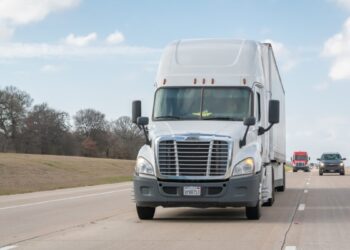
The import surge coincides with a shrinking over-the-road trucking sector. Washington’s regulatory campaign — aimed at removing non-domiciled drivers and those lacking sufficient English proficiency — has tightened capacity even during earlier low-demand periods. That contraction accelerated following the recent fuel price shock, pushing dry van spot rates to an all-time high for the week ending 4 July 2026.
ITS Logistics’ May Port/Rail Ramp Report described conditions as “volatile” — the most severe since the COVID-19 pandemic — citing record truckload pricing, sharp capacity contraction, and rebounding import volumes. According to one industry observer, rail carriers were unprepared for the sudden intermodal volume surge, contributing to slower train speeds and emerging congestion risks.
Rail shift intensifies pricing pressure
The widening gap between truck and rail pricing has driven a notable modal shift: intermodal volumes rose 10% month-on-month in May, concentrated primarily in the 550 to 1,500-mile range. For the week ended 27 June 2026, US railways registered a 7% traffic increase, with total carloads up 3.3% and intermodal volume jumping 10.1%, per the Association of American Railroads.
“Ocean and rail container drayage markets may not be feeling the market squeeze yet, but shippers should be prepared for tightening when peak season begins. It is not a question of if inland trucking container haulage rates increase, but when,”
— Paul Brashier, VP of global supply chain, ITS Logistics
This structural shift has begun to impact operational performance: slower train speeds suggest growing network stress — a precursor to imminent intermodal rate hikes aligned with ITS Logistics’ forecast of rising drayage and intermodal charges.
Broad industry alignment on volatility
ITS Logistics’ assessment is echoed across the sector. In its latest market update, Maersk stated that “North American supply chains remain relatively fluid overall, but conditions are becoming more dynamic across key ocean, gateway and inland corridors.” The convergence of multiple pressures — including the ongoing closure of the Strait of Hormuz, which elevates fuel costs, disrupts ocean carrier operations, and reshores energy exports — has created “one of the most operationally volatile freight environments in recent history,” according to ITS Logistics’ monthly Supply Chain Report.
The logistics provider noted that while ocean and rail drayage markets had not yet fully reflected the squeeze, the timing of rate increases was inevitable — not speculative. Echo Global Logistics’ acquisition of ITS Logistics on 21 January 2026 further underscores the strategic focus on navigating these complex inland dynamics.
Source: The Loadstar
Compiled from international media by the SCI.AI editorial team.