The Impact of Automation and Artificial Intelligence on Supply Chain Efficiency: Transforming Logistics for the Future
September 9, 2024 | Author Jayesh Kamble

In today’s rapidly changing global market, the supply chain industry is undergoing significant transformation due to the introduction of automation and artificial intelligence (AI). Advanced technology enables businesses to automate their supply chains, leading to more efficient service delivery, cost reduction, and increased product availability. During the pandemic, the application of automation and AI further facilitated cost-cutting and enhanced product supply as companies sought alternative methods to maintain operations amid labor shortages, fluctuating consumer demand, and logistical disruptions. This article defines the use of automation and AI as a means to revolutionize supply chains, create new logistics routes, and shape future world trade. According to Consegic Business Intelligence, the Industrial Automation and Control Systems Market is projected to exceed $864.94 billion by 2031, with a value of $379.47 billion in 2023, expected to grow to $413.87 billion in 2024, and at an average annual growth rate of 10.8% from 2024 to 2031.
Related Reading: Artificial Intelligence – How It Is Shaping and Redefining Logistics
1. Automation: Minimizing Human Intervention and Enhancing Accuracy
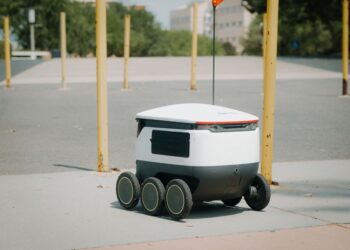
Automation technology has significantly redefined supply chain management by reducing human impact, ensuring error-free operations, and enhancing operational efficiency. Key areas impacted include fully automated retail warehouses equipped with robotic systems that can perform tasks such as picking, packing, sorting, and packaging with ultra-high precision and speed. Modern warehouses rely on autonomous mobile robots (AMRs) and automatic guided vehicles (AGVs), which are the backbone of contemporary facilities, minimizing human input and eliminating human error. Major companies like Amazon and Walmart have integrated robots into their warehouses to facilitate rapid and accurate order fulfillment. Advanced conveyor systems and robotics are used for efficient sorting and packaging. Automation technology can identify and categorize items based on size, weight, and destination, ensuring proper packaging and labeling. This reduces bottlenecks, allowing businesses to process more orders in a shorter time frame. Inventory automation, including AI-enhanced RFID sensors, eliminates manual inventory checks. By using AI technologies, RFID tags, and barcodes, companies can track inventory levels in real-time, preventing overstocking or understocking. Through automated control settings, reordering occurs without managerial intervention, meaning warehouse managers do not need to spend time on manual inventory counts. Automation extends into the transportation segment of supply chains with autonomous trucks, drones, and delivery robots that are reducing dependency on human drivers and making logistics operations faster and more efficient. Major carriers like UPS and FedEx are exploring these concepts to enhance route intelligence and cut costs.
2. Artificial Intelligence: Enabling Smarter Decision-Making
The application of AI is evolving supply chain automation by introducing data-driven decision-making. Most notably, AI technology impacts the transportation sector within supply chains. Companies can now better understand demand, create intelligent routes, and monitor risk levels in their decision-making processes through the integration of AI.
AI is being used as a sales forecasting tool to more accurately detect demand fluctuations. Machine learning algorithms can predict data from historical sales figures, consumer behavior patterns, and external factors such as weather and economic trends, then use this information to estimate demand and optimize production plans and distribution strategies. This reduces the likelihood of stockouts and decreases inventory value, positively impacting supply chains overall.
AI algorithms are still being tested on real-time data derived from traffic patterns, weather forecasts, and delivery locations. These algorithms present excellent solutions for logistics companies as they reduce fuel usage, increase delivery speed, and meet delivery times. AI-based route planning is crucial for businesses with complex networks or those delivering directly to customers.
Another area where AI is being used is in procurement departments, simplifying supplier selection, contract management, and risk assessment through embedded intelligent features. By applying machine learning algorithms, performance reviews of suppliers are conducted, combined with geographic and political risks. The algorithm then suggests faster purchasing methods, reducing supply chain vulnerabilities and lowering the risk of crises due to supplier disruptions.
AI-controlled inventory systems can automatically initiate procurement based on consumer demand and real-time inventory levels in stores. This ensures operations have specific inventories at all times, directly reducing holding costs and unnecessary stock.
3. The Role of AI in Enhancing Supply Chain Visibility and Transparency
Ideally, transparency and visibility are major challenges that must be addressed in supply chain management. AI technology is addressing these issues by providing users with a comprehensive view of operations and insights from end-to-end without any visual or network capacity limitations:
AI platforms can supervise
The entire supply chain from raw material procurement to final delivery, enabling quick access to the latest shipment statuses, inventory levels, and production schedules. These platforms collect data from various sources including IoT devices, sensors, and logistics management systems, allowing companies to have a handle on their supply chain operations.
The combination of AI and blockchain technology is powerful. Although not yet widely adopted in logistics, this combination offers significant potential. The integration of AI and blockchain brings advantages to unified supply chains. Blockchain provides an immutable distributed ledger that AI can analyze for insights and confirm product authenticity and compliance. This combination is primarily used in the pharmaceutical industry, food and beverage sector, and luxury goods industries where detecting tampered or defective products is critical.
Risk prevention is a domain where AI analyzes data from different sources to predict disruptions and propose mitigation measures. For example, AI algorithms can evaluate threats such as supplier bankruptcies, natural disasters, or political instability so that companies can adjust their procurement strategies accordingly, minimizing impacts. Insightful enterprises tend to build flexible and robust supply chains to withstand catastrophic events.
4. Collaborative Robots (Cobots) and AI in Enhancing Human Operations
One of the most critical challenges in supply chain management is visibility and transparency within logistics networks. AI technology addresses these issues by providing end-to-end visibility and real-time insights into supply chain operations:
AI platforms can monitor every step of the supply chain model, from raw material acquisition to delivery to the end consumer, offering ultra-fast tracking of all shipment updates, inventory levels, and production schedules. Data is collected in real-time through IoT devices, sensors, and logistics management systems, giving company owners a comprehensive view of their entire supply chain operations. This interface technology combined with blockchain significantly enhances traceability and transparency in supply chains. Blockchain provides an immutable record set while AI enables companies to analyze these data swiftly, detect anomalies, confirm product authenticity, and comply with regulatory requirements. This combination is particularly beneficial for the pharmaceutical industry, food and beverage sector, and luxury goods industries where product authenticity and safety are paramount.
AI has reached new heights in risk management practices through its analytical capabilities by predicting potential crises from multi-source data and providing mitigation strategies. For example, AI algorithms can assess risks such as supplier bankruptcies, natural disasters, or political instability, allowing companies to make timely decisions to minimize or prevent threats to their supply chains, ensuring continuous operations. This level of insight enables businesses to adapt to changing market conditions and scale up their operations accordingly.
Collaborative robots (cobots) and AI are enhancing human operations by working alongside workers in a safe and efficient manner, improving productivity while reducing the risk of repetitive strain injuries.
5. The Future of Supply Chains under Automation and AI
The revolution in supply chain management will be profoundly influenced by widespread automation advancements and accompanying AI technologies. These will be among the most significant changes in the coming years: hyper-automation, where AI, robotic process automation (RPA), and machine learning coexist, has become a primary asset in enterprise supply chains, achieving “zero human touch.” These solutions enable businesses to adapt to changing market conditions and scale their operations accordingly. The future vision is of fully automated supply networks that are so intelligent they can self-configure, self-repair, and self-manage without human oversight.
Autonomous supply chains will be adaptive, adjusting production schedules based on pending orders, ongoing production, warehouse occupancy, and demand. Similarly, they will automatically identify obsolete requirements. AI is the golden tool for transforming supply chains into more sustainable ones by optimizing resource use, reducing waste, and lowering greenhouse gas emissions. Simulations contributed by AI help develop greener transportation, reuse, and recycling of products to reduce net carbon emissions across the entire supply chain.
Summary
Sometimes, industries undergo disproportionate revolutions due to higher efficiency, lower costs, and better decision-making through automation and AI. The integration of artificial intelligence and computer technology solutions enables businesses to make better decisions by building smarter and more resilient supply chains that meet global market demands. AI and robotics will also contribute to the development of fully automated, transparent supply chains, which are the backbone of new logistics.
Source: Industrial Automation and Control Systems Market
Source Website: Global Trade Magazine