According to www.esgnews.earth, India has initiated exploration across more than 500 mineral blocks as part of a national strategy to secure its critical minerals supply chain amid rapid industrial expansion.
Three-Pronged National Strategy
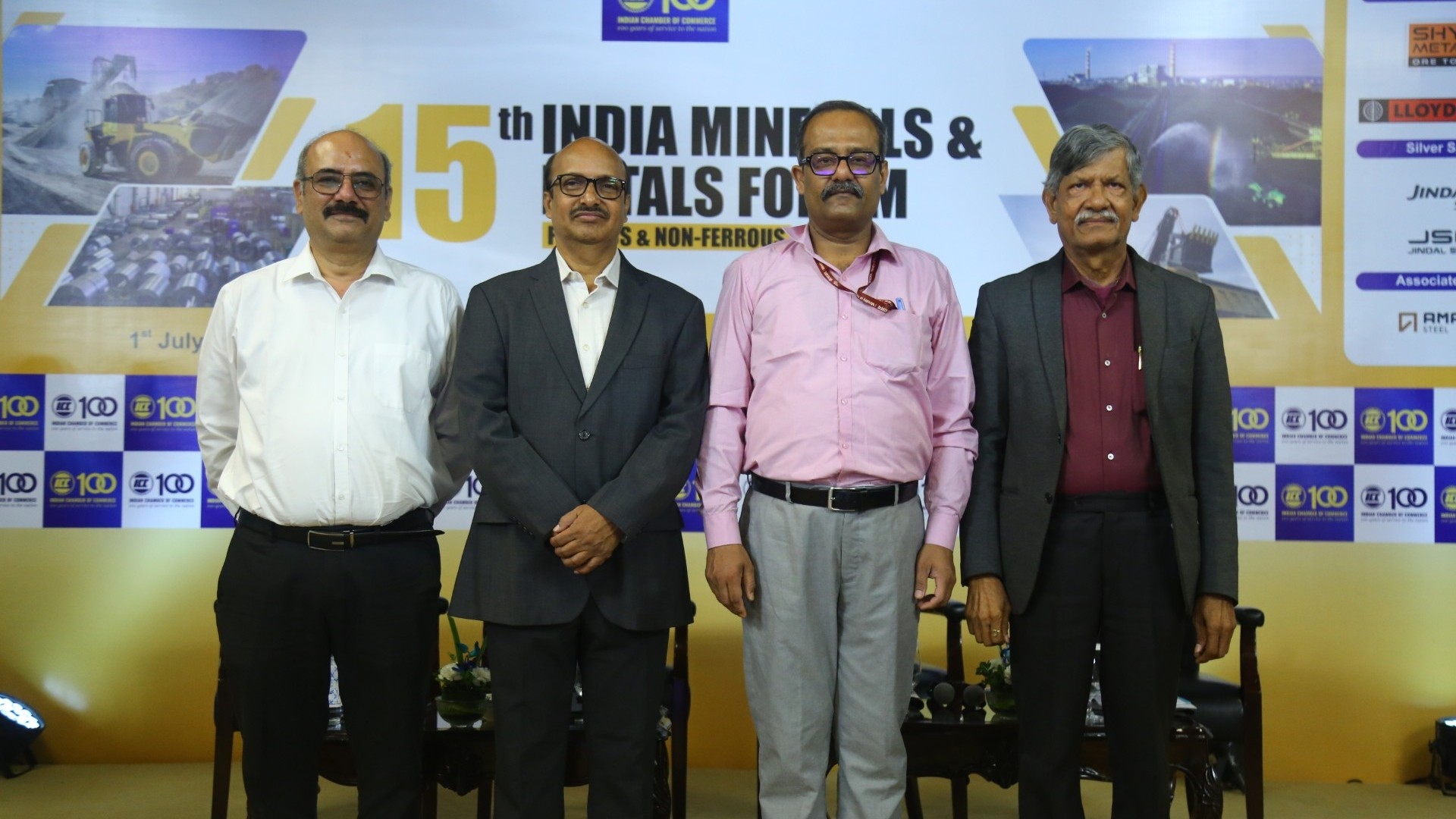
Dr. Pankaj Satija, Chairperson of the National Expert Committee on Minerals & Metals at the Indian Chamber of Commerce (ICC), outlined the government’s integrated approach during the 15th India Minerals & Metals Forum in New Delhi. The strategy rests on three pillars: accelerating domestic exploration, scaling e-waste recycling, and recovering critical minerals from industrial waste such as steel slag and fly ash. India’s official list of critical minerals now includes 31 elements, with coking coal added most recently.
The forum highlighted deepening bilateral cooperation: India and the United States advanced joint efforts under the FORGE and PACT initiatives in February 2026. Concurrently, India is expanding engagement with Argentina and other Latin American nations to diversify overseas resource access. However, structural constraints persist — host countries often mandate local ore processing before export, limiting India’s ability to capture downstream value.
Urban Mining and Waste Recovery
Anupam Lahiri, Program Director at NITI Aayog, stressed that mining alone cannot meet demand: “Domestic exploration will take time, so we also need to focus on the resources that are already around us.” He identified e-waste, battery waste, mine overburden, and tailings as underutilized reservoirs — provided the right ecosystem for commercial recycling is built.
To advance this, NITI Aayog formed a technical committee including Coal India, Singareni Collieries, Jindal Steel, and Adani to assess recoverable critical minerals from tailings and overburden dumps. Lahiri cited Neyveli Lignite Corporation’s successful extraction of rare earth elements from fly ash as an early proof point. He also flagged unresolved regulatory questions — notably how royalties should apply when critical minerals are recovered from an already-licensed coal mine.
Domestic Success Stories
Professor K A Natarajan of the Indian Institute of Science, Bengaluru, presented Hindustan Zinc’s decades-long program recovering silver from zinc processing waste — a key factor in India becoming the world’s largest silver producer. Separately, N D Rao, President of Projects at Atha & Amalgam Steel Group, highlighted Rubamin in Vadodara, which commercially recovers lithium from e-waste. Yet Rao noted India’s beach sand rare earth reserves remain underexploited due to limited private-sector participation.
These efforts directly support India’s steel sector ambitions: national output is targeted to rise from current levels of 150–160 million tons to 300 million tons by 2030 and 500 million tons by 2047. Sushanta Kumar Mishra, Executive In-charge of Tata Steel’s Ferro Alloys & Minerals Division, confirmed Tata Steel’s current capacity stands at 24 million tons, with a long-term goal of 40 million tons. His team has already conducted successful nickel pig iron trials using chromite overburden at Sukinda Valley — though regulatory clarity remains needed on classification of overburden-derived minerals.
Technology, Competitiveness, and Sustainability
Tushar Chakraborty, Executive Director at Deloitte Touche Tohmatsu India LLP, cautioned that growth must be measured not just in volume but in resilience: “As demand for steel, non-ferrous metals and other industrial commodities continues to rise, the conversation has to move beyond production targets. The real challenge is ensuring that this growth remains competitive and sustainable.” He emphasized productivity gains, raw material security, and disruption-resistant supply chains as decisive factors.
N D Rao detailed iron ore grade variability — magnetite (72.3% Fe), hematite (69.8% Fe), goethite (62.5% Fe), and siderite (below 50% Fe) — and explained how emerging reduction roasting technology in Bhubaneswar lifts goethite and limonite grades to 67–70%. Meanwhile, R R Sathpathy, Executive Director of Exploration and Beneficiation at Lloyds Metals & Energy, described transforming the Surjagad iron ore mine in Maharashtra’s Gadchiroli district into a fully electrified operation. Battery-powered equipment cut emissions from 11–12 kg per ton to 3–3.5 kg per ton; with a planned 110 MW solar-and-wind hybrid power supply coming online later in 2026, emissions are projected to fall further to 1–1.5 kg per ton. The company’s ongoing 45-million-ton beneficiation plant — built in three 15-million-ton modules, with the first due by September 2027 — extends the site’s viable resource base beyond one billion tons while sustaining local employment, operating a school, and maintaining a 100-bed hospital.
“The government’s approach is moving on three fronts—speeding up domestic exploration, treating e-waste as a valuable resource through recycling, and recovering critical minerals from industrial waste such as steel slag and fly ash.” — Dr. Pankaj Satija, Chairperson, National Expert Committee on Minerals & Metals, ICC
“Domestic exploration will take time, so we also need to focus on the resources that are already around us.” — Anupam Lahiri, Program Director, NITI Aayog
“As demand for steel, non-ferrous metals and other industrial commodities continues to rise, the conversation has to move beyond production targets. The real challenge is ensuring that this growth remains competitive and sustainable.” — Tushar Chakraborty, Executive Director, Deloitte Touche Tohmatsu India LLP
Source: esgnews.earth
Compiled from international media by the SCI.AI editorial team.