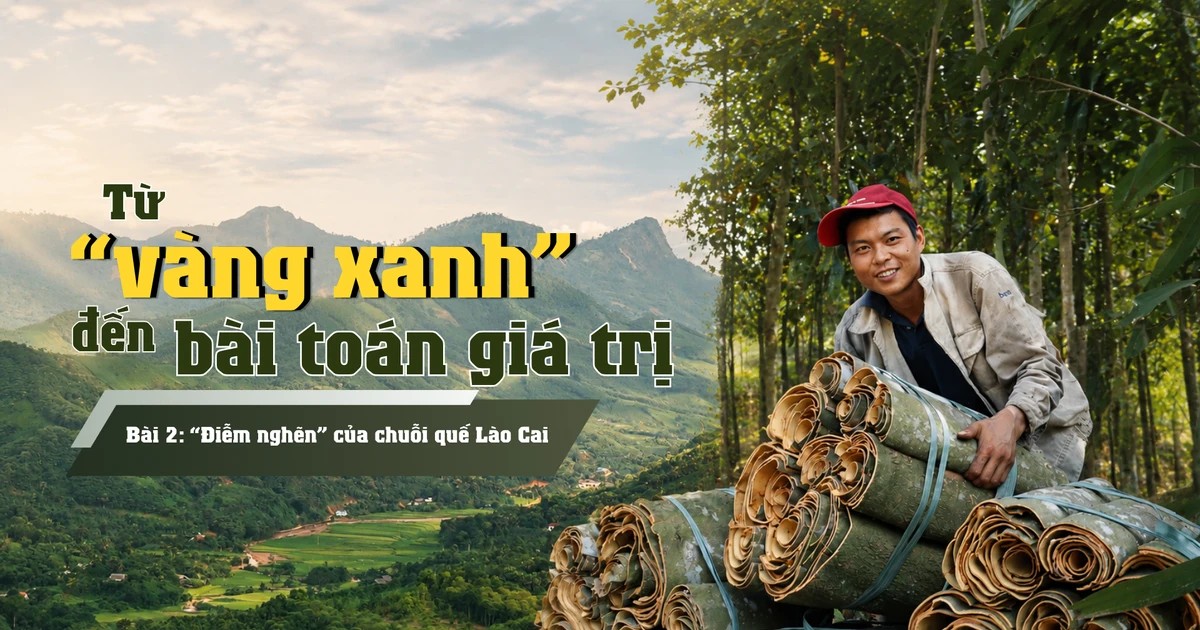
According to www.vietnam.vn, Lao Cai Province in northern Vietnam — home to one of the country’s largest cinnamon cultivation zones — faces acute bottlenecks in its cinnamon supply chain, with over 40 tons of finished cinnamon essential oil sitting unsold in warehouses and raw material purchase prices collapsing to just 1,400 VND/kg.
Production Scale vs. Value Capture Gap
Lao Cai currently hosts one of Vietnam’s most extensive cinnamon-growing areas, generating an annual production value reaching trillions of VND. Yet, despite this scale, the province remains heavily dependent on exporting unprocessed or semi-processed outputs — primarily cinnamon bark, crude essential oil, and cinnamon wood. Less than 5% of total output undergoes deep processing into high-value derivatives for pharmaceuticals, cosmetics, functional foods, or natural flavorings — sectors that demand strict chemical specifications and traceability.
The Son Hai Agricultural Products Export Processing Co., Ltd. operates a cinnamon essential oil distillation unit in Nghia Do Commune. There, dozens of tons of cinnamon branches and leaves are fed into boilers daily. While this activity supports local farmers and employs dozens of workers, the facility now holds more than 40 tons of finished essential oil inventory — a direct result of sharp price declines and export difficulties. According to Tran Van Thuy, Manager of Unit 2 at Son Hai, “Currently, raw materials in Nghia Do and neighboring localities are abundant, but due to low essential oil prices and weak market absorption, the purchase price for raw materials is also extremely low — averaging about 1,400 VND/kg — causing hardship for both farmers and enterprises.”
Market Concentration and Quality Inconsistency
The Lam Phuong Linh Cooperative, operating in Mau A Commune, continues distillation operations despite deteriorating conditions. It sources over 100,000 tons of raw material annually and extracts approximately 60 tons of essential oil per year. However, efforts to export to the U.S. and other non-Chinese markets have met persistent resistance. As Pham Hong Hue, representative of Lam Phuong Linh Cooperative, stated: “Despite the difficulties, the cooperative maintains production and continues searching for markets, hoping the selling price of essential oils will rebound soon.”
The root causes identified by processors include overreliance on a narrow set of export destinations — especially China — limited access to advanced processing technology, and inconsistent quality across growing regions. Crucially, the cinnamaldehyde content — the key active compound determining aroma profile and commercial value — varies significantly due to disparate seed sources, soil conditions, and cultivation practices. This variability renders much of Lao Cai’s output unsuitable for premium global buyers in pharma and cosmetics, which require batch-to-batch chemical consistency and organic certification compliance.
Structural Upgrades Required for Value Addition
Current processing capacity remains modest relative to raw material availability. Most facilities produce only crude oil; none meet international standards for refined, standardized, or certified organic essential oil. Meanwhile, global demand spans hundreds of applications — from antiseptic formulations and anti-inflammatory nutraceuticals to natural preservatives and fragrance bases — all requiring precise analytical validation and full traceability.
Nguyen Quang Vinh, Deputy Director of Lao Cai Province’s Department of Agriculture and Environment, emphasized the strategic pivot needed: “Past achievements represent only the initial foundation of the cinnamon industry. The current challenge is no longer expanding planted area, but improving quality, standardizing raw material zones, developing refining processes, and building brands. We must shift focus from mass production to refined, sustainable, market-driven production — so cinnamon becomes a truly high-value-added and sustainable product.”
Experts note that achieving this transition requires coordinated investment in varietal selection (high-cinnamaldehyde cultivars), certified organic farming zones, third-party quality verification, and partnerships with downstream users who specify exact chemical parameters. Without such upgrades, Lao Cai risks remaining a low-margin supplier in a volatile commodity market — even as global demand for natural, traceable botanical ingredients grows.
Source: vietnam.vn
Compiled from international media by the SCI.AI editorial team.