Retailers supplying U.S. farmers say they’ll be whipsawed by the effects of a proposed transcontinental rail merger that will concentrate too much pricing and logistical power in one mega-carrier.
Agricultural Retailers Association voices alarm
“[W]e at the Agricultural Retailers Association have serious concerns about how this merger would affect our members and the agribusiness sector as a whole,” wrote Daren Coppock, ARA president and chief executive, in a published opinion column.
Coppock, whose group represents more than 5,000 retail locations supplying feed, seed and equipment to all sizes of farms and ranches nationwide, pointed out that the four U.S.-based Class I carriers already control 90% of rail freight traffic. He said that concentrates their power to set railroad-friendly terms, driving up costs and threatening supply chain reliability for moving agricultural commodities, fertilizer, chemicals and fuel. And, it comes at a time when geopolitics and inflation are pushing up prices across the board.
Rail rate surge outpaces trucking
Freight rail rates have risen by more than 40% over the past 20 years, adjusted for inflation, about 70% faster than truck rates, Coppock wrote. Critical inputs for fertilizer such as anhydrous ammonia have risen more than 200% since the mid-2000s.
Both UP (NYSE: UNP) and NS (NYSE: NSC) say the merger will speed traffic by eliminating time-sucking interchanges of railcars, improving efficiency for shippers and growing volumes on the domestic rail network.
Past mergers eroded competition
But past mergers, Coppock observed, produced service disruptions and “have consistently reduced competition, resulting in higher transportation costs and less negotiating leverage for agricultural shippers.”
The issues are particularly acute for captive ag shippers – those served by just one railroad. “[W]e end up in a worse place than where we started,” he said.
Fertilizer transport heavily rail-dependent
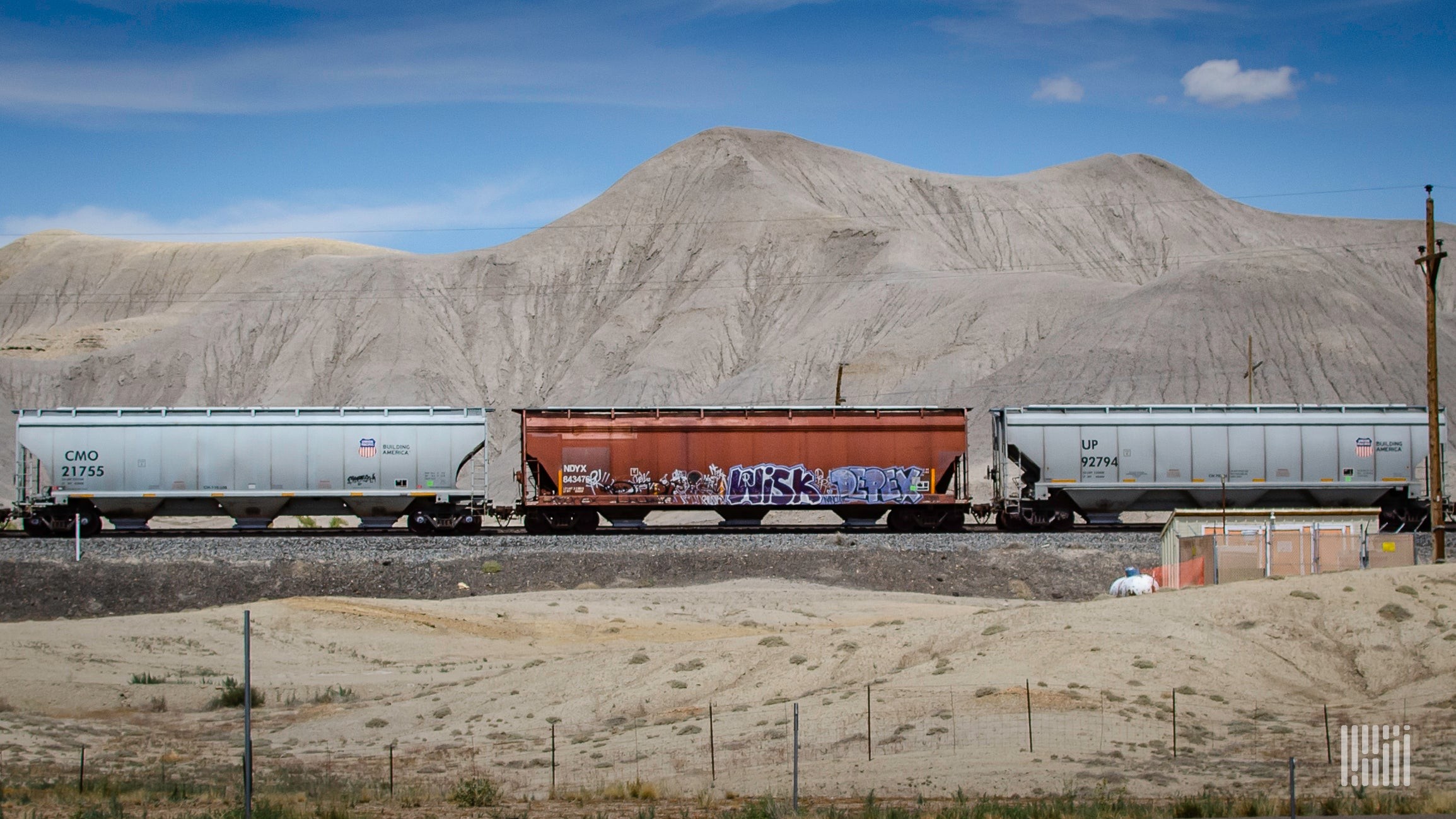
Two-thirds of the fertilizer for U.S. crops moves by rail, and one covered hopas much as 3.4 trucks, at three times the fuel efficiency of other modes.
“This proposed merger directly threatens our ability to operate and, by extension, impacts our farmers and the food supply for all Americans,” Coppock said. “If the Surface Transportation Board isn’t hearing alarm bells, they should be, because this is going to be a big problem for all of us.”
Coppock’s comments were published in trade journal Agri-Pulse. The merger proposal is valued at $85 billion, reporting cited in related coverage.
Subscribe to FreightWaves’ Rail e-newsletter and get the latest insights on rail freight right in your inbox.
Read more articles by Stuart Chirls here.
Upcoming industry events
The Supply Chain AI Symposium takes place on July 15, 2026 at The Old Post in Chicago, IL. The F3: Future of Freight Festival runs from October 27–28, 2026 at The Signal at Chattanooga Choo Choo in Chattanooga, TN.
Source: FreightWaves
Compiled from international media by the SCI.AI editorial team.