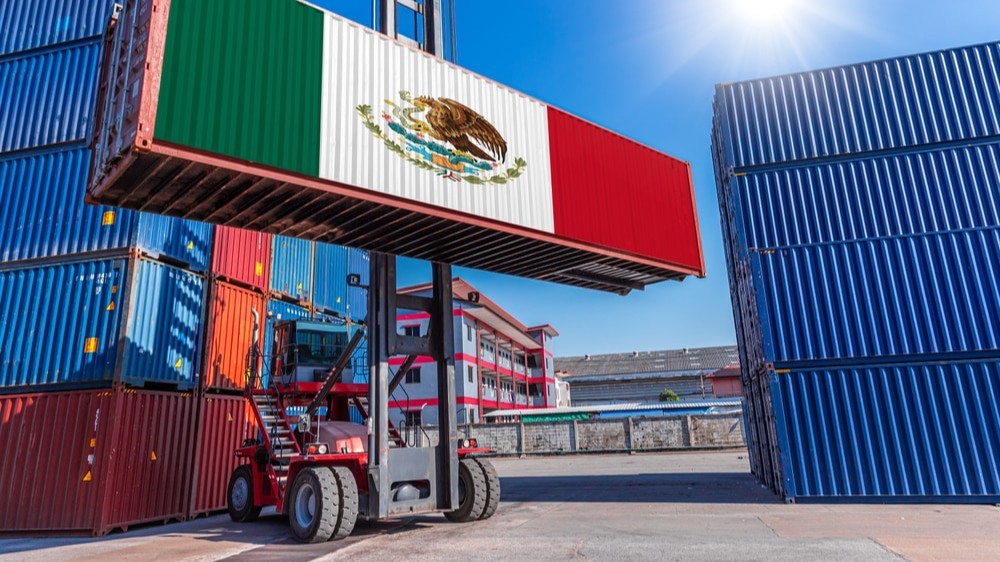
According to noticias.portaldaindustria.com.br, Brazilian industrial exports affected by Mexico’s new import tariff policy fell 42.5% in the first half of 2026 compared to the same period over the prior three years — a decline valued at US$91.5 million.
Impact of Mexico’s Strategic Industry Protection Program
Mexico’s Programa de Protección para las Industrias Estratégicas, implemented in January 2026, raised import duties on 1,463 tariff codes, with some rates exceeding 50%. The measure directly targets 171 Brazilian products exported to Mexico, of which 113 registered deteriorating sales performance between January and June 2026. According to the Confederação Nacional da Indústria (CNI), Brazil is now the 5th most exposed country globally to this policy among nations lacking a free trade agreement with Mexico.
The CNI estimates that up to US$665 million in Brazilian exports face direct exposure to the new tariffs. Among the hardest-hit items were iron or steel pipes used in oil and gas pipelines — whose exports to Mexico plunged 100% in the first quarter of 2026, effectively halting shipments entirely.
Supply chain disruption concentrated in intermediate goods
The tariff impact falls disproportionately on industrial input flows: 78.1% of the total export decline corresponds to intermediate goods — raw materials and components essential to cross-border production networks. This underscores how the policy disrupts integrated supply chains linking Brazilian and Mexican manufacturers rather than merely affecting final consumer goods.
Of the 474 commercially viable export opportunities identified by CNI for Brazil’s manufacturing sector in Mexico, 456 (90.3%) are subject to import tariffs. Tariff-affected sectors include chemicals (18.8% of opportunities), machinery and equipment (17.3%), and food products (9.9%). These figures reinforce that tariff barriers severely constrain market access despite strong competitive positioning and complementary demand patterns.
Bilateral response and policy recommendations
On 23 July 2026, the Brazilian section of the Conselho Empresarial Brasil-México (Cebramex) convened a virtual meeting with government officials to address the fallout. The session was led by Ana Beatriz Macedo da Costa, president of the Council and vice-president of Reputation, Sustainability, Legal and Corporate Affairs at Natura. Attendees included Francisco Cannabrava, director of the Mercosur Department at Brazil’s Ministry of Foreign Affairs, and Ana Cláudia Takatsu, director of International Negotiations at the Ministry of Development, Industry, Commerce and Services.
CNI advocates for two immediate measures: exemption of Brazilian goods from the new tariffs and accelerated negotiations toward a Brazil–Mexico Free Trade Agreement. The CNI projects such an agreement could add US$13.8 billion to the combined GDP of both countries, boost bilateral trade by US$3.2 billion, and attract approximately US$8 billion in new investment.
“The tariff increase for certain products concerns Brazilian industry and runs counter to what the sector seeks with Mexico: deepening bilateral relations and advancing commercial negotiations.” — Constanza Negri, manager of Trade and International Integration, CNI
CNI also recommends expanding mutual recognition of Authorized Economic Operators, eliminating non-tariff barriers, and strengthening regulatory cooperation to support resilient cross-border industrial integration.
Source: noticias.portaldaindustria.com.br
Compiled from international media by the SCI.AI editorial team.