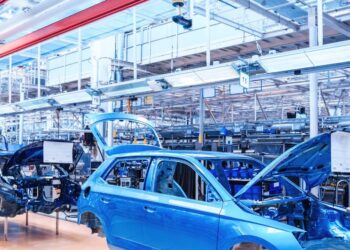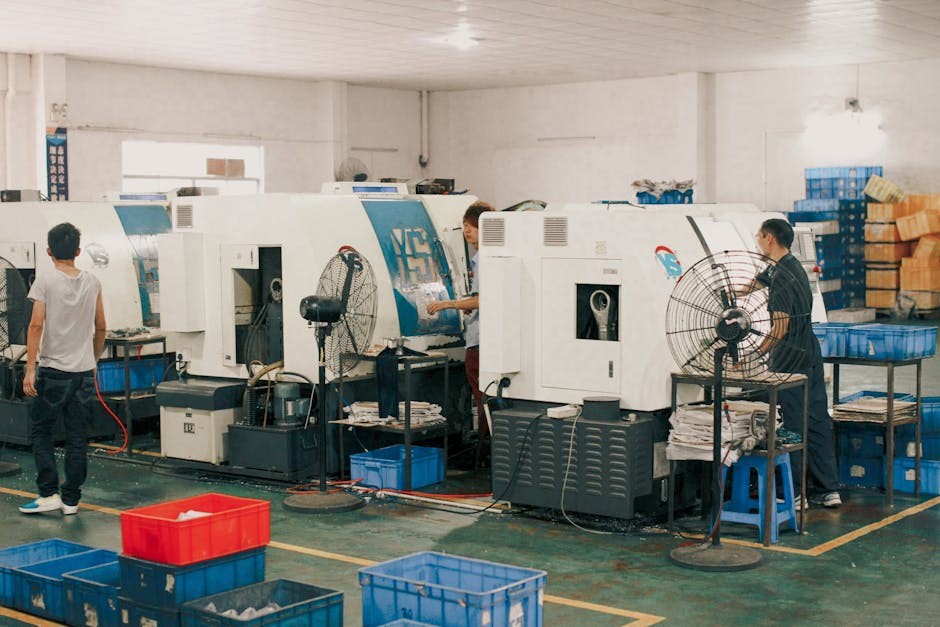
According to Express Computer, AI-driven smart factories are increasing solar panel production efficiency in India by up to 37%.
AI-Driven Efficiency Gains in Solar Manufacturing
Smart factories powered by artificial intelligence are transforming India’s solar manufacturing sector. These facilities are achieving up to 37% higher production efficiency compared to traditional models, according to Gautam Mohanka, Director at Gautam Solar. This improvement stems from real-time sensor monitoring and machine learning algorithms that optimize every stage of production. The integration of AI has reduced defect rates and minimized raw material waste, directly contributing to improved yield and product reliability.
Predictive Maintenance Reduces Factory Downtime
A key benefit of AI in manufacturing is predictive maintenance. Machine health is continuously monitored using IoT sensors, allowing AI systems to forecast equipment failures before they occur. This approach has reduced unplanned downtime by up to 40% in early adopter facilities. By preventing breakdowns, manufacturers maintain consistent production timelines, which is crucial for meeting national renewable energy targets.
Computer Vision Enhances Quality Control
Artificial intelligence enables highly accurate quality control through computer vision systems. These technologies detect microscopic defects in photovoltaic cells that are invisible to the human eye during module production. As a result, defect detection accuracy has improved by over 90%, leading to fewer rejections and higher-performing solar panels. This technological advantage supports India’s ‘Made in India’ initiative by enhancing product credibility in domestic and international markets.
Smart Supply Chains Improve Logistics and Forecasting
AI is also streamlining the renewable energy supply chain. Traditional supply chains faced frequent delays and inventory mismatches due to fragmented data and reactive planning. Now, AI-based analytics provide real-time forecasting of demand, material availability, and transportation constraints. This enables manufacturers to optimize logistics, reduce stockouts, and align procurement with production schedules. As a result, project execution timelines have improved by an average of 25%, enhancing on-time delivery performance.
Supporting National Self-Reliance Goals
India’s push for self-reliance in renewable energy is being accelerated by smart manufacturing. The government has introduced production-linked incentive (PLI) schemes to encourage domestic solar equipment manufacturing. These programs have led to the establishment of over 20 new AI-integrated solar factories across states like Tamil Nadu, Gujarat, and Uttar Pradesh. These facilities are reducing dependence on imports, particularly from China, and building a robust local supply base for solar infrastructure development.
Source: www.expresscomputer.in
Compiled from international media by the SCI.AI editorial team.