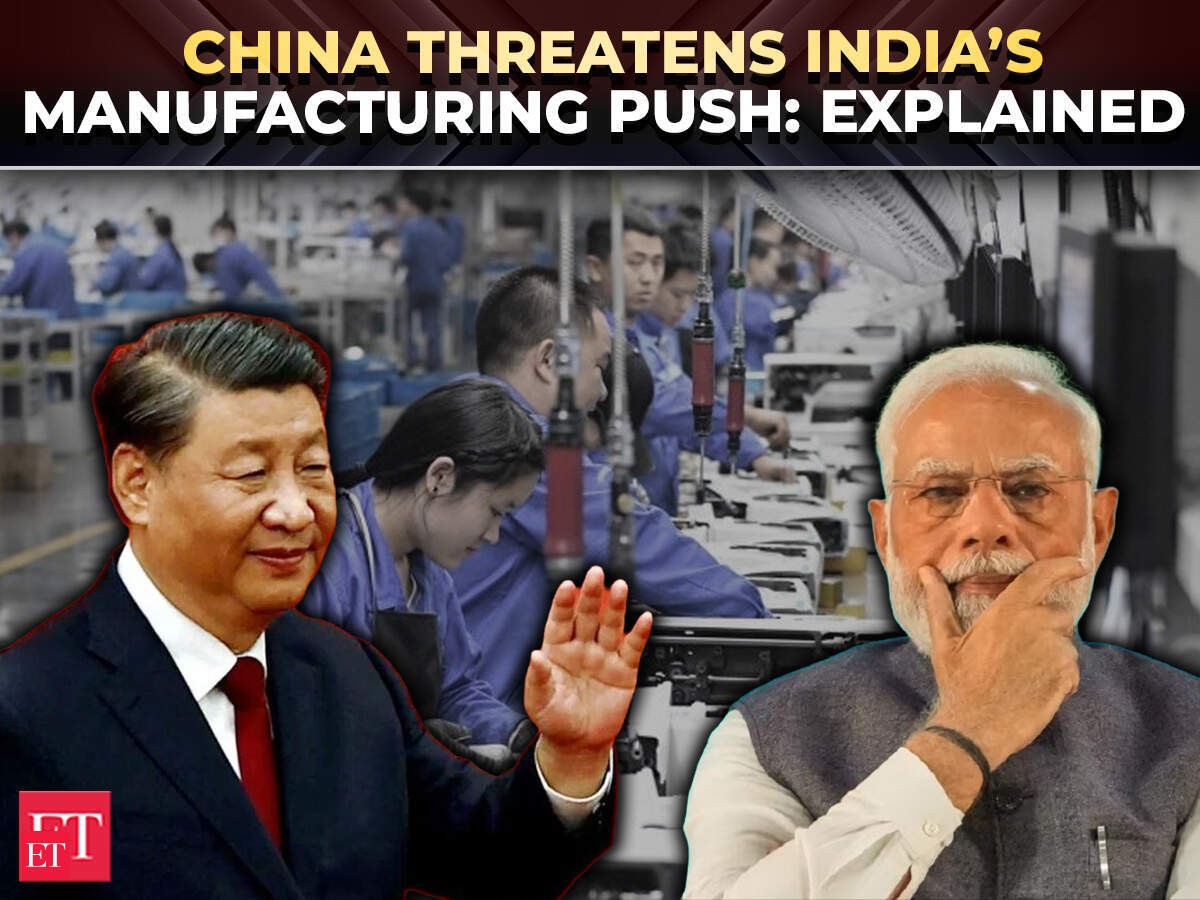
According to m.economictimes.com, China has imposed new export controls on 12 critical semiconductor materials, including gallium arsenide, germanium compounds, and silicon carbide substrates — effective 1 June 2026. The move directly targets inputs essential for radio-frequency chips, power electronics, and 5G infrastructure, sectors central to India’s $30 billion Electronics Manufacturing Clusters (EMC) initiative.
Impact on India’s Electronics Ambitions
India’s electronics manufacturing output grew 27% year-on-year in FY2025, reaching $14.8 billion, per the Ministry of Electronics and Information Technology. Yet over 78% of India’s semiconductor-related raw materials and specialty chemicals are imported from China, according to data cited by the Economic Times report. Apple’s Indian production partners — including Foxconn, Pegatron, and Wistron — rely on Chinese-sourced gallium-based RF filters and germanium-doped wafers for iPhone assembly in Tamil Nadu and Karnataka. The new controls require Chinese exporters to obtain licenses for each shipment, with approval timelines extending up to 45 working days.
Global Supply Chain Repercussions
The restrictions follow Beijing’s 2023 export ban on graphite electrodes and 2024 curbs on tungsten and molybdenum exports, both vital for semiconductor fabrication equipment. According to the report, these measures collectively affect over 300 Indian electronics component suppliers, including Bharat Electronics Limited (BEL), MosChip Technologies, and Saankhya Labs. A senior official at India’s Directorate General of Foreign Trade confirmed that 17 import license applications were rejected between March and May 2026 due to missing Chinese export permits.
Industry Response and Mitigation Efforts
India’s Ministry of Commerce launched an emergency sourcing task force on 15 May 2026, targeting alternative suppliers in Japan, South Korea, and Germany. Japanese firms Sumitomo Chemical and Shin-Etsu Chemical have increased gallium oxide wafer allocations to Indian fabs by 12% since Q1 2026. Meanwhile, Tata Semiconductor’s upcoming ₹12,000 crore ($1.44 billion) front-end fab in Dholera — scheduled for Phase I commissioning in Q4 2027 — now faces revised material qualification timelines. As Chandni Jain, the report’s author, states:
“These controls don’t just delay shipments — they force redesigns of entire circuit architectures for Indian OEMs already operating on razor-thin margins.” — Chandni Jain, ET Now Senior Correspondent
Broader Geopolitical Context
This action aligns with China’s broader strategy to assert control over upstream technology inputs: since 2022, Beijing has added 47 materials and technologies to its dual-use export control list. In parallel, India’s Production-Linked Incentive (PLI) scheme for electronics has disbursed ₹13,450 crore ($1.61 billion) to 127 companies as of April 2026. However, only 3 of those 127 firms currently produce domestically sourced semiconductor-grade germanium or gallium compounds — highlighting a critical gap in backward integration. Global supply chain professionals now face immediate pressure to audit Tier-2 and Tier-3 material provenance, implement multi-sourcing protocols for all 12 newly restricted items, and accelerate qualification of non-Chinese wafer substrate alternatives.
Source: m.economictimes.com
Compiled from international media by the SCI.AI editorial team.