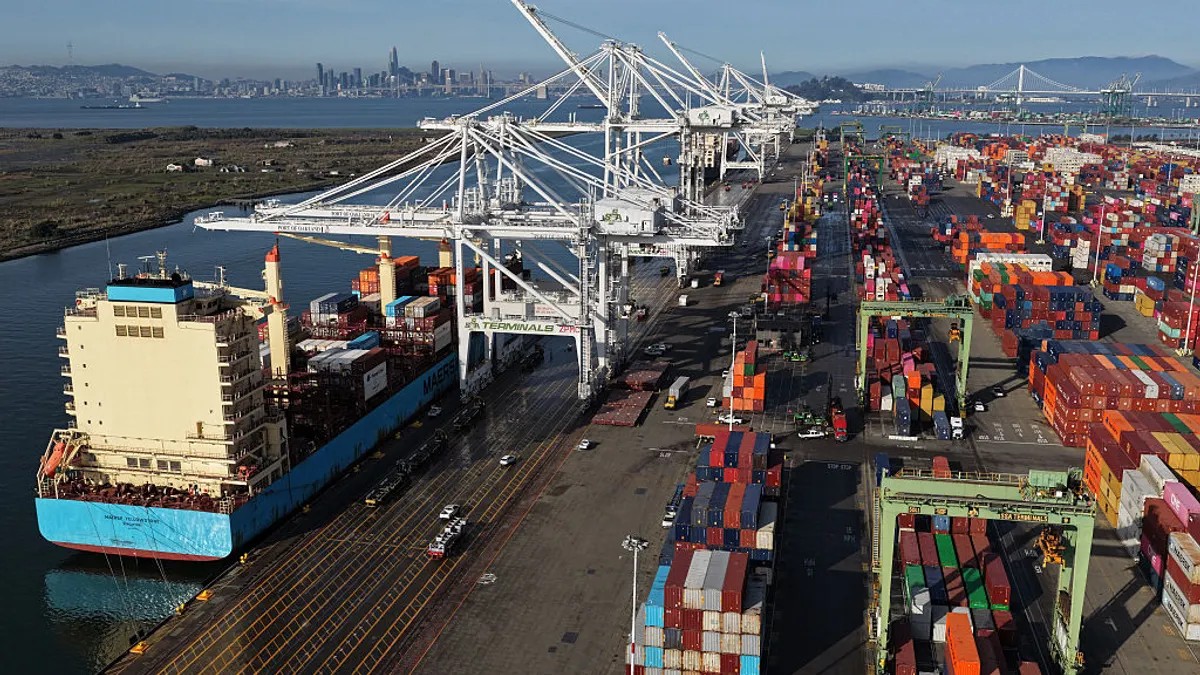
According to www.supplychaindive.com, U.S. shippers are postponing long-term ocean freight contract negotiations as geopolitical tensions from the Iran war continue to disrupt global shipping patterns. The report cites Xeneta Chief Analyst Peter Sand, who stated that shippers aim to avoid locking in elevated rates for the next 12 months amid volatile market conditions. This hesitation is contributing to a muted peak season outlook for 2026, with contract signing activity delayed past the traditional May–June window.
Spot Market Pressure and Carrier Incentives
As contract talks stall, more container volumes are shifting to the spot market — where carriers are charging premiums. According to Freightos’ May 12 update, spot market rates have risen despite a documented low-demand stretch across key trade lanes. Carriers, seeking volume certainty, are offering discounts to large shippers willing to commit to new annual contracts. This creates a tactical trade-off: pay higher short-term spot rates now to preserve flexibility, or secure lower fixed rates by signing early — even amid uncertainty.
Shippers Express Cautious Confidence
Not all companies are deferring commitments. Bob’s Discount Furniture and Dollar Tree have publicly expressed confidence in their existing or recently negotiated ocean freight contracts. Both retailers operate extensive import-dependent supply chains, sourcing primarily from Asia to U.S. West Coast ports including the Port of Oakland. Their stance contrasts with broader industry caution but aligns with historical behavior during prior periods of rate volatility — such as the 2021–2023 transpacific surge, when some shippers locked in multi-year rates at record highs only to face steep declines shortly thereafter.
Geopolitical and Structural Context
The Iran war’s impact on maritime logistics extends beyond insurance and routing. It has intensified scrutiny of chokepoints including the Strait of Hormuz, through which over 20% of global oil shipments pass — and where naval incidents have prompted rerouting via the Cape of Good Hope, adding 10–14 days to Asia–U.S. East Coast voyages. While the current article focuses on U.S. West Coast dynamics, this detour effect continues to strain vessel capacity and contribute to rate inflation across multiple lanes. Industry data from Xeneta shows average transpacific spot rates rose 22% year-on-year in Q1 2026, even as U.S. retail inventory-to-sales ratios held at 1.32x — near the five-year average, indicating no broad-based restocking surge.
Practitioner Implications
For supply chain professionals, the delay in contract finalization means extended reliance on dynamic procurement tools and real-time rate benchmarking. Procurement teams at midsize importers are reporting longer internal approval cycles for spot bookings, while logistics managers are increasing buffer stock for high-turn SKUs — particularly those moving via West Coast gateways. According to a Xeneta press release dated May 14, 2026, carriers are prioritizing contractual volume guarantees over rate maximization, suggesting that shippers with stable demand profiles retain significant negotiating leverage — if they act before the traditional July 1 contract effective date.
“Shippers want to avoid the risk of locking in higher rates over the next year.” — Peter Sand, Chief Analyst, Xeneta
Source: Supply Chain Dive
Compiled from international media by the SCI.AI editorial team.