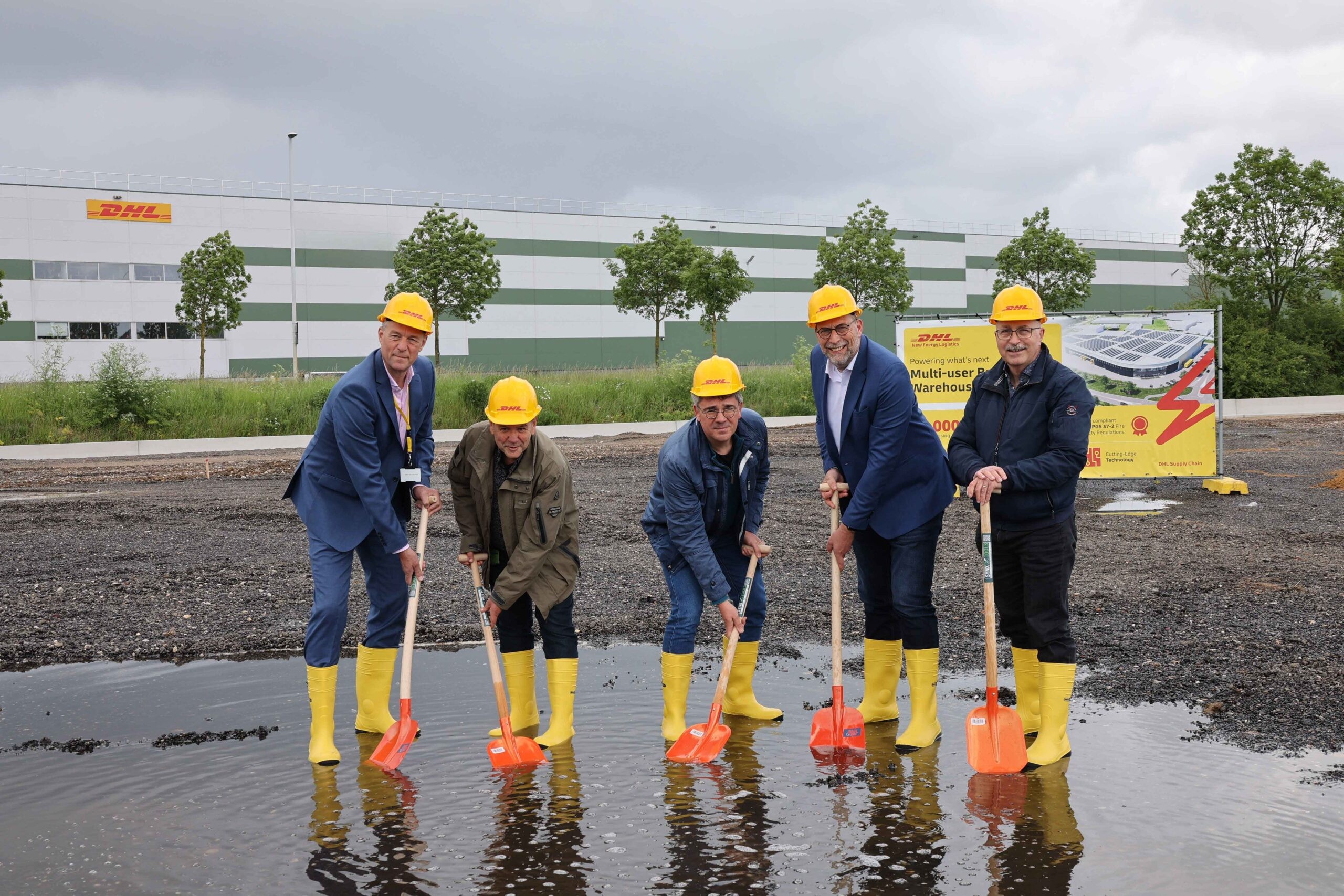
According to www.parcelandpostaltechnologyinternational.com, DHL Supply Chain has broken ground on a new European Battery Logistics Hub in Holtum, Limburg, the Netherlands. The facility will offer 17,000 m² of specialized storage and service space for high-voltage batteries and is scheduled to become operational in early 2027.
Integrated Campus for EV and Energy Storage Supply Chains
The Holtum site is physically adjacent to DHL Supply Chain’s existing automotive operation, forming an integrated campus designed to deliver end-to-end logistics solutions across electric mobility and battery energy storage systems (BESS) in Europe. Batteries handled at the hub will serve both electric vehicles and rapidly expanding BESS applications—including residential home storage and solar energy integration. The facility is strategically positioned to act as a central European gateway serving customers across the Netherlands, Germany, Belgium, and neighboring markets.
Regulatory-Compliant Services and Sustainable Connectivity
The new hub is engineered to support complex, highly regulated battery supply chains. It offers a comprehensive suite of value-added services under one roof: compliant storage, diagnostics and testing, charging and conditioning, refurbishment, reverse logistics, and preparation for recycling. Its location provides direct access to major highways linking the Benelux and Germany, as well as proximity to a container and barge terminal on the Juliana Canal. This waterborne connection strengthens supply chain resilience and expands sustainable distribution options for DHL’s European customers.
Strategic Alignment with DHL Group Strategy 2030
The investment directly advances DHL Group Strategy 2030, which identifies new energy—including electric mobility, renewable energy infrastructure, and circular supply chains—as a decisive growth driver. Rainer Haag, Europe CEO at DHL Supply Chain, stated:
“The transformation of mobility and energy systems is a key driver of change in global supply chains. By expanding our battery logistics capabilities in Holtum and closely linking them with our existing automotive expertise on site, we are creating a scalable one-stop shop solution for the EV sector. This investment directly supports DHL Group Strategy 2030, where new energy is a decisive growth driver for our business across Europe.” — Rainer Haag, Europe CEO at DHL Supply Chain
Leadership and Local Partnership
The groundbreaking ceremony included senior representatives from DHL and local government. Attendees included Dirk van Houtum (DHL), Hans van de Winkel (Municipality Sittard-Geleen), Huub Menten (Municipality Sittard-Geleen), John Scherders (DHL), and Jan van de Berg (Municipality Sittard-Geleen). The project reflects DHL’s long-standing commitment to localized infrastructure development in high-growth logistics corridors—consistent with industry-wide expansion in battery logistics. For example, Hellmann and MAS Holdings announced plans on May 20, 2026, to develop a fashion logistics hub in Sri Lanka, while Grimaldi Group and Leapmotor International scaled their automotive distribution partnership on May 19, 2026. These coordinated moves underscore a broader sectoral shift toward dedicated, regulatory-compliant infrastructure for emerging technology supply chains.
Practitioner Implications
For supply chain professionals, the Holtum hub signals growing standardization in high-risk battery logistics: unified compliance frameworks, certified handling protocols, and multimodal flexibility (road, barge, and future rail integration) are becoming baseline expectations—not differentiators. The 17,000 m² scale, combined with early-2027 go-live timing, provides lead-time visibility for OEMs and energy storage integrators planning pan-European market entry. Moreover, the integration of reverse logistics and recycling prep within the same physical footprint reduces handoffs, cuts documentation latency, and aligns with EU Battery Regulation requirements effective July 2027.
Source: www.parcelandpostaltechnologyinternational.com
Compiled from international media by the SCI.AI editorial team.