South Korean Court Blocks 18-Day Samsung Strike
According to KED Global, a South Korean court has blocked a planned 18-day strike by more than 45,000 unionized workers at Samsung Electronics, effectively halting the labor action days before it was set to begin. The ruling comes amid escalating tensions over a proposed 15% share of 2026 operating profits as a performance bonus, which could amount to 45 trillion won ($30 billion), according to industry analysts.
Production Cuts and Supply Chain Concerns
Samsung Electronics has already begun scaling back semiconductor production in anticipation of the strike, taking emergency measures to mitigate potential disruptions. The company, the world’s largest memory chipmaker, faces the risk of over $67 billion in economic damage if the strike proceeds, industry officials have warned. The move affects critical components such as DRAM and NAND flash memory, which are essential for artificial intelligence (AI) systems and global data infrastructure.
“A walkout at the world’s largest memory chipmaker would be unimaginable for national economic stability,” said Kim Jung-kwan, South Korea’s minister of trade, industry and energy, during a February 2026 cabinet meeting.
Union Demands and Profit Disparity
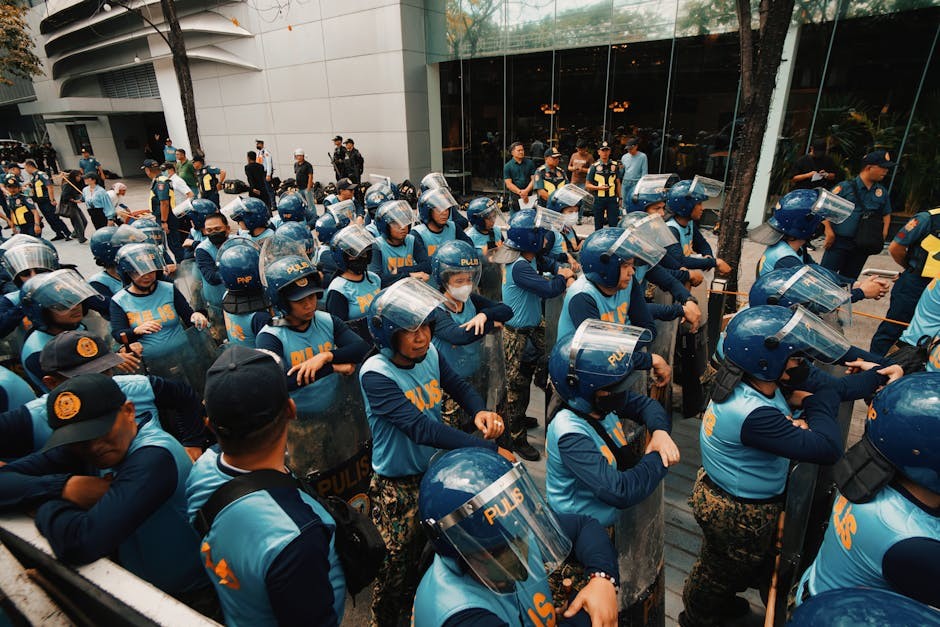
Unionized workers at Samsung’s Pyeongtaek plant, where around 40,000 employees rallied on April 23, 2026, are demanding the removal of a performance bonus cap and a 15% allocation of the company’s projected $200 billion in 2026 operating profit. The dispute has intensified since Samsung reported its strongest quarterly performance in South Korean corporate history, driven by surging demand for memory chips due to the AI boom.
The company’s Q1 2026 earnings were higher than its full 2025 annual profit, underscoring the financial stakes in the labor negotiations. The labor dispute has also exposed a rift between semiconductor workers and those in non-chip divisions, with some non-chip union members leaving the labor union due to concerns over widening performance bonus disparities.
Emergency Arbitration and Negotiation Deadlock
The court injunction was granted following an emergency arbitration request filed by Samsung. The ruling pushes the dispute back to formal negotiations, suspending the strike until a resolution is reached. The company has rejected previous offers to enter talks, citing the need to maintain stable supply chain operations, particularly for high-bandwidth memory (HBM) chips used in AI accelerators.
Industry experts note that the semiconductor supply chain remains highly concentrated, with Samsung, TSMC, and SK Hynix dominating the global DRAM and NAND markets. Any prolonged disruption at Samsung could ripple through global tech manufacturing, affecting major clients like NVIDIA, Apple, and Microsoft.
Source: www.kedglobal.com
Compiled from international media by the SCI.AI editorial team.