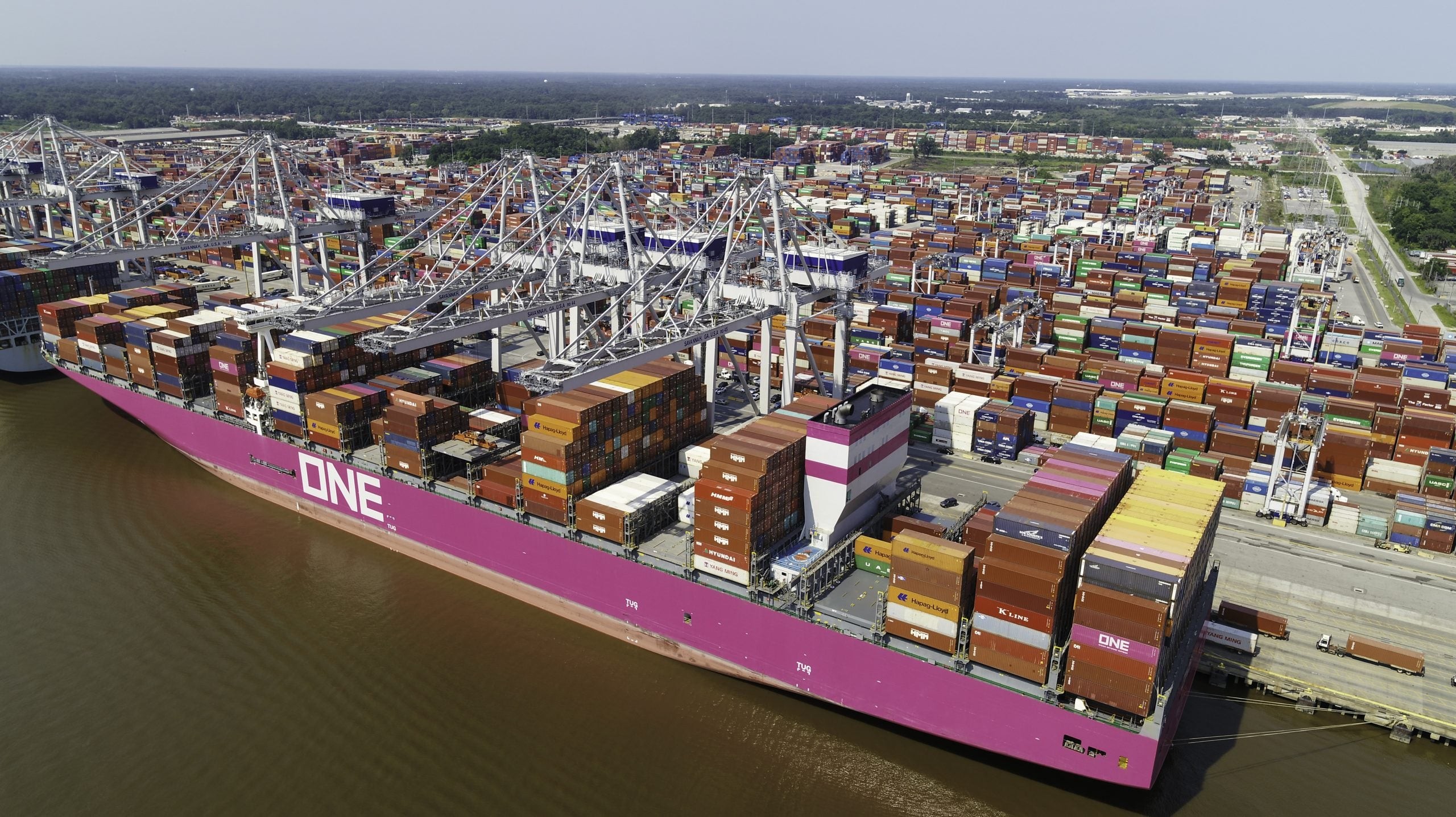
According to www.freightwaves.com, the Georgia Ports Authority (GPA) is advancing a $5 billion capital investment program aimed at strengthening supply chain predictability and cost efficiency amid global trade volatility.
Strategic Context and Leadership Commitment
The GPA unveiled this strategy during its 57th annual Georgia International Trade Conference, held in late April 2026. Governor Brian Kemp addressed attendees, stating:
“Innovation and port investments by the Georgia Ports Authority are helping to keep our state No. 1 for business while also positioning us as a true leader in global trade.” — Gov. Brian Kemp, State of Georgia
The conference brought together shippers, carriers, rail providers, and logistics executives to assess how Southeastern U.S. infrastructure can offset persistent disruptions—including West Coast congestion, Panama Canal drought restrictions, and vessel schedule unreliability.
Cost and Reliability Advantages Documented by Georgia Tech
Research from Georgia Tech’s Supply Chain and Logistics Institute quantifies Savannah’s competitive edge. Routing cargo through the Port of Savannah saves shippers more than $1,000 per container when delivering to Atlanta, Memphis, and Nashville—compared to West Coast gateways. The study further found that Savannah delivers more predictable transit times, reduced congestion exposure, and superior end-to-end reliability. Chris Gaffney, managing director of the institute, affirmed:
“Our research shows that when shippers evaluate total landed cost and end-to-end reliability, routing cargo through Savannah provides a clear economic advantage compared with West Coast routes.” — Chris Gaffney, Managing Director, Georgia Tech Supply Chain and Logistics Institute
Operational Velocity and Modal Performance
Savannah’s infrastructure supports high-volume, low-dwell operations. The port handles 40 container ships weekly and processes 14,000–16,000 truck gate moves daily. Dual-container transactions (drop-off + pickup) are completed in under 50 minutes; single moves average 30 minutes. Rail accounts for 20% of inland cargo movement, supported by 42 doublestack trains departing weekly. The port maintains the lowest rail dwell time in the nation at 20 hours or less. In 2025, the Mason Mega Rail facility handled 591,000 containers—a record volume validating GPA’s rail-centric expansion.
Gainesville Inland Port Extends Network Reach
The GPA opened the Gainesville Inland Port on May 4, 2026, adding daily rail service operated by Norfolk Southern (NYSE: NSC). Located in north Georgia, the facility targets manufacturing and distribution corridors serving the I-85 and I-75 corridors. Its launch follows GPA’s 2023 announcement of a $2.5 billion investment plan focused on deepening the harbor, expanding rail capacity, and automating terminal operations—part of the broader $5 billion commitment spanning 2023–2030.
Source: FreightWaves
Compiled from international media by the SCI.AI editorial team.