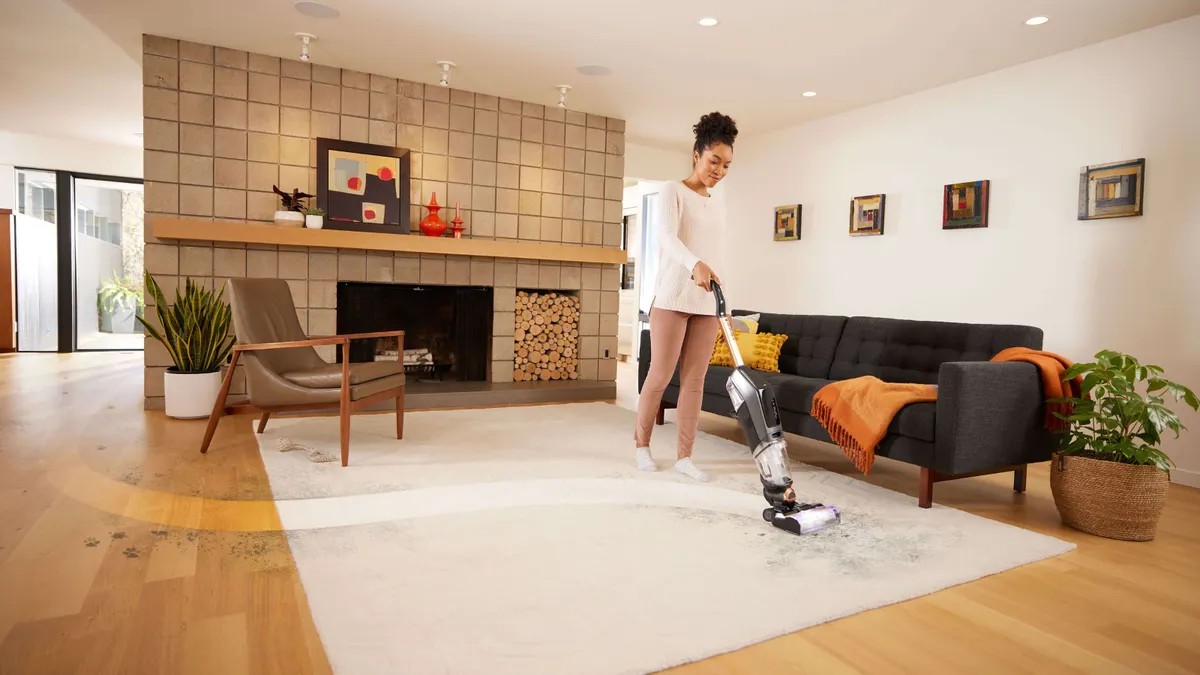
According to www.supplychaindive.com, Bissell Homecare reduced its supply chain forecast modeling cycle from multiple weeks to a few days through a multi-year collaboration with o9 Solutions.
Technology-Driven Forecast Acceleration
Bissell Homecare, headquartered in Grand Rapids, Michigan, has deployed several modules from o9 Solutions’ cloud-based platform since 2023. These include demand planning, supply chain planning, and inventory optimization tools. According to Lyndsi Lee, SVP of Supply Chain and Operations at Bissell, the integration has directly improved forecast accuracy, accelerated decision-making velocity, and sharpened inventory management across its U.S.-based operations. The company’s vacuum product line accounts for over 70% of its annual revenue, per industry estimates cited in Supply Chain Dive’s coverage of home appliance manufacturers’ 2025 financial disclosures.
COVID-19 as Catalyst for Change
The pandemic exposed structural weaknesses in Bissell’s legacy systems. As lockdowns intensified in early 2020, household cleaning demand surged — particularly for deep-cleaning appliances — causing volatility that existing manual forecasting processes could not absorb. Lee stated that these shifts revealed a critical lack of technological sophistication and automation. “The shifts in demand exposed a lack of technological sophistication and automation in its operations,”
“The shifts in demand exposed a lack of technological sophistication and automation in its operations.” — Lyndsi Lee, SVP of Supply Chain and Operations, Bissell Homecare
Implementation Timeline and Scope
Bissell began its digital supply chain transformation in 2023, rolling out o9’s modules incrementally. By Q2 2025, the company had achieved full deployment across its North American planning centers. The initiative covered 12 major SKUs representing >95% of domestic vacuum unit volume, including the CleanView, Pet Hair Eraser, and Symphony lines. Forecast model recalibration time dropped from 14–21 days to under 72 hours, enabling weekly rolling forecasts instead of quarterly updates.
Industry Context and Peer Benchmarks
Bissell’s move aligns with broader adoption trends among mid-sized consumer durables firms. In 2025, 68% of U.S.-based home appliance suppliers with $500M–$2B revenue reported deploying AI-augmented demand planning tools, according to Gartner’s Supply Chain Technology Survey. Competitors like SharkNinja and Dyson have similarly partnered with o9 and Blue Yonder: SharkNinja cut forecast error by 22% between 2023–2025, while Dyson reported a 35% reduction in safety stock after implementing integrated planning in Q4 2024. Unlike enterprise rollouts at Fortune 500 firms requiring 18–24 months, Bissell’s phased implementation took 27 months from pilot to full production — reflecting typical timelines for companies with 1,200–1,800 employees and single-ERP environments.
Practitioner Implications
For supply chain professionals managing SKU-constrained portfolios, Bissell’s experience underscores three concrete takeaways: first, cloud-native platforms enable rapid iteration — the company tested three alternative scenarios (base demand, post-pandemic normalization, new product launch surge) within 48 hours during Q3 2025; second, integrating demand sensing with inventory optimization reduced average days of inventory on hand from 89 to 54 days; third, cross-functional alignment improved measurably — monthly S&OP meetings now include real-time data from sales, marketing, and logistics teams, cutting agenda-driven meeting time by 40%. These outcomes are replicable for firms with annual logistics spend under $120 million, per CSCMP’s 2025 Mid-Market Benchmark Report.
Source: Supply Chain Dive
Compiled from international media by the SCI.AI editorial team.