According to www.scmp.com, China-Arab trade reached US$407.4 billion in 2024, making China the Arab world’s largest trading partner. The source states this figure reflects a structural evolution beyond hydrocarbons — with cooperation now spanning infrastructure, information technology, ports and logistics, manufacturing, and green energy.
Strait of Hormuz as Economic Lifeline — Not Just a Geopolitical Flashpoint
The Strait of Hormuz remains a critical chokepoint: over 20 million barrels per day of oil transit through it, representing roughly 21% of global petroleum liquids consumption (IEA, 2023 data cited in broader industry context). For Asia, the passage is not a distant Middle Eastern concern but an immediate economic reality. China, Japan, South Korea, India, and Southeast Asian nations collectively import more than 75% of their crude oil via maritime routes that converge near the Strait. As Mohamad Zreik, postdoctoral fellow at the School of International Studies, Sun Yat-sen University, notes:
“For China, Japan, South Korea, India and Southeast Asia, it has always been more than just a Middle Eastern problem. It is an Asian economic issue.” — Mohamad Zreik, Postdoctoral Fellow, School of International Studies, Sun Yat-sen University
From Oil Dependency to Green Industrial Partnership
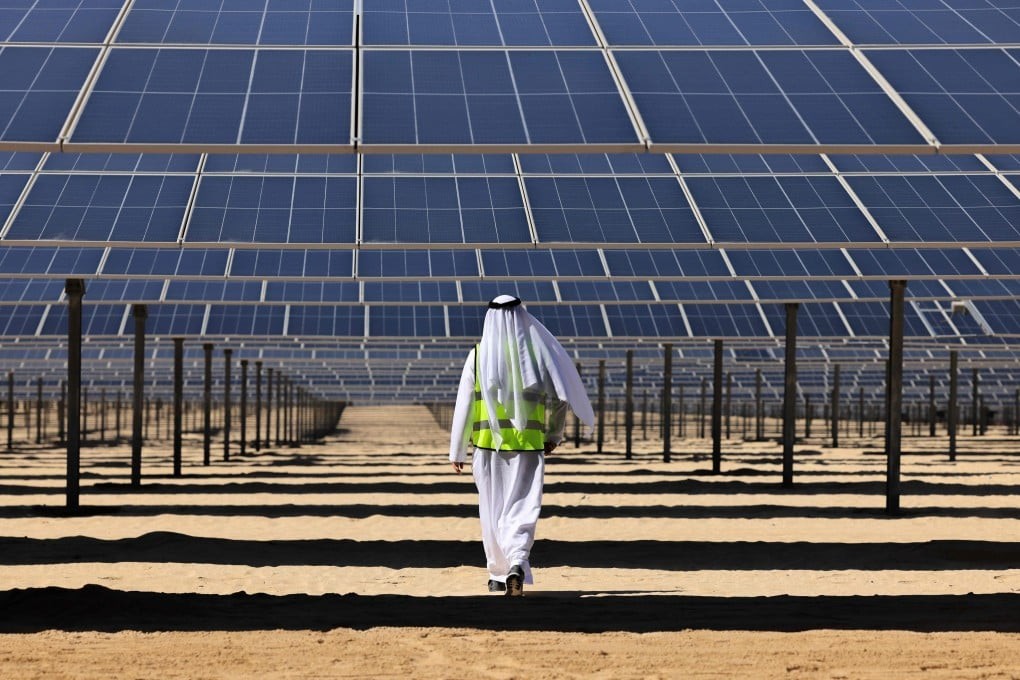
Gulf states are accelerating economic diversification under national visions — Saudi Arabia’s Vision 2030 and the UAE’s Operation 300bn both target non-oil GDP growth of 50% by 2030. China supplies key enablers: it manufactures 80% of the world’s solar photovoltaic modules (IEA, 2024), 75% of lithium-ion batteries (BloombergNEF, 2025), and accounted for 60% of global electric vehicle exports in 2024 (UN Comtrade). The International Energy Agency estimates global spending on electricity generation hit US$1.5 trillion in 2025, a figure 50% greater than combined investment in oil, natural gas, and coal supply. This signals a definitive power shift — one Gulf states are actively leveraging. In the first seven months of 2025, China’s trade with Arab League nations totaled US$241.6 billion, up from US$219.3 billion in the same period in 2024 (General Administration of Customs of China).
Supply Chain Implications for Energy Transition Infrastructure
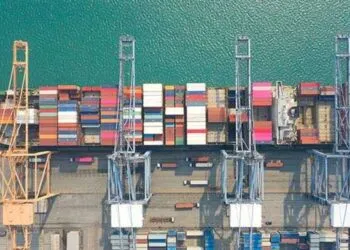
This pivot reshapes physical and financial supply chains. Green energy projects require new logistics nodes: battery-grade nickel and cobalt must move from Indonesia and Democratic Republic of Congo to Chinese refineries and Gulf assembly hubs; PV module shipments from Jiangsu and Guangdong now route through Jebel Ali and Dammam ports; and EV component manufacturing is relocating to Saudi Arabia’s King Abdullah Economic City and Abu Dhabi’s Masdar City — both offering 10-year corporate tax holidays and zero import duties on renewable equipment. According to the source, Gulf incentives align with China’s industrial capacity: China produced 12.4 million EVs in 2024 (CAAM), while Saudi Arabia aims to produce 500,000 EVs annually by 2030 (Saudi Automotive Strategy). These figures translate directly into port call frequency, container throughput demand, and multimodal rail-sea corridor utilization — especially along the China-GCC Railway Corridor currently under feasibility study (GCC Secretariat, 2025).
Source: South China Morning Post
Compiled from international media by the SCI.AI editorial team.