According to www.vccircle.com, Epic Group inaugurated its Trimetro Manufacturing Campus in Khordha, Odisha on 04 May 2026 — a US$100 million investment spanning 40 acres that marks India’s first fully net-zero carbon and net-zero water garment manufacturing facility.
Landmark Infrastructure and Environmental Certification
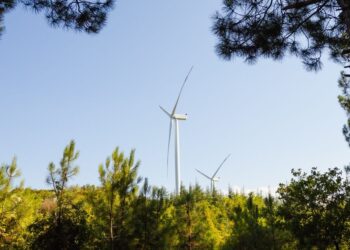
The Trimetro campus is certified as both net-zero carbon and net-zero water — the first garment facility in India to achieve both designations simultaneously. It integrates onsite and offsite solar power generation, sustainable biomass fuel, battery energy storage systems, and high-efficiency HVAC and lighting to eliminate operational carbon emissions. Water sustainability is achieved through closed-loop recycling, rainwater harvesting, and advanced effluent treatment, resulting in a net-positive water balance — meaning the facility returns more water to the local watershed than it consumes. The campus also features super-insulated buildings and biodiverse green spaces covering over 35% of its 40-acre footprint.
Economic and Employment Impact
The project directly creates 10,000 jobs, with 80% of the workforce composed of women. Located in Khordha district — part of Odisha’s industrial corridor — the campus strengthens regional employment in a state where female labor force participation in manufacturing remains below 25%, per World Bank 2023 data. Production capacity is set at 20 million garments annually, serving global brands including Nike, PVH, and Lululemon, all of which have publicly committed to Science-Based Targets initiative (SBTi) alignment by 2030.
Financing and Institutional Backing
The International Finance Corporation (IFC) provided a $100 million debt financing package in 2024, comprising a sustainability-linked loan and a green loan with embedded environmental performance triggers. This IFC support extended beyond Trimetro to fund Epic Group’s broader regional expansion, including capacity upgrades across its 12 manufacturing facilities in Bangladesh, where the company employs over 75,000 workers. According to the source, the IFC financing was structured so that interest rates adjust quarterly based on verified reductions in Scope 1 and Scope 2 emissions and water withdrawal intensity — measured in liters per garment.
Industry Context and Peer Benchmarks
Trimetro enters a rapidly evolving landscape: as of Q1 2026, only seven apparel manufacturing campuses globally hold dual net-zero carbon and net-zero water certifications — including Kering’s Milan Innovation Hub (certified 2023), Arvind Limited’s Ahmedabad Green Park (2024), and MAS Holdings’ Horana Eco-Factory in Sri Lanka (2025). In contrast, over 82% of India’s 8,000+ garment units remain reliant on grid electricity from coal-fired plants, according to the Confederation of Indian Industry (CII) 2025 Sustainability Report. Supply chain professionals now face concrete implications: Tier-1 suppliers must disclose real-time energy and water metrics via platforms like Textile Exchange’s Preferred Fiber and Materials Market Report (PFMMR), and buyers increasingly require third-party verification (e.g., UL SPOT, AWS Standard) for contract renewals.
“At Epic, we believe that industrial progress and environmental responsibility go hand in hand. The Trimetro Manufacturing Campus is the embodiment of this belief — a model for how manufacturing can grow sustainably while contributing to the well-being of people and the planet. This is more than a factory; it is a blueprint for the future of global manufacturing.” — Ranjan Mahtani, Founder & Chairman, Epic Group
- US$100 million total investment by Epic Group
- 40-acre campus in Khordha, Odisha
- 20 million garments produced annually
- 10,000 direct jobs created, 80% women
- $100 million IFC debt financing package issued in 2024
Source: www.vccircle.com
Compiled from international media by the SCI.AI editorial team.