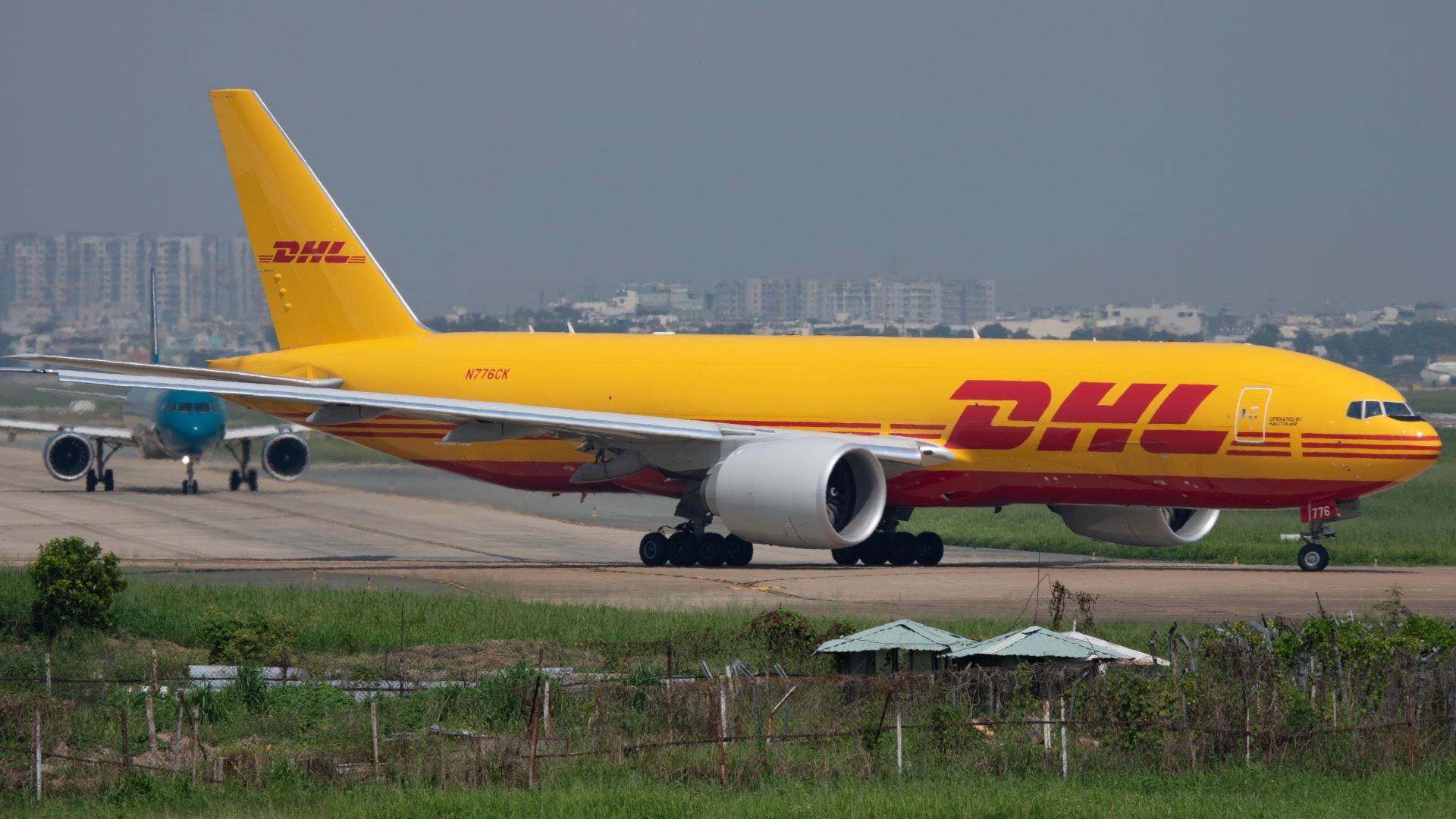
According to www.freightwaves.com, DHL Global Forwarding will launch three weekly widebody air cargo flights between Southeast Asia and the United States beginning June 1, 2026. The service uses Boeing 777 freighters operated by Kalitta Air under contract with DHL.
Route Structure and Operational Details
The new dedicated air service follows a multi-leg routing: Hanoi (Vietnam) → Taipei (Taiwan) → Anchorage (Alaska) → Chicago/Cincinnati → Seoul (South Korea) → Hanoi. U.S. destinations alternate weekly between Chicago and Cincinnati, DHL’s primary North American air hub. The aircraft deployed are Boeing 777-300 converted freighters, including one former Emirates passenger jet reconfigured by Israel Aircraft Industries and delivered to DHL earlier in 2026.
Strategic Fleet Investment and Capacity Expansion
DHL has committed to a long-term upgrade of its intercontinental air fleet, having signed contracts with Boeing between 2018 and 2022 to purchase 28 Boeing 777 aircraft. The final units were delivered in 2026. For the Asia–Europe corridor, DHL secured one converted 777-300 freighter and one brand-new factory-built 777. On March 29, 2026, DHL launched a weekly charter flight between Liège, Belgium, and Hong Kong, with a stopover in Tel Aviv, Israel. A second Asia–Europe route — Shanghai to Leipzig, Germany — is scheduled to commence on June 1, 2026.
Pharma-Dedicated Network and Charter Advantages
DHL Global Forwarding is prioritizing use of its own aircraft for pharmaceutical shipments on designated corridors. One such multi-weekly service connects Brussels, Belgium, and Cincinnati, also operated by Kalitta Air using a 777-300 passenger-to-freighter aircraft. The dedicated pharma network is expected to expand to include Germany, India, Singapore, and Japan. According to the source, self-controlled charter aircraft enable logistics providers to offer shippers more reliable capacity and service than tendering shipments through regular scheduled flights from passenger or all-cargo carriers.
Market Context and Industry Alignment
This expansion aligns with broader industry trends toward vertical integration and capacity control. In early 2026, DHL Group reported increased profits despite lower overall shipment volumes and revenue — a reflection of higher-margin, asset-light charter operations. Competitors including UPS and FedEx have similarly increased reliance on owned or leased freighters for time-sensitive lanes; UPS added four 767 freighters in 2025, while FedEx operates over 600 aircraft globally. The Asia–US air cargo trade lane remains under structural pressure: according to IATA, average air cargo yields on this corridor rose 14.3% year-on-year in Q1 2026, driven by constrained belly capacity and rising demand for high-value electronics and healthcare goods. Supply chain professionals report that guaranteed charter capacity reduces lead-time variability by up to 32% for B2B heavy freight moving between Vietnam, South Korea, and U.S. Midwest distribution centers.
“Expanding our controlled capacity on the Asia-Europe corridor reinforces our commitment to reliability, speed, and resilience for our customers. The demand on that trade lane continues to grow at an exceptional pace, and strengthening our network ensures that we stay ahead of customer needs.” — Henk Venema, global head of air freight, DHL Global Forwarding
Source: FreightWaves
Compiled from international media by the SCI.AI editorial team.