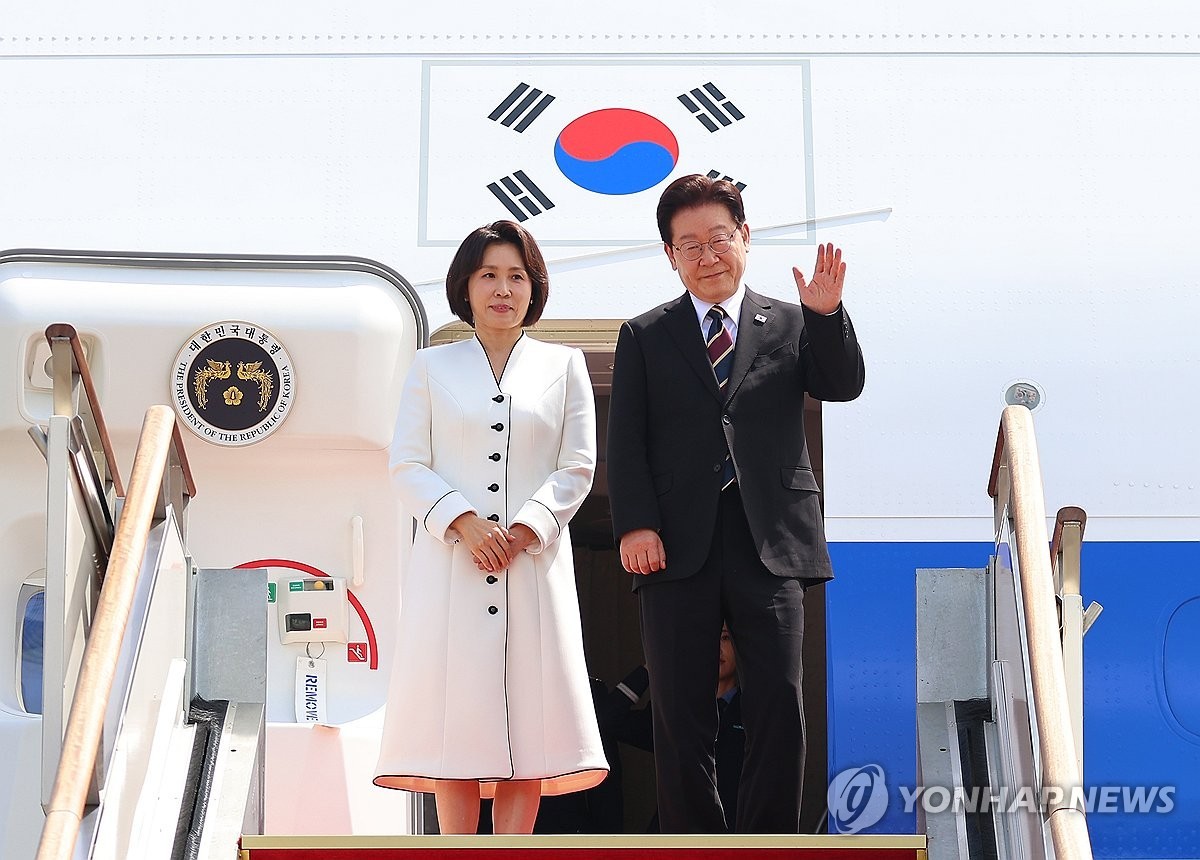
According to en.yna.co.kr, South Korean President Lee Jae Myung’s state visits to India and Vietnam in April 2026 underscored Seoul’s intensified focus on energy security and raw material supply chain resilience amid escalating geopolitical uncertainty in the Middle East.
Strategic Trips Amid Middle East Volatility
The six-day trip concluded on April 24, 2026, following bilateral summits in New Delhi and Hanoi. It occurred against the backdrop of the U.S.–Iran conflict entering its eighth week — a development disrupting global energy flows and heightening concerns over chokepoints including the Strait of Hormuz, a critical maritime corridor for South Korea’s imports of crude oil and industrial feedstocks like naphtha.
India Partnership: $50 Billion Trade Target & Critical Minerals
In New Delhi, President Lee Jae Myung held a summit with Indian Prime Minister Narendra Modi. The two leaders agreed to deepen cooperation in critical minerals, energy, artificial intelligence (AI), finance, and shipbuilding.
“In light of recent developments in the Middle East, we will continue to strengthen bilateral cooperation to ensure a stable supply of energy resources and key raw materials,” Lee said after the summit.
They also pledged to accelerate negotiations to upgrade their Comprehensive Economic Partnership Agreement (CEPA), aiming to double bilateral trade from the current $25 billion to $50 billion by 2030. Fifteen memorandums of understanding (MOUs) were signed, including one laying the groundwork for joint construction of a shipyard in India — a move intended to expand South Korean industrial capacity beyond domestic and Chinese bases.
Vietnam: $150 Billion Trade Goal & Nuclear Energy Expansion
In Hanoi, Lee met with Vietnam’s top leader To Lam — the first foreign head of state to visit since Lam assumed both the Communist Party General Secretary and State President roles earlier in April. The two reaffirmed their goal of expanding bilateral trade from $94.6 billion in 2025 to $150 billion by 2030. Twelve MOUs were signed covering energy, infrastructure, AI, and transportation. Notably, nuclear energy emerged as a new pillar: the Korea Electric Power Corporation (KEPCO) and Vietnam National Industry-Energy Group signed two MOUs on joint feasibility studies and financing for potential nuclear power development projects — supporting Vietnam’s effort to revive its nuclear program, shelved in 2016 due to financing constraints.
Broader Context for Supply Chain Professionals
For global supply chain professionals, this diplomatic push reflects a concrete, government-backed acceleration of regional diversification strategies. Vietnam has long served as a key manufacturing base for South Korean firms — including Samsung Electronics and LG Electronics — and is now being elevated to a strategic partner in de-risking production away from China. India’s inclusion signals a parallel pivot toward high-growth, large-scale markets with domestic policy support for critical mineral processing and green energy infrastructure. According to the report, National Security Adviser Wi Sung-lac stated the trip helped lay the groundwork for deeper economic cooperation with key partners, tapping into their strong growth potential and expanding Seoul’s engagement with the Global South. These efforts align with broader industry trends: since 2022, over 40% of new South Korean FDI in ASEAN has targeted Vietnam, while India’s Production-Linked Incentive (PLI) scheme has drawn more than $8 billion in electronics-related investment commitments from Korean conglomerates. The 27 MOUs collectively address multiple layers of supply chain vulnerability — from upstream raw material access (critical minerals) to midstream energy infrastructure (nuclear, renewables) and downstream industrial capacity (shipbuilding, AI integration).
Source: en.yna.co.kr
Compiled from international media by the SCI.AI editorial team.