According to www.adaption-it.nl, five interrelated logistics developments in Q1 2026 are directly affecting supply chain costs, availability, risk, and agility — with implications extending far beyond national borders.
1. Strait of Hormuz Blockage Disrupts Dutch and Global Supply Chains
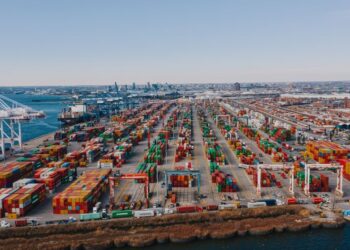
The blockage of the Strait of Hormuz triggered global maritime rerouting, shifting sailing schedules and driving up insurance costs and shipping surcharges — including for refrigerated transport. While geographically distant from the Netherlands, the disruption has cascading effects: reduced global supply elevates prices for energy, raw materials, and transport. Companies with suppliers in Asia, customers in the Middle East, or heavy reliance on sea freight or energy-intensive processes face immediate operational impacts. According to the report, this underscores the need for risk diversification — not only across routes but also via alternative suppliers, buffer stock, contractual flexibility, and surcharge-aware procurement.
2. Dutch Ministry of Defense Emerges as a Structural Logistics Client
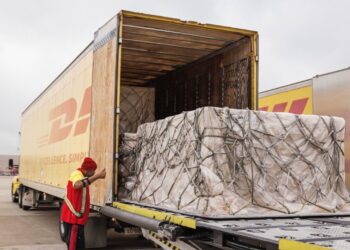
In Q1 2026, the Dutch Ministry of Defense launched its first tender processes for civilian logistics support, making its announced Logistics Ecosystem a practical reality. As stated by Logistiek.nl, this shift opens a new, long-term market for transport companies, forwarders, and logistics service providers — one focused on movement-related road transport, transshipment, storage facilities, and broader logistics services. However, working with Defense demands adaptation: stricter compliance requirements, rigorous tender procedures, guaranteed delivery reliability and availability, and long-term contract readiness. According to Waltherploosvanamstel, successful engagement requires professionalization in documentation, processes, and risk management.
3. Netherlands’ New Truck Levy Reshapes Transport Cost Structures
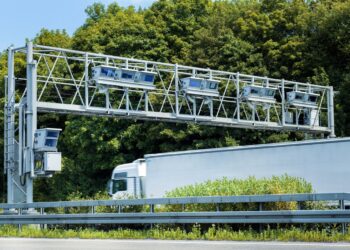
Effective July 1, 2026, the Netherlands will implement a per-kilometer truck levy on nearly all highways and parts of provincial and municipal roads. The rate depends on vehicle weight, emission class, and CO2 emission class — transforming the measure from a fiscal tool into a strategic lever influencing fleet composition, equipment usage, and logistics network design. As noted by HBP Media, the impact extends beyond truck owners: carriers will pass costs through rates, surcharges, and contract negotiations, meaning shippers and supply chain coordinators will feel the effects across the entire chain.
4. Cybersecurity Transitions from IT Concern to Core Supply Chain Responsibility
The source states that digital risks have moved “from IT to the boardroom,” signaling that cybersecurity is no longer a back-office issue but a foundational element of supply chain resilience. With interconnected disruptions — where geopolitical conflict, regulatory change, and cyber threats compound — logistics professionals must now treat data integrity, system access controls, and third-party vendor security as integral to operational continuity and contractual performance.
5. The Netherlands Loses Competitive Ground as a Distribution Hub
The convergence of rising transport costs (including the upcoming truck levy), tightening regulatory compliance burdens, and evolving risk profiles is eroding the Netherlands’ historical advantage as a preferred location for distribution centers. According to the report, location decisions are “becoming less straightforward than before,” as companies reassess trade-offs between proximity to European markets and total landed cost, regulatory complexity, and systemic vulnerability.
Together, these five developments reflect a broader shift: supply chains are increasingly shaped by non-traditional forces — defense policy, maritime chokepoint instability, national fiscal instruments, cyber hygiene mandates, and locational competitiveness — all demanding integrated, cross-functional response capabilities from supply chain professionals.
Source: www.adaption-it.nl
Compiled from international media by the SCI.AI editorial team.