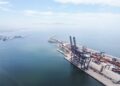
According to swarajyamag.com, a decade-long infrastructure investment totaling $360 billion has reduced India’s logistics cost burden to 10–10.7% of GDP in FY26 — down from 13–14% of GDP a decade earlier. The report, jointly released by the Confederation of Indian Industry (CII) and Knight Frank at the CII Multimodal Transportation and Logistics Summit on Friday, May 29, 2026, estimates annual economic savings of $123–133 billion as a direct result.
Global Standing and Systemic Gains
India’s Logistics Performance Index (LPI) ranking improved from 54th globally in 2014 to 38th in 2023, per the CII-Knight Frank report. This 16-rank jump reflects measurable progress in cross-border trade efficiency, customs performance, infrastructure quality, and timeliness. The report attributes gains to sustained national investments in freight corridors, port modernization, and digital freight platforms such as the Electronic Way Bill (e-Way Bill) system, which processed over 1.2 billion e-way bills in FY25. According to the source, these interventions have strengthened end-to-end connectivity, reduced transit time variability, and lifted supply chain performance across manufacturing and export-oriented sectors.
Multimodal Logistics Parks: The Next Lever
The report identifies multimodal logistics parks (MMLPs) as the critical next-phase infrastructure for further optimization. It states that India will require 216 MMLPs, each with an average annual cargo handling capacity of 16–17 million tonnes (MT), to meet its 2047 freight modal shift targets. Currently, only 35 MMLPs are operational or under construction, according to government data cited in related policy briefs. Persistent overreliance on road transport — which still carries 62% of India’s freight tonnage — and weak first- and last-mile integration continue to suppress rail and inland waterway utilization.
Operational Impact of MMLPs
As noted in the report, MMLP-grade intermodal interchange delivers a 43% total cost advantage over road freight on Dedicated Freight Corridor (DFC) routes. These facilities also compress terminal origin-side dwell times by over 90% and reduce cargo handling damage significantly. That reliability shift enables rail to serve high-value, time-sensitive sectors previously dominated by road — including FMCG, automotive, and e-commerce.
“By aggregating fragmented, sub-threshold cargo, MMLP-grade interchange unlocks a 43 per cent total cost advantage over road freight on DFC corridors. Simultaneously, MMLPs compress terminal origin-side dwell times by over 90 per cent and drastically reduce handling damage, transforming rail into a time-predictable, reliable logistics channel for high-growth, non-bulk sectors like FMCG, automotive, and e-commerce.” — Ashwani Gupta, Whole-time Director and CEO, Adani Ports and SEZ
International Benchmarks and Implementation Gaps
The report draws parallels with integrated logistics park models in Germany, the Netherlands, and Singapore — all of which achieved modal balance where rail and inland waterways handle ≥35% of domestic freight and maintain terminal dwell times under 24 hours. In contrast, India’s average rail terminal dwell time remains at 48–72 hours, per Ministry of Railways’ 2025 Operational Review. The CII-Knight Frank analysis underscores that scaling MMLPs is not merely about physical infrastructure but hinges on institutional coordination: unified land acquisition, single-window clearances, and interoperable IT systems linking rail, road, and customs authorities — a challenge highlighted in the 2023 National Logistics Policy Action Plan.
Source: swarajyamag.com
Compiled from international media by the SCI.AI editorial team.