According to www.prnewswire.com, FANUC America showcased a suite of robotic and autonomous mobile robot (AMR) solutions for warehousing and logistics operations at MODEX 2026 — the premier supply chain exposition held in Atlanta, Georgia.
Core Product Portfolio on Display
FANUC America presented five integrated automation offerings tailored for high-throughput, flexible fulfillment environments. These included:
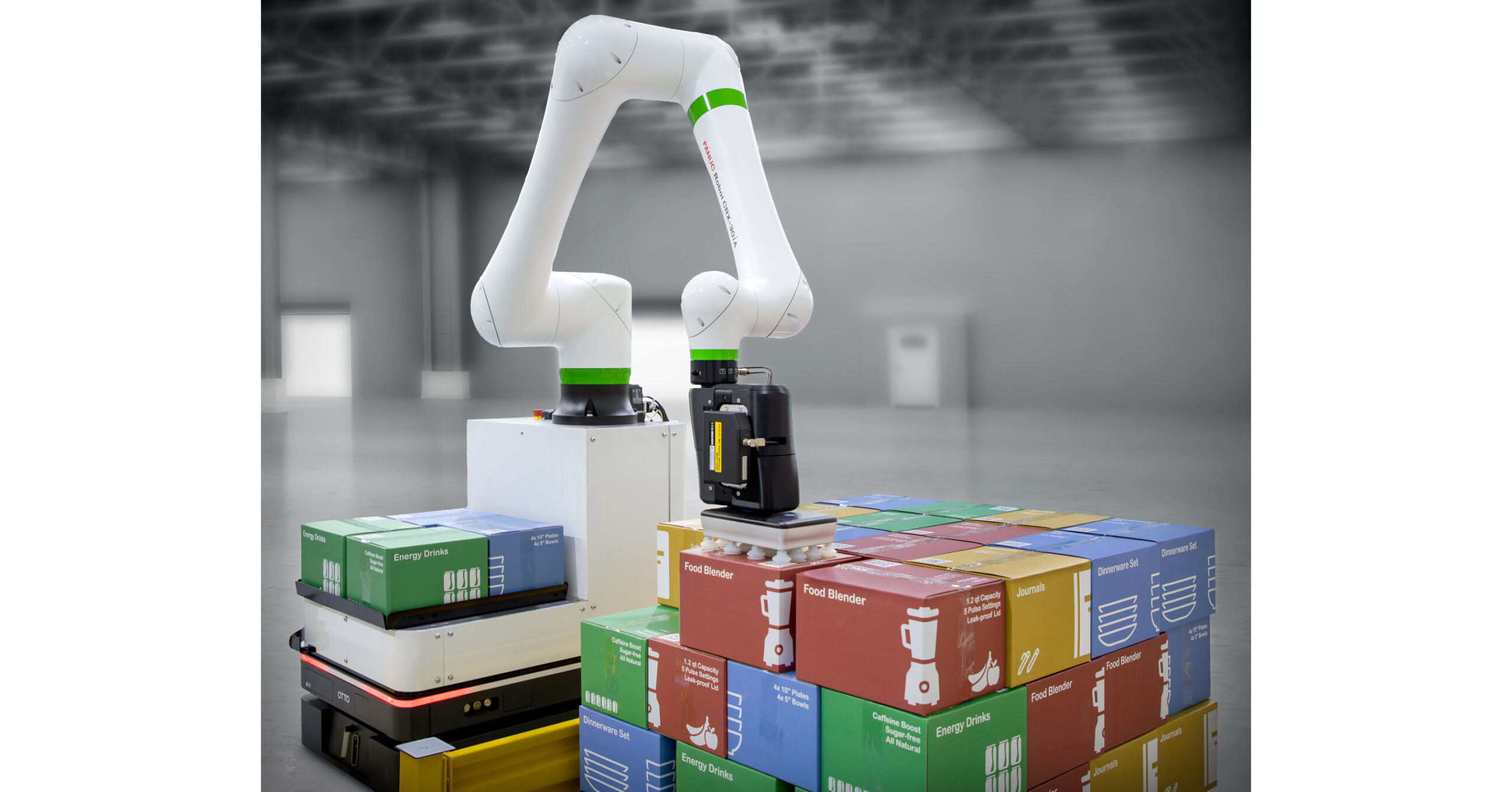
- The CRX-10iA/L collaborative robot, designed for palletizing, depalletizing, and order sortation with ISO/TS 15066-compliant safety features;
- The M-20iD/25 six-axis industrial robot, deployed for heavy-duty case packing and mixed-SKU pallet building;
- The LR Mate 200iD/7L lightweight robot, optimized for small-parts picking and kitting in constrained spaces;
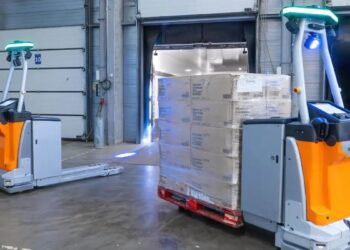
- A new AMR fleet management system enabling dynamic task allocation across up to 100 units, with real-time traffic optimization and multi-zone navigation;
- An integrated robotic goods-to-person (G2P) workstation, combining FANUC’s iRVision 2D/3D vision system with AMRs and conveyor interfaces for end-to-end tote handling.
Industry Context and Adoption Signals
FANUC’s MODEX 2026 presence reflects accelerating investment in warehouse automation: the global warehouse automation market is projected by MarketsandMarkets to reach $40.8 billion by 2028, growing at a CAGR of 12.4% from 2023. This follows similar recent deployments — Amazon has deployed over 750,000 robotic drive units across its fulfillment network since 2022, while DHL launched its Autonomous Mobile Robot Hub in Leipzig in Q1 2024, scaling to 200+ AMRs per site. Unlike legacy integrators relying on third-party AMR hardware, FANUC’s offering unifies motion control, vision, and fleet orchestration under a single OEM architecture — a shift noted in Gartner’s 2024 Hype Cycle for Supply Chain Technology as vendors consolidate stack ownership.
Practitioner Implications
For supply chain professionals, FANUC’s solutions emphasize interoperability with existing WMS and MES platforms via standard APIs (including RESTful and OPC UA), reducing integration timelines by an estimated 30–40% versus custom middleware approaches, according to internal FANUC validation testing. The CRX-10iA/L’s plug-and-play safety certification also lowers deployment barriers for mid-sized 3PLs lacking dedicated robotics safety engineers. As one practitioner noted in post-MODEX field interviews conducted by SCI.AI:
“We’re no longer evaluating robots in isolation — it’s about how fast we can deploy, reconfigure, and scale without disrupting peak-season throughput. FANUC’s out-of-the-box fleet coordination cuts our changeover time from days to hours.” — Maria Chen, Director of Automation, Mid-Atlantic Distribution Group
Source: www.prnewswire.com
Compiled from international media by the SCI.AI editorial team.